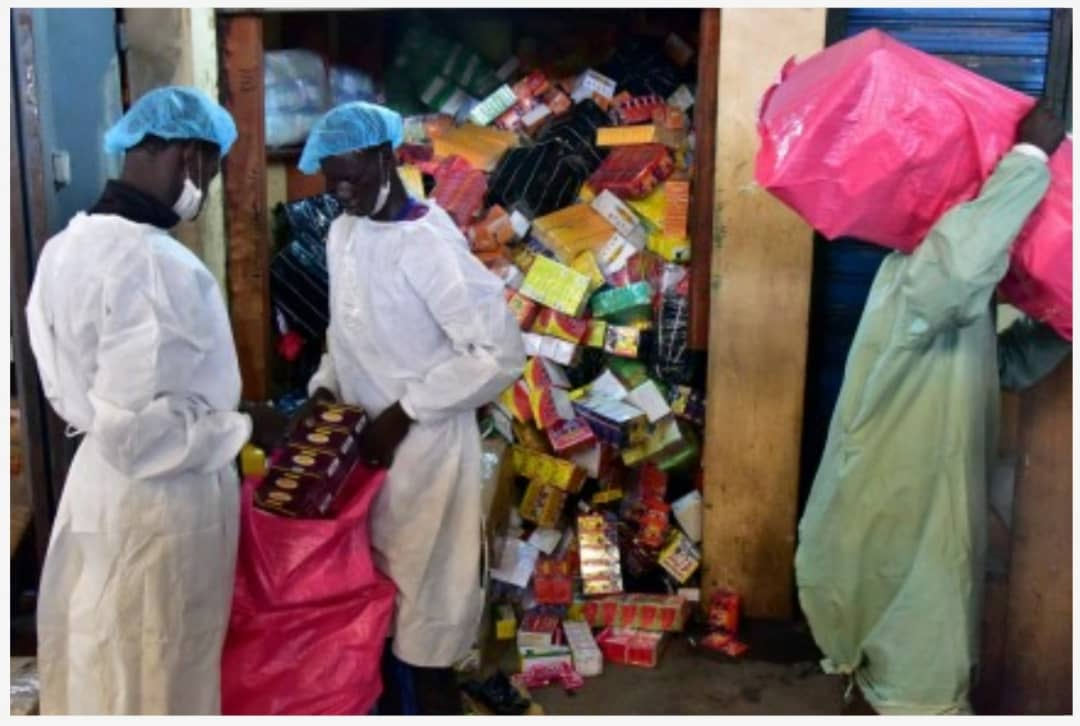
The United Nations recently released its threat report for 2023 on the critical issue of the trafficking of medical products in Africa, particularly in the Sahel region–and the report makes for grim reading, laying bare the scale of the problem and underscoring the need to tackle it.
The pharmaceutical industry’s inability to supply enough medical products and services to meet booming demand has created a vacuum which traffickers are unfortunately filling. The inability to meet demand stems from a variety of different factors: the high cost of raw materials, lack of government investment in the pharmaceutical sector, unfavorable manufacturing conditions, and a lack of infrastructure and technical know-how. Particularly in the Sahel countries and their neighbors, the high prevalence of malaria and other infectious diseases in addition to the difficulty accessing affordable and available healthcare creates the perfect environment for needs to be met via other illegal and dangerous means.
Thankfully, a number of private companies are stepping in to try and help address this serious issue, taking initiative to contribute to a safer medical environment by offering solutions that clearly delineate between safe and substandard medical products, saving lives in the process.
The danger of the unregulated
Countless tragedies underline the vital importance of taking concrete measures to stamp out medicine trafficking. Just last year, for example, 70 Gambian children died from Acute Kidney Injury. Their deaths were linked by WHO officials to cough syrups made in India that had been contaminated with ethylene glycol (EG) and diethylene glycol (DEG). It is the deadliest total poisoning on record from toxins that have been known to scientists for decades. The tests later showed that the medicines contained extremely dangerous levels of toxins and had been sold in bottles incorrectly labeled as WHO-approved. These findings didn’t come as a surprise to those who know the sector, however–pharmaceutical experts have warned for years about the lax oversight that Indian pharmaceuticals enjoy, and half of the generic medicines used in Africa come from India.
However, the problem goes beyond India–while there are no reliable estimates of the overall quantities of medical products that have been trafficked, certain studies put the percentage of substandard or falsified medicines in the Sahel region at between 19 and 50 percent. A large part of the issue is that a little less than half of the substandard and falsified medical products were found within the regulated supply chain. As the UN report explained, “illicitly manufactured medical products can find their way into authorized pharmaceutical outlets which shows how much the regulated (legal) and unregulated (illicit) supply chains are interconnected”. This parallel trade has tragic consequences–according to the UN report, in sub-Saharan Africa as many as 267,000 deaths per year are linked to falsified and substandard antimalarial medicines. Additionally, up to 169,271 deaths are linked to falsified and substandard antibiotics used to treat severe pneumonia in children.
Hope for the future as private sector innovates
While obviously, the situation is dire, the good news is that companies are springing up with solutions to counter this problem and save lives in the process. The experienced Swiss security expert SICPA, for example, has developed a variety of solutions to address these challenges. As an entrusted player in the field, SICPA uses a mix of covert, overt, and forensic security features to protect product packaging and avoid adulteration. Each drug must be marked with a unique 2D barcode including various data fields, such as a product code, the batch ID, the expiry date, and the serial number. This data must often be electronically reported and stored in a national repository. This brand protection, naturally, is not just good for the consumer of these products but is also good for the pharmaceutical company producing them.
SICPA is already a global leader in hi-tech serialization and traceability. A long-trusted partner to governments, central banks, and the industry, with their Health Security Solutions (HSS), SICPA is bringing this longstanding expertise to bear in tackling the issue of trafficked medical products. There are also newcomers on the scene, a variety of “home-grown” African startups are starting to pop up using features that SICPA employs (blockchain, authentication apps, etc.). For example, mPedigree is a Ghanaian startup that uses mobile technology for verification purposes; Customers can send a unique code found on the drug packaging via SMS to a centralised database for verification which allows them to receive a response confirming its authenticity.
Another interesting approach is to use chatbots as a way to consult a brand in real-time and boost transparency. Sproxil based in Lagos Nigeria, partnered with Shanila—an established pharmaceutical company— and launched a Facebook chatbot to enable customers to verify Shalina products with ease, improving trust through direct engagement through a familiar medium.
By making it more difficult for traffickers to sell substandard or falsified medications and creating a traceable and safe supply chain, solutions like those from SICPA, mPedigree, and Sproxil have the potential to save countless lives.
We’ve got the edge. Get real-time reports, breaking scoops, and exclusive angles delivered straight to your phone. Don’t settle for stale news. Join LEADERSHIP NEWS on WhatsApp for 24/7 updates →
Join Our WhatsApp Channel