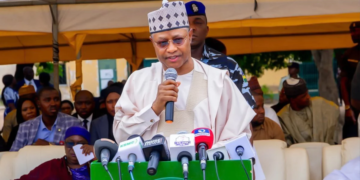
Recently, the executive secretary of the Universal Basic Education Commission (UBEC), Dr Hamid Bobboyi, said that the country needs an additional 194,876 qualified teachers to fill the existing gaps in the basic education sector. He also disclosed that at the primary school level, the nation needs 907,769 new classrooms and 200,085 new classrooms at the Junior Secondary School level, making it a total of 1,107,854 classrooms required at the basic education level.
Speaking at a one-day partnership meeting/dialogue with the organised private sector on the implementation of the Universal Basic Education (UBE) programme in Lagos, Bobboyi blamed state governments for not prioritising teachers’ professional development despite collecting 10 per cent of the UBEC grant for this purpose. In Nigeria, pre-primary education, primary education, and lower secondary education, otherwise known as Junior Secondary School (JSS), together are called basic education.
The findings revealed in the latest report from the Universal Basic Education Commission (UBEC) are disturbing to us as a newspaper. Previously, on this page, we expressed our concern regarding the dearth of teachers in the nation’s education system, yet the situation is lamentably not improving.
More disconcerting, in our view, are the stark disparities uncovered by the latest UBEC report. The report shows that the early childhood care and development education (ECCDE) and junior secondary school levels appear to have an excess of teachers, while the primary school level is severely understaffed. This is even true for certain rural primary schools, which have as few as two or three teachers serving the entire student population.
The report rightly noted that this inadequate supply of primary-level teachers is a key contributor to the broader learning poverty afflicting basic education in Nigeria. Sadly, the factors underlying this teacher shortage are all too familiar. This skewed distribution is symptomatic of deeper systemic problems that have long plagued Nigeria’s education sector.
We observed that many state governments have simply not recruited new teachers for years, thereby allowing attrition through retirement and other means to erode the teaching workforce. This, combined with the ongoing “japa” syndrome that sees talented teachers leaving the profession for greener pastures, has created a perfect storm of understaffing.
In addition, the poor welfare and working conditions of teachers in Nigeria have long been a source of frustration, driving away many qualified individuals from entering and remaining in the teaching field.
We recall that during last year’s celebration of World Teacher’s Day, the national president underscored the gravity of the situation when he rightly asserted that effective teaching and learning cannot occur when there is a severe shortage of teachers.
This newspaper believes that education is the bedrock of societal progress and economic prosperity, and teachers are the linchpins of this foundational pillar. They are not mere instructors but mentors, guides, and nurturers of young minds – the very individuals entrusted with shaping the nation’s future leaders.
For us, Nigeria’s dearth of primary school teachers is a crisis that can no longer be ignored. It strikes at the heart of the country’s efforts to provide quality education for all and break the cycle of poverty and inequality.
The time has come for the government, in collaboration with stakeholders, to take decisive action to address this crisis and ensure that every Nigerian child has access to the education they deserve.
We, therefore, call on the administration of President Bola Ahmed Tinubu, to prioritise the swift and comprehensive implementation of policies and incentives aimed at revitalising the teaching profession.
Concerted efforts must also be made to improve teachers’ welfare and working conditions, ensuring that the profession is seen as a viable and attractive career path for the best and brightest minds.
Beyond this, state governments must also shoulder their fair share of the responsibility. They must urgently embark on aggressive teacher recruitment drives to fill the gaping vacancies in primary schools, especially in rural and underserved areas.
For us, the future of Nigeria’s children, and indeed, the nation’s future, depends on the success of this endeavour. By investing in the primary education sector and empowering our teachers, we can unlock the immense potential of our young people and pave the way for a brighter and more prosperous Nigeria.
The refrain against employment in the states is the paucity of funds. While the governments are striving to overcome this challenge, they would be well-advised to look inward for a ready pool of teaching staff to draw from. The governments should bite the bullet and send all trained teachers who abandoned their calling to push files in offices back to the classrooms. The Kano state government tried it, and the firmament did not fall upon us.
We’ve got the edge. Get real-time reports, breaking scoops, and exclusive angles delivered straight to your phone. Don’t settle for stale news. Join LEADERSHIP NEWS on WhatsApp for 24/7 updates →
Join Our WhatsApp Channel