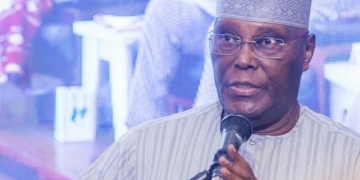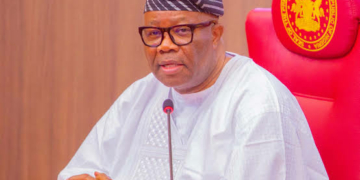
Barely two years into office, President Bola Ahmed Tinubu’s “Renewed Hope” agenda is under intense scrutiny as corruption probes continue to rock his administration. SAMSON ELIJAH writes that ministers and key agency CEOs have resigned or come under investigation, raising urgent questions about accountability, governance, and the credibility of the government’s anti-corruption commitments
From alleged mismanagement of public funds to abuse of office, these high-profile cases of corruption surrounding some appointees of the President Bola Ahmed Tinubu’s led government have placed the administration in the public eye, testing its ability to deliver on promises of transparency. While official responses range from denials to pledges of full cooperation, the spate of resignations has fueled criticism that corruption remains deeply entrenched at the highest levels.
From investigations by anti-graft agencies to growing public outcry over alleged financial impropriety, recent developments have reignited national debate about the administration’s anti-corruption posture and the credibility of its “Renewed Hope” agenda.
For citizens, these developments are more than headlines, they are a litmus test for the administration’s integrity. Observers warn that how these cases are handled will either reinforce or undermine public confidence in Tinubu’s leadership and the effectiveness of his anti-corruption drive.
Rising Wave Of Allegations
In recent months, allegations involving high-ranking government officials have dominated public discourse. While the specifics differ across cases, many revolve around alleged mismanagement of public funds, procurement irregularities and abuse of authority.
Anti-corruption agencies, including the Economic and Financial Crimes Commission (EFCC) and the Independent Corrupt Practices and Other Related Offences Commission (ICPC), have confirmed that some of the allegations are under active investigation.
The agencies have repeatedly stressed that investigations do not amount to proof of guilt.
An EFCC source said, “No individual is above the law, regardless of political affiliation or position. Due process will be followed in all cases.”
Tinubu Replaces Heads Of Key Petroleum Agencies
The debate intensified following President Tinubu’s decision to replace the heads of two major petroleum regulatory agencies.
The Presidency recently announced the resignations of Farouk Ahmed, chief executive officer of the Nigerian Midstream and Downstream Petroleum Regulatory Authority (NMDPRA), and Gbenga Komolafe, chief executive of the Nigerian Upstream Petroleum Regulatory Commission (NUPRC), both stepping down amid ongoing corruption probes.
Mr Ahmed’s exit followed public allegations by Aliko Dangote, President and chief executive officer of Dangote Industries Limited, who accused him of corruption, abuse of office and economic sabotage.
Dangote alleged that the NMDPRA leadership colluded with oil importers to frustrate local refining through the continued issuance of import licences.
Dangote also alleged that Ahmed was living beyond his legitimate means, claiming he spent more than $7 million on the education of his four children abroad.
He submitted a formal petition to the ICPC calling for Ahmed’s arrest, investigation and prosecution.
Ahmed, however, described the allegations as “wild and spurious,” saying he welcomed investigation by relevant authorities as an opportunity to clear his name.
President Tinubu has since forwarded the names of Oritsemeyiwa Amanorisewo Eyesan and Engineer Saidu Mohammed to the Senate for confirmation as new heads of the NUPRC and NMDPRA respectively.
Uche Geoffrey Nnaji’s Exit:
Uche Geoffrey Nnaji, who served as Nigeria’s Minister of Innovation, Science and Technology, was effectively removed from office in October 2025 amid a major certificate credibility scandal. An investigative report alleged that he submitted forged academic and NYSC certificates during his ministerial confirmation, claims that the University of Nigeria, Nsukka , the institution he cited could not verify. After the controversy intensified, Nnaji attempted legal action to block the release of his records but ultimately resigned, saying the sustained allegations were politically motivated and were distracting from government work. Presidential aides later confirmed that President Bola Tinubu had directed him to step down to avoid further embarrassment for the administration.
Betta Edu’s Removal:
Dr. Betta Edu, former Minister of Humanitarian Affairs and Poverty Alleviation, was suspended and ultimately removed from the Federal Executive Council in 2024 following allegations of misappropriation of public funds. A memo surfaced showing she had directed that hundreds of millions of naira intended for vulnerable groups be transferred into a private bank account, prompting President Tinubu to suspend her and order a thorough investigation by the Economic and Financial Crimes Commission (EFCC). Despite her denial of wrongdoing, the controversy over financial transactions under her watch led to her dismissal from the cabinet. She never returned to ministerial carryout her duty.
Fresh Appointments, Old Allegations
The administration’s latest round of appointments to federal ministries, departments and agencies (MDAs) has also drawn criticism from civil society groups. Some newly appointed officials are linked to unresolved corruption allegations.
Among them is Senator Kabir Abdullahi Barkiya, appointed chairman of the Nigerian Agricultural Land Development Authority (NALDA), who has been accused of diverting a solar-powered streetlight project meant for his senatorial district to his private residence—an allegation he has yet to publicly address.
Former Katsina State Governor Ibrahim Shehu Shema, now chairman of the Federal Capital Development Authority (FCDA), has faced multiple corruption cases in the past, including allegations of embezzlement and misappropriation of public funds. Some cases were discontinued without a court verdict, while others remain unresolved.
Former Senate President Anyim Pius Anyim, appointed chair of the National Merit Awards Committee, has also faced longstanding corruption allegations, including those linked to the Centenary City project and election-related funds. None of the investigations resulted in convictions.
Group Seeks Probe of Allegations Against Matawalle
Meanwhile, the Odua People’s Assembly (OPA) has called for a thorough investigation into allegations linking the Minister of State for Defence, Bello Matawalle, to banditry.
In a statement signed by its chairman, Mr Richard Olatunji Kayode, the group described the allegations as “alarming and unacceptable,” especially amid Nigeria’s ongoing security challenges.
The group cited a viral video allegedly showing a notorious bandit leader defending the minister and called for Matawalle’s removal to restore public confidence.
Presidency’s Position
The Presidency has maintained that President Tinubu will not shield any official found culpable. Presidential aides have consistently argued that allegations must be investigated through due process rather than trial by public opinion.
At a public event, President Tinubu reiterated that his administration “will not tolerate corruption at any level,” insisting that accountability remains non-negotiable.
CISLAC: Removal Without Prosecution Is Not Accountability
Commenting on the unfolding controversies, Senior Programme Officer of the Civil Society Legislative Advocacy Centre (CISLAC), Suleiman Gimba, said the removal or resignation of public officials over corruption allegations, without prosecution, does not amount to true accountability.
According to Gimba, accountability in a constitutional democracy requires transparent investigation, prosecution, conviction where appropriate, and recovery of stolen assets.
He noted that apart from the Betta Edu case—where authorities officially linked her removal as Minister of Humanitarian Affairs to allegations of financial misconduct—most exits from office have been explained away as “health reasons” or “personal decisions.”
“This lack of candour makes government an unreliable narrator—saying one thing publicly while doing another institutionally,” Gimba said.
He warned that when allegations end with resignation, affected individuals remain legally eligible to return to public office, contributing to the recycling of politically exposed persons.
He also cautioned that without prosecution and forfeiture orders, corruption remains profitable.
Gimba called for stricter enforcement of anti-corruption laws, limits on the use of nolle prosequi in corruption cases, and safeguards against political defections being used to evade accountability.
Public Trust at Stake
Analysts say the growing number of allegations presents both a challenge and an opportunity for the Tinubu administration. While unresolved cases risk eroding public confidence amid economic reforms and rising living costs, decisive and transparent action could strengthen institutional credibility.
Political analyst Dr Tunde Afolayan said, “If investigations are allowed to run their full course and sanctions applied where necessary, it could reinforce the administration’s anti-corruption credentials.”
Civil society groups and the Nigerian Bar Association have echoed similar calls, urging strict adherence to the rule of law and public disclosure of investigation outcomes.
As investigations continue, observers say how the administration balances political loyalty with accountability will shape public perception—and may ultimately define the legacy of President Tinubu’s anti-corruption drive.
We’ve got the edge. Get real-time reports, breaking scoops, and exclusive angles delivered straight to your phone. Don’t settle for stale news. Join LEADERSHIP NEWS on WhatsApp for 24/7 updates →
Join Our WhatsApp Channel