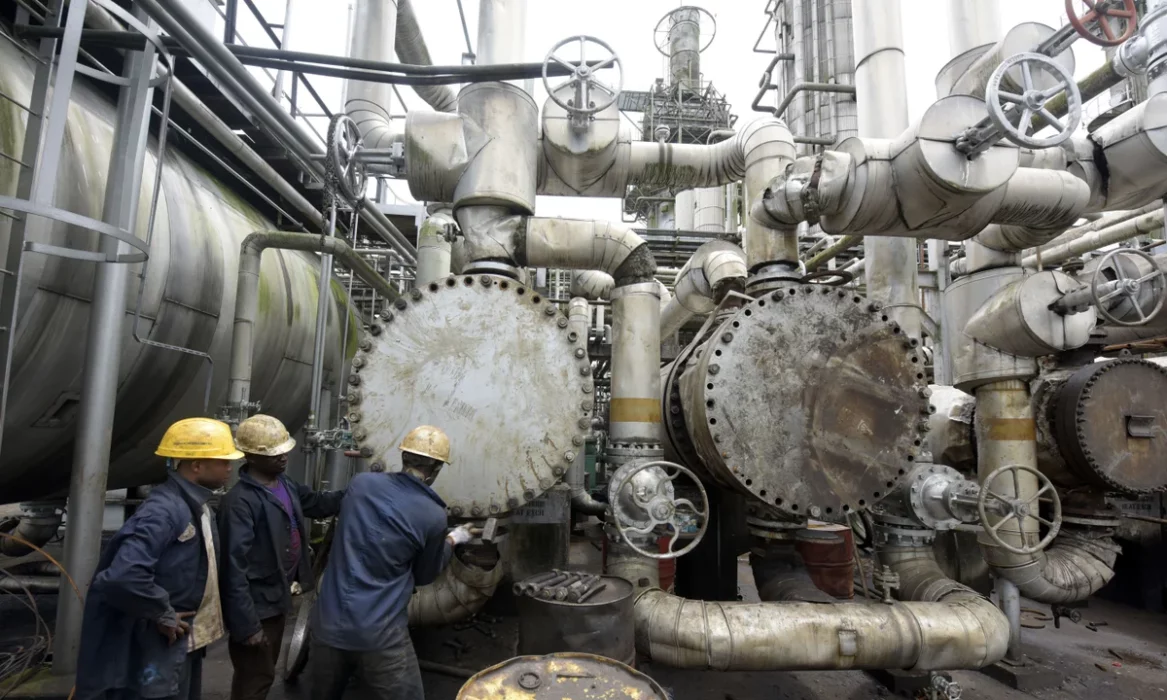
Nigeria is closing the year with optimism around its upstream oil sector as a new licensing bid round raises expectations of improved crude oil output and increased investment. The federal government has anchored its ₦58.18 trillion 2026 Budget on a crude oil production target of 1.84 million barrels per day (mbpd) and an oil price benchmark of $64–65 per barrel, assumptions stakeholders believe are achievable if current reforms and investment plans are sustained.
Central to this optimism is the 2025 oil licensing bid round launched by the Nigerian Upstream Petroleum Regulatory Commission (NUPRC) on Monday, December 1, 2025. The exercise, which offers 50 oil and gas blocks, is expected to unlock fresh capital, boost production capacity, and reposition Nigeria as a competitive destination in the global energy market.
The bid round comprises 15 onshore blocks, 19 shallow-water blocks, 15 frontier assets, and one deep-water block. According to the NUPRC, the process could attract up to $10 billion in investment and add as much as two billion barrels of oil over the next decade, translating to about 400,000 barrels per day at peak production.
Industry experts view the exercise as a strategic intervention aimed at reversing years of underinvestment caused by regulatory uncertainty, fiscal concerns, and security challenges in the Niger Delta. They argue that the bid round, combined with ongoing regulatory and tax reforms, could significantly lift output and government revenue over the medium term.
Captain Emmanuel Iheanacho, Executive Chairman of Integrated Oil and Gas Ltd and Genesis Shipping Worldwide, expressed confidence that the bid round would deliver positive outcomes for the economy. He said new fields coming on stream would increase government revenue, foreign exchange earnings, and GDP growth, while supporting Nigeria’s fiscal projections.
Iheanacho noted that the current bid round departs from past approaches by focusing on attracting credible investors with technical and financial capacity, rather than emphasising high signature bonuses. According to him, this shift would help unlock undeveloped assets more efficiently and accelerate production growth.
“I believe that at the end of the process, Nigeria will be in a better position to meet its OPEC quota and also supply sufficient crude to local refineries that are demanding more feedstock to operate at capacity,” he said.
Also speaking on the bid round, Dr Zion Athora, Partner at Ernst & Young Nigeria, said the exercise would strengthen investor confidence and enhance revenue generation, particularly in light of recent tax reforms. He explained that under the new tax framework, royalty collection would now be handled by the Nigeria Revenue Service, replacing the Federal Inland Revenue Service.
Athora noted that royalties would be payable strictly in cash, rather than in kind, a change aimed at improving transparency and predictability in government revenue. He added that the reforms address longstanding investor concerns over multiple taxes and the high cost of doing business in Nigeria.
“One of the key objectives of the tax reforms is to reduce complexity, enhance transparency, and foster a competitive business environment,” Athora said. “These changes should support ease of doing business and help drive foreign direct investment into the oil and gas sector.”
He further noted that the reforms introduce specific provisions to ensure fiscal stability in gas development and renewable energy investments, alongside targeted incentives to attract capital into the gas sector. Despite lingering challenges related to the multiplicity of taxes, Athora said the reforms are likely to have a positive impact on investment flows into the industry.
The bid round also aligns with President Bola Tinubu’s broader economic agenda to make Nigeria “irresistible for investment.” The NUPRC has reduced signature bonuses to about $3 million from as high as $7 million in previous rounds, while providing higher-resolution seismic data to reduce exploration risks and lower entry barriers.
NUPRC Chief Executive, Gbenga Komolafe, has emphasised that while previous licensing rounds have seen awardees pay signature bonuses and commence exploration, new barrels take time to materialise. “The fact that a licensing round was done last year does not immediately translate into additional barrels,” he said, underscoring the long-term nature of upstream investments.
Beyond oil, the 2025 licensing round places strong emphasis on gas development, supporting Nigeria’s domestic energy needs and aligning with global energy transition goals. The transparent, data-driven process is also designed to deepen local participation in the sector and strengthen confidence in the Petroleum Industry Act (PIA).
Indigenous operators, under the umbrella of the Independent Petroleum Producers Group (IPPG), have reaffirmed their commitment to driving growth in the oil and gas sector. Indigenous companies now account for over 50 per cent of Nigeria’s crude oil and gas production, a milestone widely seen as evidence of growing local capacity.
Looking ahead, IPPG states that it will support Nigeria’s ambition to reach three million barrels of oil per day and 12 billion standard cubic feet of gas by 2030. Over the next five years, the group plans to focus on infrastructure expansion, host community engagement, capacity building, strong governance, and responsible resource development.
Meanwhile, the Petroleum Products Retail Outlets Owners Association of Nigeria (PETROAN) has expressed confidence that the 2026 budget assumptions on oil production and pricing are realistic. The association believes targeted investments in upstream operations, including field rehabilitation and renewed exploration, will boost output and government revenue.
PETROAN, however, stressed that achieving the production target would require improved security for oil and gas assets and stronger engagement with host communities, as outlined in the PIA. Effective community participation, it said, is critical to reducing production losses and ensuring stability in oil-producing regions.
Similarly, the Centre for the Promotion of Private Enterprises (CPPE) described the assumptions underpinning the 2026 budget as conservative and largely realistic. Its Chief Executive Officer, Dr Muda Yusuf, noted that while the projections are achievable, the oil price benchmark could be further adjusted to reflect market realities better.
Overall, stakeholders agree that the success of the 2025 bid round could play a pivotal role in lifting Nigeria’s oil production, stabilising government revenue, and supporting broader economic growth in the years ahead.
We’ve got the edge. Get real-time reports, breaking scoops, and exclusive angles delivered straight to your phone. Don’t settle for stale news. Join LEADERSHIP NEWS on WhatsApp for 24/7 updates →
Join Our WhatsApp Channel