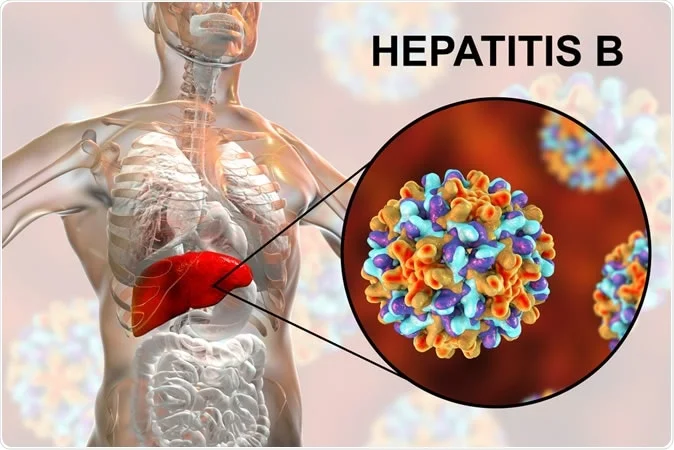
A consultant gastroenterologist, Dr Ameh Ojonugwa, has urged the federal government to launch an aggressive, HIV-style national campaign to combat Nigeria’s growing hepatitis B crisis.
He warned that the country is sitting on a silent but deadly epidemic affecting at least 20 million people.
Dr. Ojonugwa told LEADERSHIP that hepatitis B remains Nigeria’s leading cause of liver disease, yet public awareness and government response remain far below what is required to halt transmission.
“We need the same scale of mobilisation we saw during the HIV era. Back then, even remote villages heard about prevention and free testing. But hepatitis awareness is still fragmented and mostly limited to city centres,” he said.
Nigeria falls within a hepatitis B endemic zone, with prevalence rates ranging between eight and 15 per cent, meaning one in every 10 Nigerians is infected.
Dr. Ojonugwa described hepatitis B as the commonest trigger of liver disease in the country, ahead of hepatitis C and alcohol-related complications.
He noted that while hepatitis C affects roughly one to two per cent of Nigerians, its public health threat is compounded by low testing rates and minimal awareness.
Despite being part of the National Programme on Immunisation (NPI), the hepatitis B vaccine still fails to reach large sections of the population, especially newborns in rural and underserved areas.
“If every child born today receives the hepatitis B vaccine, the disease could become history in Nigeria in 20 years. But the vaccine is still mostly available in big hospitals and some PHCs. Many children born in informal settings miss the crucial birth dose,” Dr. Ojonugwa said.
He blamed weak primary healthcare structures and poor vaccine distribution networks for perpetuating the cycle of infection.
Dr. Ojonugwa stressed that hepatitis B is transmitted through infected blood and body fluids, not casual contact. “People assume they can get hepatitis by sharing meals or living together, which is false. The real risk lies in unsafe injections, transfusions, shared sharps, and from mother to child during childbirth,” he said.
He also highlighted a key difference: hepatitis B is preventable but not curable, while hepatitis C is curable but lacks a vaccine.
The specialist urged the federal government to adopt a multi-front strategy:
Mass nationwide testing, especially free community outreach. Consistent vaccination campaigns, targeting newborns, rural communities, and high-risk groups.
Intensive public education, using radio, schools, markets, worship centres, and social media.
He argued that such a coordinated response mirrors Nigeria’s successful HIV campaign, which drastically improved awareness, early detection, and prevention.
“With political commitment, funding, and community involvement, Nigeria can drastically reduce hepatitis B infections. This is one epidemic we can prevent, but only if we act with urgency,” he said.
We’ve got the edge. Get real-time reports, breaking scoops, and exclusive angles delivered straight to your phone. Don’t settle for stale news. Join LEADERSHIP NEWS on WhatsApp for 24/7 updates →
Join Our WhatsApp Channel