Nigeria’s health system is cracking under pressure, especially at the primary level where communities first seek care. With Primary Healthcare Centres (PHCs) crippled by equipment shortages, skeletal staffing and empty drug shelves, PATIENCE IVIE IHEJIRIKA writes on how Nigerians are increasingly forced to seek help wherever they can find it
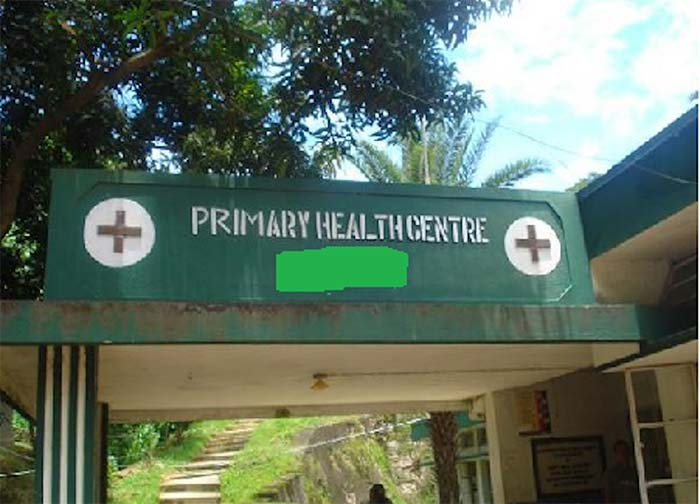
Primary Health Care (PHC) facilities were originally established to serve as the foundation of Nigeria’s healthcare system, accessible, affordable, and community-based centers meant to meet basic health needs. However, for many Nigerians today, these facilities have lost their relevance and trust.
Continuous disappointment has driven people away. The persistent absence of even the cheapest and most essential drugs such as paracetamol, empty or poorly stocked drug shelves, inadequate infrastructure, and an insufficient, unmotivated, or sometimes absent workforce. Instead of being places of relief and reassurance, many PHCs have become symbols of neglect and unfulfilled promises.
This reality is deeply saddening. Communities that should rely on nearby PHCs for prompt and simple medical attention are left with no choice but to look elsewhere. The failure of these frontline health facilities means that illnesses that could have been easily treated early are ignored, worsened, or redirected to higher-level hospitals.
Trust, once lost through repeated experiences of poor service delivery, is difficult to rebuild, and many Nigerians no longer consider PHCs a viable option when seeking care.
In the desperate hunt for improved healthcare, patients are forced to rush past their local PHCs and travel long distances to district hospitals and general hospitals. This not only increases financial and physical burdens on individuals and families but also places unnecessary pressure on secondary healthcare facilities. What was designed to be a simple, community-level solution has become a missed opportunity, one that continues to widen gaps in access, equity, and quality of healthcare across the country.
For many citizens, the search for safe and affordable healthcare begins not with reassurance, but with fear.
On January 2, 2026, Mrs. Comfort Imong lost her 30-year-old son at Eja Memorial Hospital, Itigidi, in Abi local government area of Cross River State, not simply to illness, but to a failed health system.
According to a source who pleaded not to be named in the hospital, he said, after Mrs Comfort ‘s son ( Asor) slumped and was rushed to the hospital, there was no oxygen available. The health workers on call allegedly did not get up from their seat to check the patient’s pulse, vital signs, or attempt resuscitation. The only effort came from an overwhelmed nurse on duty, left alone in a critical moment.
Mrs. Imong watched helplessly as her son struggled and eventually gave up the ghost. She describes the experience as “Nigeria happening” to her, a phrase that captures the pain of preventable loss. Today, she says nothing will ever link her to primary healthcare facilities again.
In Kurudu, Abuja, that fear follows Mrs. Edosa whenever childbirth crosses her mind. Despite having a PHC just minutes from her home, she travels long distances to register for antenatal care at Asokoro District Hospital. Like many others, her decision reflects a growing loss of confidence in facilities meant to offer first-line care.
Mrs. Edosa told LEADERSHIP Sunday that she was unwilling to take any risks, expressing deep concern over the absence of critical emergency facilities at the PHC. She noted that the lack of ambulances and oxygen supplies left her vulnerable, fearing a situation where complications could arise and she would need to be rushed to a secondary healthcare facility at the last minute.
This quiet abandonment of primary healthcare is playing out daily across the country. Patients with routine illnesses bypass nearby centres, expectant mothers flood referral hospitals, and preventable conditions worsen while waiting for care that should be readily available. As secondary and tertiary hospitals strain under avoidable pressure, PHCs—designed to absorb early cases remain neglected and underutilised.
The consequences are severe and far-reaching. When proximity no longer guarantees safety and trust in local care collapses, healthcare becomes a gamble rather than a right. Until primary healthcare is rebuilt as a place of confidence rather than compromise, Nigerians will continue to make desperate choices, choosing distance, cost and overcrowding over facilities that have failed to meet their most basic needs.
A mother of three in Jikwoyi, who identified herself as Mama Ekene, also shared her recent experience at a Primary Health Care (PHC) facility. She noted that while the tests at the PHC were significantly cheaper than those at private laboratories or hospitals, she was still forced to purchase malaria and typhoid medications elsewhere because the facility did not have them in stock.
According to Mama Ekene, she would have spent far less on her sick child, even without health insurance if the Primary Health Care (PHC) facility had stocked the necessary medications. She urged the government to equip PHCs with the resources they need to provide complete and effective care.
“If only the PHC had the drugs, it would have been far cheaper than buying from the pharmacy. I want the government to please help us by providing PHCs with adequate manpower, electricity, drugs, and other essential resources so that we can spend less,” she said.
These concerns persist despite ongoing efforts to make healthcare more accessible and affordable in the country. Primary Health Care (PHC), intended to serve as the first point of contact for patients, often lacks the capacity, personnel, and resources to fulfill this role effectively. Consequently, many people bypass PHCs and turn to secondary and tertiary institutions for even basic healthcare services.
Behind every crowded hospital ward is a story of a Primary Health Care (PHC) centre that could not provide the care patients needed. For millions of Nigerians, the journey to good health begins with uncertainty and often ends with high out-of-pocket costs.
Despite Nigeria’s position as Africa’s most populous nation and one of its largest economies, government spending on health remains low, leaving citizens to bear the burden of an underfunded and overstretched healthcare system.
In the 2025 budget, only 5.18 per cent was allocated to health, far below the 15 per cent commitment, which should have amounted to N7.185 trillion, leaving a shortfall of approximately N4.704 trillion.
Even with the N282.65 billion allocated for the Basic Health Care Provision Fund (BHCPF), intended to support primary healthcare across the country, many PHCs still lack basic infrastructure, trained personnel, and regular supplies of essential medicines.
Further checks by LEADERSHIP Sunday revealed that PHCs sometimes refer pregnant women to private clinics or secondary health facilities due to a lack of basic medical consumables, and in many cases, essential resources like oxygen or an ambulance are unavailable.
With government health facilities crumbling, more Nigerians are turning to private hospitals if they can afford them. For the majority, however, healthcare expenses are paid out-of-pocket, often pushing families into debt or forcing them to forgo treatment altogether.
The World Bank estimates that over 70 per cent of healthcare spending in Nigeria is out-of-pocket, one of the highest rates globally.
Children and pregnant women are particularly vulnerable. Nigeria continues to have one of the highest maternal mortality rates in the world, with approximately 1,047 deaths per 100,000 live births, according to UNICEF.
According to health experts, advocates, and civil society groups, poor health budgeting in Nigeria has wide-reaching effects on the entire sector, undermining service delivery, infrastructure, workforce capacity, and overall health outcomes.
They have called on the government to prioritise health in national and state budgets and to fully implement the Basic Health Care Provision Fund (BHCPF).
The executive director of the Civil Society Legislative Advocacy Centre (CISLAC), Auwal Musa Rafsanjani, blamed the chronic underfunding, corruption, and lack of political will for the worsening conditions in hospitals and rising mortality rates, particularly among women and children.
Rafsanjani lamented that despite Nigeria’s commitment to allocate at least 15 per cent of its national budget to healthcare, as agreed under the 2001 Abuja Declaration, the government has consistently failed to meet this target.
“It’s very clear that politicians and public officials are not interested in funding healthcare because they always have access to public funds to travel abroad and take care of themselves,” he said.
While top government officials seek medical care overseas, ordinary Nigerians are left to suffer and die from preventable diseases, malnutrition, and childbirth complications. “Our hospitals are just empty. Nigerian children are dying because of malnutrition and nobody is doing anything to save them,” he added.
Rafsanjani also highlighted the brain drain plaguing the sector. In the last decade, thousands of Nigerian-trained doctors and nurses have left the country in search of better working conditions abroad, leaving a huge gap in service delivery. This exodus, he said, has further crippled an already fragile system.
“Corruption, poor funding, and negligence have created a deadly cocktail in our healthcare system,” Rafsanjani noted, stressing that healthcare workers are demoralised due to poor remuneration and working conditions. “Even pregnant women in rural communities die before they reach health facilities in the city,” he said.
Rafsanjani called for comprehensive reforms, including the elimination of corruption, improved infrastructure, and investment in human resources. “We need a leader that truly cares for the people. A healthy nation is a productive nation,” he said.
He urged all levels of government; local, state, and federal to prioritise health financing, close infrastructure and personnel gaps, and implement meaningful reforms to rescue the sector from total collapse.
“Without a functioning healthcare system, Nigeria’s future remains at serious risk,” he warned.
Corroborating this, a public health expert, Dr. Timothy Chigbo, said poor funding leads to dilapidated or insufficient hospitals and clinics, especially in rural area, adding that it also lead to a lack of essential equipment and maintenance, making diagnosis and treatment difficult or impossible.
According to Dr. Chigbo, low salaries, poor working conditions, and lack of training opportunities drive healthcare workers to seek better opportunities abroad (brain drain), and the few remaining personnel are overworked and demoralised, affecting service quality.
He said the PHC, which should be the first line of defense, is underfunded, leading to poor maternal and child health services and lack of early disease detection. “This increases pressure on tertiary hospitals, which become overwhelmed,” he said.
Dr. Chigbo told LEADERSHIP Sunday that underfunded health promotion and disease prevention programmes lead to avoidable outbreaks of diseases like cholera, malaria, and Lassa fever.
He added that important health initiatives, such as free cancer care for children or free maternal healthcare, remain unimplemented or under-implemented due to lack of funds.
According to him, a poor health budget leads to a fragile and inequitable health system, poor health outcomes, and an overburdened population, warning that without increased and efficient health spending, Nigeria’s health sector cannot meet the needs of its growing population.
Also, former President of the Medical and Dental Consultants Association of Nigeria (MDCAN), Prof. Mohammad Aminu Mohammed, acknowledged some progress in healthcare delivery but warned that child mortality, maternal mortality, and under-five deaths remain alarmingly high.
“Year in, year out, we are just hovering between 4 per cent and 5 per cent. We haven’t reached 6 per cent. This lack of funding affects everything, from equipment and facilities to the welfare of healthcare workers,” he said.
Prof. Mohammed also stressed the need to improve incentives for healthcare professionals, especially in rural areas, to stem the tide of brain drain. He called for better welfare packages and highlighted how inflation and economic hardship are making healthcare less accessible.
“Out-of-pocket payments remain a huge barrier. Even when people know where to get care, they often can’t afford it,” he said, advocating for expanded universal health coverage and insurance schemes to ease the financial burden on households, especially those battling chronic conditions like heart, kidney, and liver diseases.
He further urged the government to support private healthcare providers through tax waivers, low-interest loans, and incentives for importing medical equipment. “These are the kinds of measures that make countries attractive for medical tourism,” he noted.
On medical education, Prof. Mohammed decried the neglect of educators in policy discussions. “We talk about increasing the number of healthcare workers, but not about those training them. We need better welfare for medical educators, modern training facilities, and integration of IT and AI into our medical education system,” he said.
Expressing similar concerns, immediate past chairman of the Nigerian Medical Association (NMA), Plateau State chapter, Dr. Bapiga’an Audu, described Nigeria’s budgetary commitment to health as “unfortunate.”
“Despite signing the Abuja Declaration, Nigeria has consistently fallen short since 2021. Budget releases are delayed, poorly prioritised, or underutilised, worsening the sector’s challenges,” he said.
However, the National Primary Heath Care Development Agency (NPHCDA) said progress has been made through key initiatives supporting UHC, such as the BHCPF, the National Health Insurance Authority (NHIA), and Primary Healthcare Revitalisation programs.
Launched under the National Health Act of 2014, the BHCPF serves as a cornerstone of Nigeria’s UHC strategy. It funds improvements in primary healthcare, including infrastructure upgrades, personnel recruitment, and free services for vulnerable populations.
Executive Director of NPHCDA, Dr. Muyi Aina, said recently that 901 PHCs across the country have been revitalised and that the federal government plans to upgrade an additional 2,701 PHCs.
According to him, the agency has completed an unprecedented nationwide assessment of more than 18,000 PHCs.
He also said that the government was mobilising more donor resources for PHC support, with a significant boost coming from a $1 billion fund facilitated by the president and the coordinating Minister of Health and Social Welfare.
As the government aspires to improve health outcomes and reduce preventable deaths, experts say that genuine progress will only come when political leaders treat healthcare as a national priority rather than an afterthought.
However, for women like Mrs. Edosa, mothers like Mama Ekene, and millions of others across the country, the hope for a healthier Nigeria remains tied to a system that has yet to meet their most basic needs.
We’ve got the edge. Get real-time reports, breaking scoops, and exclusive angles delivered straight to your phone. Don’t settle for stale news. Join LEADERSHIP NEWS on WhatsApp for 24/7 updates →
Join Our WhatsApp Channel