
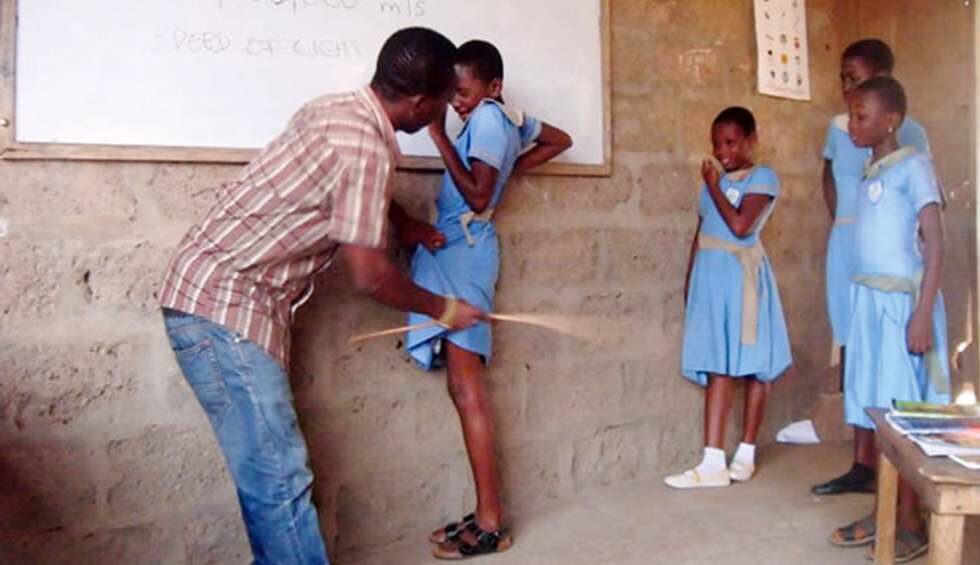
It was something we feared, avoided and secretly respected. The teacher’s whip sat quietly in the classroom corner, leaning against the blackboard or resting on the teacher’s table, doing more talking than actual striking.
Its presence alone could silence noise, straighten spines and suddenly improve handwriting. For many of us, it was the quickest cure for lateness, unfinished assignments and unnecessary chatter. In those days, a whip a day truly seemed to keep stupidity away.
Growing up as millennials, we knew the rules. Come late to school, you met the whip. Fail to submit an assignment, you met the whip. Make a noise in the class, forget your homework, or test boundaries and you meet the whip. It chased away mischief, or at least forced it into hiding. We learned early that actions had consequences, and those consequences came swiftly, sometimes painfully, but always clearly defined.
Corporal punishment was once a widely accepted part of school discipline, rooted in the belief that physical correction builds character and obedience.
Educational history and policy records show that flogging and caning were standard practices in schools across Africa, Europe, and Asia well into the late 20th Century. Teachers were trusted not just to teach, but to mould behaviour. Parents often reinforced this authority, warning children that school discipline would be supported at home.
Yet, even then, not everyone learned the lesson. Some of us were flogged into submission, corrected repeatedly and still carried our stubbornness into adulthood. The whip could force compliance, but it could not always teach understanding. And while many remember it as firm discipline, there were moments when correction crossed into cruelty, something that was never right and should never be justified.
Today, the classroom has changed. Many schools no longer flog children. Policies around child protection, psychological safety and students’ rights have reshaped how discipline is handled. The rod is being spared, and often, one wonders what has replaced it. With all the mischief we carried in our pockets back then, how do teachers today cope without the whip? How do they maintain order, instil respect and teach consequences in an era where physical punishment is discouraged or banned?
It is not an argument for abuse. Discipline should never be brutal, demeaning, or harmful. No child deserves violence disguised as correction. Still, in quiet moments of reflection, one cannot help but remember a time when a simple whip commanded attention, set boundaries and defined authority.
Remembering the teacher’s whip is remembering an era, one shaped by fear, respect, order, and unanswered questions about what truly builds character. It reminds us that discipline evolves, methods change and yet the challenge remains the same: how to guide children firmly, fairly and humanely into responsible adulthood.
We’ve got the edge. Get real-time reports, breaking scoops, and exclusive angles delivered straight to your phone. Don’t settle for stale news. Join LEADERSHIP NEWS on WhatsApp for 24/7 updates →
Join Our WhatsApp Channel