Taraba State has recorded a remarkable turnaround in the implementation of the Agro-Climatic Resilience in Semi-Arid Landscapes (ACReSAL) Project, moving from one of the weakest-performing states to a nationally recognised state with many success stories.
At the recent Pre-Mid-Term Review (PMTR) of the World Bank-assisted project, Taraba received an award for improved project implementation since inception. This achievement put the state agency in the national limelight.
This commitment undoubtedly reflects renewed leadership and effectiveness under Governor Agbu Kefas’s administration.
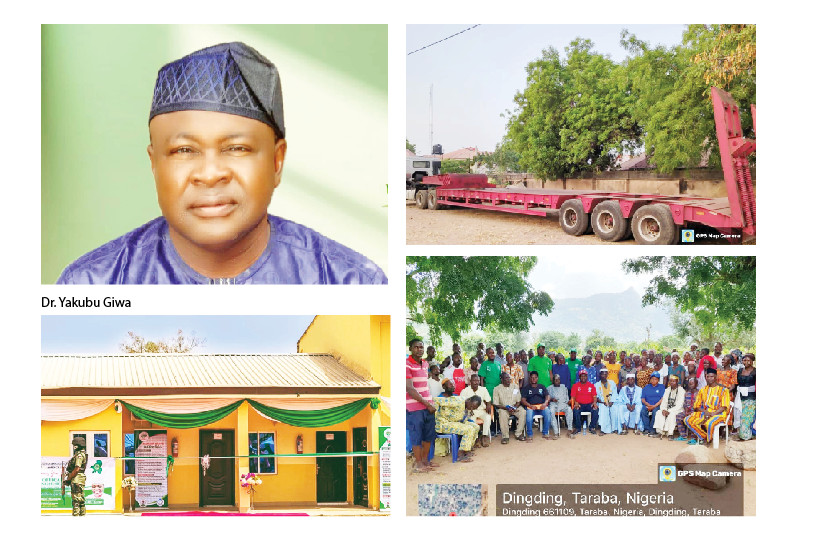
“We inherited the project when it was moving at a very slow pace. But today, we are no longer where we used to be. We are somewhere,” the State Project Coordinator, Dr Yakubu Giwa, said.
ACReSAL is being implemented in 19 northern states and the Federal Capital Territory, with performance determining continued access to World Bank funding.
Before Dr Giwa assumed office, Taraba consistently recorded project implementation rates below 50%, placing it near the bottom of the national ranking. That narrative has since changed from a poor rating to national recognition.
At the last PMTR meeting in Abuja, Taraba scored 68 per cent, outperforming at least six other states, a record that was expected since the ACReSAL began operation in the state.
“By general rating, no state is below 60 per cent today, while some are above 70 per cent. Taraba’s 68 per cent shows clear improvement compared to where we started,” Giwa explained.
One aspect that put the state on the national map was intervention in land restoration and erosion control. This, of course, was the primary focus of ACReSAL interventions in Taraba State under Component ‘A’. One of the flagship projects is the Boboji Water Storm Control Project in Jalingo, covering about 1.3 kilometres. The recently awarded project is designed to reclaim degraded land and reduce erosion to the bare minimum.
“The project when completed, we will introduce bioengineering measures. This includes planting agricultural and economic trees along both banks to control erosion, serve as windbreakers, and help combat climate change.”
In support of agriculture and rural access for rural dwellers, ACReSAL also plans to construct feeder roads around the Boboji axis and along the Larmude River corridor in Jalingo to ease the transportation of farm produce to markets.
“There is intensive farming and irrigation activities around these areas. Without access roads, farmers struggle to move their goods.”
Similar interventions are ongoing across the state, especially in Takum Local Government Area, where contracts have been awarded in Lebam to control flooding. At the same time, Wukari has benefited from erosion and livelihood support projects by ACReSAL.
According to the project coordinator, all ACReSAL projects in Taraba comply strictly with World Bank environmental and social safeguard standards, emphasising that, “we have Replacement Action Plans in place to ensure nobody is cheated, deprived, or neglected. All affected persons, whether in Boboji, Lebam, or elsewhere within the catchment areas, will be adequately compensated.”
It is a fact that ACReSAL operates strictly on a catchment-based approach, in line with World Bank standards, to expand operations and reach more beneficiaries.
The project, which first began in four pilot local government areas, namely Jalingo, Takum, Wukari and Zing, has reached 16 communities through the Community Revolving Fund (CRF).
“The CRF is not a grant. It is a revolving fund. Repayment has started, and sustainability depends on communities paying back so others can benefit, even after ACReSAL winds up,” Giwa clarified.
Meanwhile, the agency has planned to add 10 more catchment areas, with seven already under design. These may cut across other local government boundaries to maximise impact.
In Zing, for instance, ACReSAL has planted economic trees across 94 hectares in the Yakoko Forest Reserve, while in Namnai and Gari Baka, about 1,000 hectares of degraded land have been reclaimed, with mango, guava, and other species planted to support afforestation and economic tree plantations.
“We intend to create agro-zones where people can farm and also benefit from economic tree plantations,” Giwa said.
While in Gassol, about 200 hectares have been earmarked for similar interventions, even as the agency’s largest reserve at Garba Chelle covers about 4,000 hectares, plans are currently underway to expand plantations to 10,000 hectares, including palm oil and cocoa projects in the Kurmi Local Government Area this year.
In all those areas, economic trees have been planted, and we provided hand-pump boreholes to support irrigation and provide clean water to host communities.
This record of achievements wouldn’t have been possible without the support of the state government under the stewardship of Dr Agbu Kefas, as the improved performance of ACReSAL in Taraba State aligns with the development agenda of Governor Kefas, whose administration has provided counterpart funding and an enabling environment for the project.
“Without the support of the state government, we would still be lagging,” Giwa said.
Although the state is yet to meet all its targets, it has a lot on the table to deepen environmental protection, boost rural livelihood and bring governance closer to the people of Taraba State.
We’ve got the edge. Get real-time reports, breaking scoops, and exclusive angles delivered straight to your phone. Don’t settle for stale news. Join LEADERSHIP NEWS on WhatsApp for 24/7 updates →
Join Our WhatsApp Channel