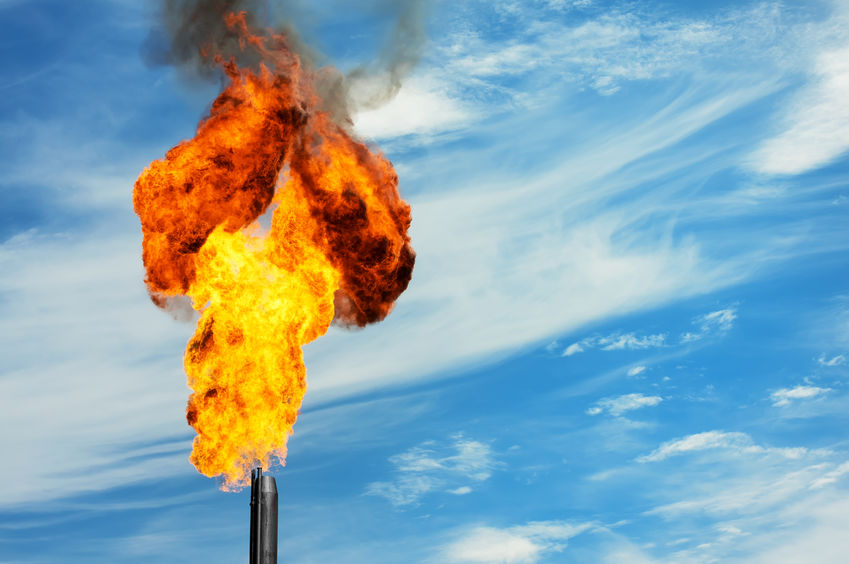
An energy policy expert, Prof. Ken Ife, says Nigeria is poised to turn decades of gas flaring from waste into wealth under its 2026–2030 National Development Plan.
The expert said this in an interview with the News Agency of Nigeria (NAN) on Wednesday in Lagos.
“For a long time, flare gas was simply burned off as waste. What this plan does is change the thinking.
“Flare reduction is no longer just about the environment; it is now part of Nigeria’s economic growth story,” the economist noted.
He explained that the shift was anchored on the Nigerian Gas Flare Commercialisation Programme (NGFCP), which is designed to end routine flaring by allowing private investors to capture and use gas that would otherwise be wasted.
According to him, the Nigerian Upstream Petroleum Regulatory Commission (NUPRC) approved 28 companies in late 2025 to develop 49 flare sites across the country.
According to him, the programme is expected to attract up to two billion dollars in private investment and capture between 250 and 300 million standard cubic feet of gas daily, turning pollution into revenue.
“This is about stopping waste and creating value at the same time.
“Instead of burning money into the air, we are putting it to work,” he said.
He said funding and infrastructure were critical to making the plan work, pointing to the Midstream and Downstream Gas Infrastructure Fund (MDGIF) created under the Petroleum Industry Act as a major driver of progress.
“The fund has already supported more than N287 billion worth of gas projects,” he said.
He noted that many of them were helping to connect flare sites to factories, power plants and regional markets.
Ife also cited a 500-million-dollar Afreximbank facility being used to close gaps in pipeline and gas-processing infrastructure.
To overcome long-standing pipeline shortages, he said the plan encourages the use of trucking for compressed and liquefied natural gas, often called virtual pipelines.
He explained, “This means gas can be processed at the flare site and moved straight to where it is needed.
“It speeds things up while permanent pipelines are being built.”
On monitoring and compliance, Ife said satellite-based systems now allow regulators to track flare volumes in real time, reducing the chances of under-reporting by operators.
He added that using flared gas for power generation could unlock more than three gigawatts of electricity for host communities and the national grid, while new plants were also coming on stream to convert gas into methanol for industrial use.
Ife said recent reforms had removed the financial incentive to flare gas, noting that flare penalties could no longer be written off as tax expenses.
“That change alone makes flaring a costly decision for operators,” he said.
Ife said sustained progress would depend on coordinated government support, investor-friendly policies and access to affordable financing.
He highlighted the Economic Development Incentive introduced under the 2025 Tax Reform Act, which offers tax credits for gas processing and utilisation projects, as a strong signal to investors.
Ife added that the decision to lower the domestic gas price to 2.13 dollars per million British thermal units strikes a balance between producers’ profitability and industries’ affordability.
“Nigeria is no longer just trying to stop gas flaring. It is learning how to build an economy around gas that was once wasted,” he added.
We’ve got the edge. Get real-time reports, breaking scoops, and exclusive angles delivered straight to your phone. Don’t settle for stale news. Join LEADERSHIP NEWS on WhatsApp for 24/7 updates →
Join Our WhatsApp Channel