
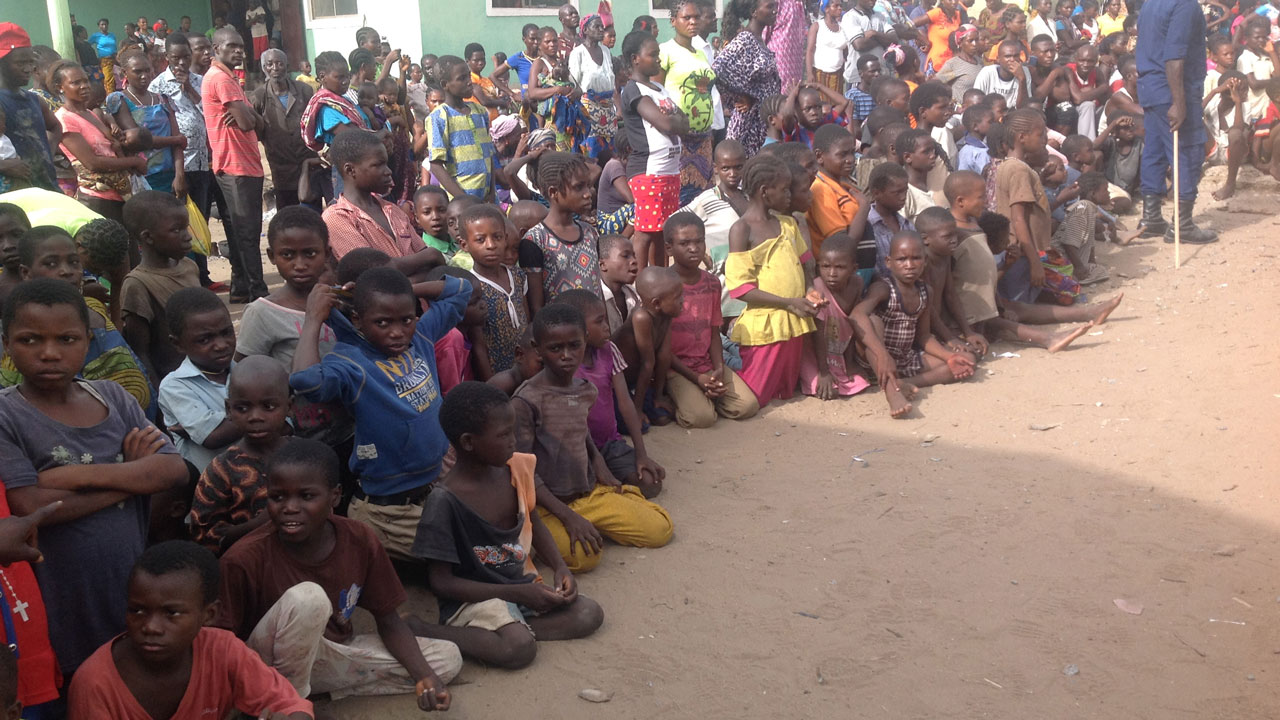
More than 3.7 million Nigerians are currently living in internal displacement, a stark indicator of the country’s deepening security and humanitarian challenges, the United Nations has said.
The United Nations Assistant Secretary-General and Resident and Humanitarian Coordinator for Nigeria, Mohamed Malick Fall, revealed the figure on Monday at the launch of the Internally Displaced Persons (IDP) Policy and State Action Plan on Durable Solutions (SAP) for Katsina and Zamfara States, held at Fraser Suites Abuja.
Fall noted that while displacement has long been associated with Nigeria’s Northeast, the Northwest is increasingly emerging as a major epicentre, driven by persistent insecurity, banditry, and communal conflicts.
He stressed that displacement is not merely about movement but about the loss of homes, livelihoods, education, and stability for millions of citizens.
“Displacement is a national development challenge. It affects economic productivity, social cohesion, and long-term stability,” he said.
Chairman of the Northwest Governors’ Forum and Katsina State Governor, Dikko Umaru Radda, said the growing numbers underscore the urgency of shifting from short-term humanitarian relief to durable, policy-driven solutions.
Radda announced the creation of a Social Development Unit within the forum’s secretariat to coordinate policy alignment, strengthen implementation, and promote peer learning among Northwest states.
“Internal displacement has evolved into a structural issue that requires long-term, coordinated strategies anchored on recovery, reintegration, and resilience,” he stated.
Zamfara State Governor, Dauda Lawal, described the displacement burden in his state as severe, citing the destruction of communities, abandoned farmlands, and prolonged disruption to education and healthcare services. He emphasised that durable solutions must prioritise security, livelihoods, and social stability.
UNDP Resident Representative, Elsie Attafua, highlighted the need for state-led recovery frameworks capable of helping displaced persons rebuild their lives and enabling host communities to absorb population pressures without further strain.
Stakeholders at the event agreed that the figure of 3.7 million displaced Nigerians reflects not only a humanitarian emergency but also a governance and development imperative that requires sustained collaboration among federal and state governments, development partners, and affected communities.
The launch of the IDP Policy and SAP for Katsina and Zamfara was described as a critical step toward coordinated, long-term solutions to reverse the cycle of displacement and restore dignity to affected populations.
We’ve got the edge. Get real-time reports, breaking scoops, and exclusive angles delivered straight to your phone. Don’t settle for stale news. Join LEADERSHIP NEWS on WhatsApp for 24/7 updates →
Join Our WhatsApp Channel