The Federal Competition and Consumer Protection Commission (FCCPC) has said it has begun monitoring fuel prices nationwide to ensure petrol marketers do not manipulate prices to the detriment of consumers.
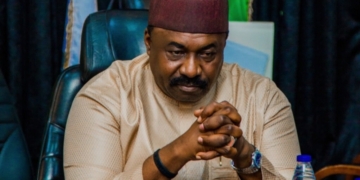
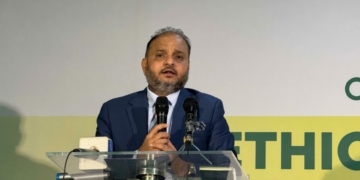
Executive vice chairman and chief executive officer of the Commission, Tunji Bello, disclosed this on Thursday while briefing State House correspondents during the Meet The Press briefing at the Presidential Villa, Abuja.
Bello said the Commission was closely observing developments in the petroleum market, particularly the possible effects of the ongoing United States–Israel–Iran war on prices in Nigeria.
According to him, petrol price movements often have a ripple effect on the prices of other goods and services.
“We are presently monitoring the situation now, the effect of the US, Israeli, Iran war as it affects prices in Nigeria,” he said.
“Petrol has far-reaching effects on some of the things we eat or take on a daily basis.”
The FCCPC boss explained that the Commission had already deployed monitors to track developments and ensure that marketers do not exploit consumers.
“If somebody has reduced ₦100 or ₦200 from the price and you are still selling your own for ₦1,500 per litre or ₦1,100 per litre, we should be able to ask you why you are doing that,” Bello said.
He added that the Commission was also collaborating with the Department of Petroleum Resources (DPR) in monitoring developments in the sector.
Bello also disclosed that airlines found to have fixed ticket prices during the Christmas period may be asked to refund passengers who paid inflated fares.
According to him, the Commission had already completed an investigation into the matter following complaints about sharp increases in ticket prices during the festive season.
He said ticket prices that were around ₦145,000 to ₦150,000 rose to between ₦500,000 and ₦700,000 during the period.
“We investigated the airlines during the Christmas period because what we found was that they colluded to fix prices at that time,” Bello said.
He noted that the Commission had already issued a report on the investigation and was currently considering penalties.
“What we are also considering is to look at a situation where we ask them to refund the excess to the passengers, which we assume that they exploited,” he added.
Bello, however, declined to mention the airlines involved, noting that the final report on the investigation would be released soon.
He also said that electricity supply and financial technology services account for a large share of consumer complaints nationwide.
Bello explained that electricity consumers frequently complain about issues such as metering, estimated billing and inadequate power supply.
The commission noted that many consumers on Band A tariffs, who are expected to receive up to 20 hours of electricity supply daily, often complain about not receiving the promised service.
The Commission said it works to ensure that electricity distribution companies deliver the level of service tied to the tariffs they charge.
He also disclosed that complaints involving fintech companies were common, particularly regarding online transactions and loan services.
The Commission disclosed that it had resolved over 9,000 complaints between March and August 2025, leading to the recovery of more than ₦10 billion for consumers.
The Commission, however, urged Nigerians to lodge complaints formally rather than express their frustration privately.
“Nigerians sometimes grumble more than they complain.“Once you complain, the system generates a code for the complaint, and we can begin to act on it.”
The FCCPC said it would continue engaging consumers, market associations and regulators to address unfair practices and protect consumer rights across different sectors of the economy.
We’ve got the edge. Get real-time reports, breaking scoops, and exclusive angles delivered straight to your phone. Don’t settle for stale news. Join LEADERSHIP NEWS on WhatsApp for 24/7 updates →
Join Our WhatsApp Channel