\The Independent National Electoral Commission (INEC) on Tuesday released the draft 2026 Regulations and Guidelines for Political Parties in preparation for the 2027 general elections.
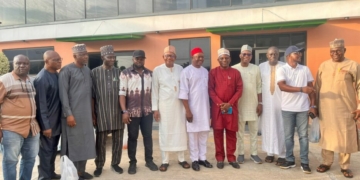
The unveiling was done by INEC chairman, Joash Amupitan, during a consultative meeting with political party leaders in Abuja, focused on reviewing party operations under the new Electoral Act 2026.
Amupitan explained that the review was necessary to align regulations with the updated legal framework. “Nigeria cannot navigate a 2027 horizon using a 2022 map,” he said, urging parties to pay particular attention to Clause 40(4) & (5), which governs election expenses for primaries and campaigns.
He noted that the guidelines had undergone a clause-by-clause realignment to ensure they are legally robust and operationally consistent with the new Act. Using data from the Political Party Performance Index (PPPI), developed with the Westminster Foundation for Democracy, INEC identified gaps between party constitutions and grassroots realities.
The draft regulations cover key aspects of political party operations, including registration, mergers, day-to-day management, and internal accountability. They aim to make party primaries transparent, curb imposition of unpopular candidates, and reduce voter apathy and litigation.
Amupitan added that the regulations set standards for peaceful campaigns, transparent financing, and provisions for deregistration of parties. They also embed measurable benchmarks for the participation of women, youth, and persons with disabilities.
He urged parties to view the draft not as a restriction but as a safeguard for democracy.
In response, the national chairman of the Inter-Party Advisory Council, Yusuf Dantalle, called on the National Assembly to urgently amend the Electoral Act 2026, arguing that certain provisions place undue pressure on political parties.
Dantalle specifically challenged the mandatory direct primaries, the submission of membership registers with National Identification Numbers (NIN) within a short timeframe, and the weakening of penalties for vote buying. He also demanded the immediate restoration of mandatory electronic transmission of results to the INEC Results Viewing (IReV) portal.
He reiterated IPAC’s call for the creation of an Electoral Offences Commission to ensure accountability and said the council had appealed to the National Assembly to revisit the Act to guarantee credible and transparent elections.
We’ve got the edge. Get real-time reports, breaking scoops, and exclusive angles delivered straight to your phone. Don’t settle for stale news. Join LEADERSHIP NEWS on WhatsApp for 24/7 updates →
Join Our WhatsApp Channel