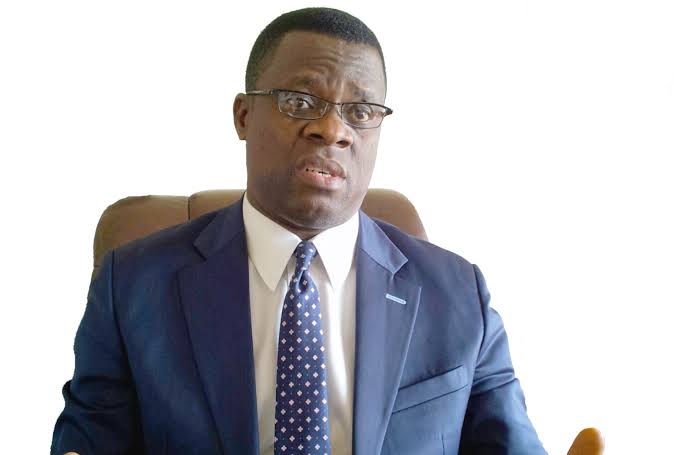
His admirers and genuine lovers of democracy see Barrister Mike Igini as one among a few Nigerians who can end the country’s search for credible elections at all levels.
But the powers to be, especially corrupt politicians and their rigging agents, dread and hate him. His antecedents in Edo and Akwa Ibom States, where he served as a resident electoral commissioner, showed that Igini is no pushover and has zero tolerance for electoral malpractices.
Igini has earned a national reputation as one of the most principled Nigerians to have served in the country’s electoral system, with a career defined by courage, transparency and a firm commitment to credible elections.
The activist hails from Delta State and received his university education at the University of Benin (UNIBEN), where he studied Law. His time on campus was marked by active involvement in student unionism, a period that helped shape his lifelong advocacy for justice, accountability and democratic ideals. After graduating, he proceeded to the Nigerian Law School, where he was called to the Nigerian Bar, formally beginning his legal career.
Before joining the electoral body, Igini worked across several organisations and platforms. He practised as a legal practitioner and was actively involved in civil society engagements, including pro-democracy advocacy and public affairs commentary. His exposure to governance and legal processes positioned him for public service. His major institutional role, however, came with his appointment to the Independent National Electoral Commission (INEC) as a resident electoral commissioner (REC).
Igini recently featured in an Arise News interview, saying he regretted spending 10 years with the electoral body.
Igini recalled the longstanding resistance to fair elections and the personal risks involved, including the killing of his colleague in Kano for attempting to “do the right thing.”
He said, “I spent over 30 years of my life, including 10 practical years in INEC, working to remove the history of our elections from the realm of frustration and pain, so we can give meaning and purpose to the ballot as the best means of expressing the will of the people in a democracy.
“To now find out that all that we did was in vain, that’s why I regret that I wasted my 10 years in service of the fatherland, because I’d have been a dead man by now.
“However, I would have been a dead man pursuing this cause; my colleague in Kano was killed because we wanted to do the right thing for Nigeria. His entire family was wiped out.”
During his time at INEC, Igini served in multiple states, notably Edo and Akwa Ibom, where he became widely known for his uncompromising stance on electoral integrity. As REC, he oversaw elections, monitored political party primaries and ensured strict compliance with the Electoral Act. His insistence on due process often brought him into direct confrontation with entrenched political interests, but it also earned him widespread respect among civil society and election observers.
One of the most defining moments of Igini’s service was his role in exposing and pursuing electoral fraud involving an INEC official. In Akwa Ibom State, he uncovered irregularities linked to a returning officer who had manipulated election results. Rather than allowing the matter to be swept under the carpet—a fate that often befalls such cases—Igini took decisive action. He ensured that the case was thoroughly investigated, documented and handed over for prosecution.
Through collaboration with law enforcement agencies and the legal system, the erring official was prosecuted and eventually convicted for electoral fraud. This marked a milestone in Nigeria’s electoral history, demonstrating that accountability within the system was possible. Igini’s insistence on following the case through to its logical conclusion sent a strong message that electoral misconduct would not go unpunished.
Throughout his decade-long service at INEC, Igini consistently advocated reforms aimed at strengthening transparency and public trust in elections. He spoke openly about the dangers of political interference and the need to protect electoral officers who uphold the law. His tenure was not just about conducting elections, but about redefining the standards of electoral governance in Nigeria.
Since leaving INEC, Igini has remained a prominent voice in national discourse, frequently weighing in on electoral reforms and governance issues. His experience and unwavering stance have positioned him as a credible authority on election management.
In a system often criticised for its flaws, Mike Igini stands out as proof that credible polls are achievable when integrity, courage and professionalism are allowed to thrive.
We’ve got the edge. Get real-time reports, breaking scoops, and exclusive angles delivered straight to your phone. Don’t settle for stale news. Join LEADERSHIP NEWS on WhatsApp for 24/7 updates →
Join Our WhatsApp Channel