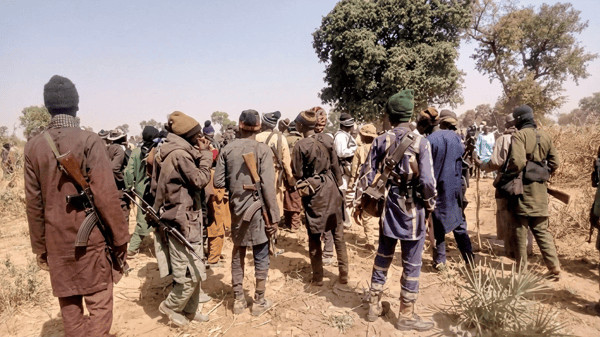
The 2026 Global Terrorism Index, released in March by the Institute for Economics and Peace, delivers a damning verdict on Nigeria’s security trajectory. The country now ranks fourth globally among nations most affected by terrorism up from sixth place previously.
With 750 recorded fatalities and 171 incidents in 2025 alone, representing a 43 to 46 per cent surge in terrorism-related deaths, the numbers tell a story that millions of Nigerians living in fear already know too well. Nigeria is losing the war against terror, and the current approach to national security is failing.
What makes this report particularly alarming is that Nigeria is the only country in the Sahel region to record an increase in both deaths and incidents. While neighbouring Burkina Faso, Mali and Niger countries that have endured their own brutal seasons of violence are showing signs of reduction, Nigeria is moving in the opposite direction. Attacks attributed to the Islamic State surged from 20 in 2024 to 92 in 2025.
That is not a marginal escalation. It is a near five-fold explosion in terrorist activity by a single group, happening under the watch of a government that repeatedly assures citizens it is winning the security battle.
The ink on the GTI report had barely dried before the country was confronted with fresh horrors. On Palm Sunday, gunmen descended on the Angwan Rukuba community in Jos North Local Government Area of Plateau State, killing no fewer than 40 people. The same night, 13 wedding guests were mowed down in Kahir village, Kagarko Local Government Area of Kaduna State. That attackers could strike soft targets on one of Christianity’s most sacred days and simultaneously massacred guests at a wedding celebration speaks to a depth of depravity and operational boldness that should send shivers through the corridors of power. The police in Plateau put the death toll at 14, a discrepancy that itself raises troubling questions about the reliability of official casualty figures in a country where underreporting of violence has become routine.
And these were not isolated incidents. In March, Maiduguri a city that had enjoyed relative calm after years of Boko Haram devastation was rocked by a series of suspected suicide bombings that killed at least 23 people and injured over 100 others. The blasts hit the busy Monday Market, the gate of the University of Maiduguri Teaching Hospital and an area near the post office. Maiduguri had not witnessed such coordinated carnage in years. It was a brutal reminder that the insurgency in the North-East, far from being degraded, retains the capacity to strike at the heart of civilian life whenever it chooses.
President Bola Tinubu has condemned these attacks in strong language, calling the perpetrators “heartless cowards” and vowing that their barbaric acts will not go unpunished. He has directed security agencies to intensify efforts to pursue the killers and commended the governors of Plateau and Kaduna states for their containment efforts.
In our view, these are appropriate responses. But Nigerians have heard such condemnations before after countless massacres in Benue, Zamfara, Niger, Katsina and elsewhere. Condemnation without consequence is just noise. What the country needs now is not more rhetoric but a fundamental shift in how the federal government confronts the terrorism menace.
Three things demand urgent attention. First, the president must accelerate the commencement of state police. The centralised policing model has proven woefully inadequate for a country of Nigeria’s size, diversity and complexity of security threats. Governors who understand the peculiarities of their terrains and communities are better positioned to coordinate rapid responses to attacks than a command structure headquartered in Abuja.
Second, the government must commit serious resources to technology-driven security. The president himself acknowledged that “our government is currently acquiring more sophisticated equipment to enable our security agencies to track and smash criminals in real time.” Nigerians want to see this promise materialise not as a talking point, but as operational reality. Satellite surveillance, drone technology, biometric databases and digital intelligence-sharing platforms are no longer luxuries. They are basic requirements for any serious counter-terrorism effort in 2026.
Countries with far fewer resources than Nigeria have deployed these tools to significant effect. There is no excuse for the continued reliance on outdated methods that leave communities exposed.
Third and this is perhaps the most difficult but most consequential step: the government must summon the political will to go after the sponsors and financiers of terrorism. It is an open secret that terrorism in Nigeria does not sustain itself. There are networks of funding, logistics and political protection that enable these groups to acquire weapons, recruit fighters and plan attacks with disturbing precision. Until the government is willing to follow the money trail and prosecute those at the top of the chain regardless of their political connections, ethnic affiliations or religious identity the cycle of violence will continue.
Arresting foot soldiers while their sponsors walk free in Abuja, in state capitals and across the country is not a counter-terrorism strategy. It is theatre.
Nigerians are tired. They want to go to their markets, attend their places of worship, celebrate their weddings and send their children to school without the paralysing fear that they may not return alive. That is not an extravagant demand. It is the most basic expectation any citizen can have of their government.
At number four on the Global Terrorism Index, Nigeria is broadcasting its dysfunction to the world, scaring away the foreign investment the economy desperately needs and condemning its own people to lives defined by grief and insecurity. The time for platitudes is over. President Tinubu must act decisively, urgently and without sentiment.
We’ve got the edge. Get real-time reports, breaking scoops, and exclusive angles delivered straight to your phone. Don’t settle for stale news. Join LEADERSHIP NEWS on WhatsApp for 24/7 updates →
Join Our WhatsApp Channel