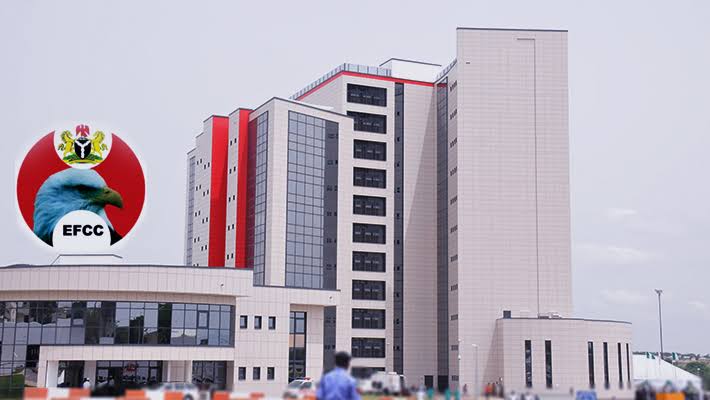
In March this year, the Economic and Financial Crimes Commission (EFCC) claimed to have recorded a significant milestone in concluding the testimony of its key witness, Assistant Commissioner of Police and lead investigator, Umar Babangida, in the ongoing trial over the controversial Mambilla hydropower project.
For the uninformed, the Mambilla Power trial involves a fraudulent $6 billion contract award and the misappropriation of more billions of Naira in public funds meant for the stalled 3,960MW hydroelectric project in Taraba State.
Former ministers of Power, Olu Agunloye and Saleh Mamman are currently on trial for their alleged involvement in the Mambilla case.
While Agunloye is facing trial for fraud, forgery, and disobeying presidential directives, Mamman faces charges for laundering money running into billions related to the same project.
The Mambilla Hydroelectric Power Project, intended to be Nigeria’s largest power project, has been plagued by delays for over 40 years.
Sunrise Power is in arbitration with Nigeria at the International Chamber of Commerce (ICC), Paris, France, alleging a breach of contract.
The company said it was awarded a $6 billion build, operate and transfer (BOT) contract in May 2003 by the Obasanjo administration but that the federal government repudiated the agreement.
Sunrise is asking for a compensation of $2.3 billion, claiming it had spent millions of dollars on financial and legal consultants before the contract was jettisoned.
Sadly, Nigeria’s trajectory is one replete with international contractual agreements that went awry and ended up in the court of arbitration.
Earlier this year, Nigeria secured a $6.2 million arbitration victory against a United Kingdom-based technology company over a disputed national e-procurement contract.
The dispute involved European Dynamics UK Ltd, which had filed claims against the Bureau of Public Procurement (BPP) over an electronic government procurement (e-GP) system project.
A statement issued by Kamarudeen Ogundele, special adviser to the president (communication and publicity), Office of the Attorney-general of the Federation and Minister of Justice, said the ruling relieved the country of potential financial exposure estimated at over $6.2 million (approximately N9.3 billion) in claimed payments and damages.
This newspaper also recalls that in 2010, the Ministry of Petroleum Resources signed a 20-year Gas Supply and Processing Agreement (GSPA) with the Process and Industrial Developments Ltd (P&ID), a British Virgin Islands firm, to build a gas processing plant to convert “wet gas” into electricity for Nigeria.
However, P&ID claimed Nigeria failed to supply the necessary gas, leading to a 2012 lawsuit. A London tribunal awarded P&ID $6.6 billion in 2017, which grew to over $11 billion with interest.
Fortunately, in October 2023, the English High Court ruled in favour of Nigeria, declaring the award was obtained by fraud and violated public policy.
Consultants Adewale Adetokunbo and Kareema Mohammed said one major lesson for the nation is to ensure that contracts entered into by the government are prepared by competent and experienced legal and other experts with an unimpeachable degree of integrity.
In the meantime, addressing the issue of dubious agreements signed by Nigerian political appointees and civil servants requires a multifaceted approach.
These agreements have more often than not, led to protracted legal battles with a heavy toll on the country’s financial resources and reputation damage.
The case of Ogun state suffice where three presidential jets were seized in France in 2024 following a court order obtained by a Chinese firm, Zhongshan Fucheng Industrial Investment over a contract dispute with Ogun State.
Government officials should be mandated to conduct thorough due diligence before entering into contract agreements .
This includes evaluating the credibility and track record of foreign companies involved.
Also, implementing a standard procedure for assessing the financial and legal standing of potential partners could deter corrupt practices.
As a newspaper, creating robust regulatory frameworks is also crucial. This involves revising laws governing public procurement and contracts to ensure transparency and accountability.
The establishment of clear guidelines on the process of entering into agreements with foreign entities can help mitigate risks associated with dubious contracts.
The Attorney General of the Federation and Minister of Justice, Lateef Fagbemi, speaking on the recent victory against the UK -based firm, said Nigeria can no longer be taken for granted.
But overall, it’s our considered opinion that the prevention of dubious agreements hinges on comprehensive reforms in governance and transparency.
By strengthening regulatory frameworks, enhancing due diligence, promoting transparency, and fostering civic engagement, Nigeria can take significant strides toward eradicating corruption and ensuring that public resources are managed ethically and efficiently.
These actions would not only protect the country’s interests but also bolster its international reputation, attracting more genuine and responsible foreign investments.
We’ve got the edge. Get real-time reports, breaking scoops, and exclusive angles delivered straight to your phone. Don’t settle for stale news. Join LEADERSHIP NEWS on WhatsApp for 24/7 updates →
Join Our WhatsApp Channel