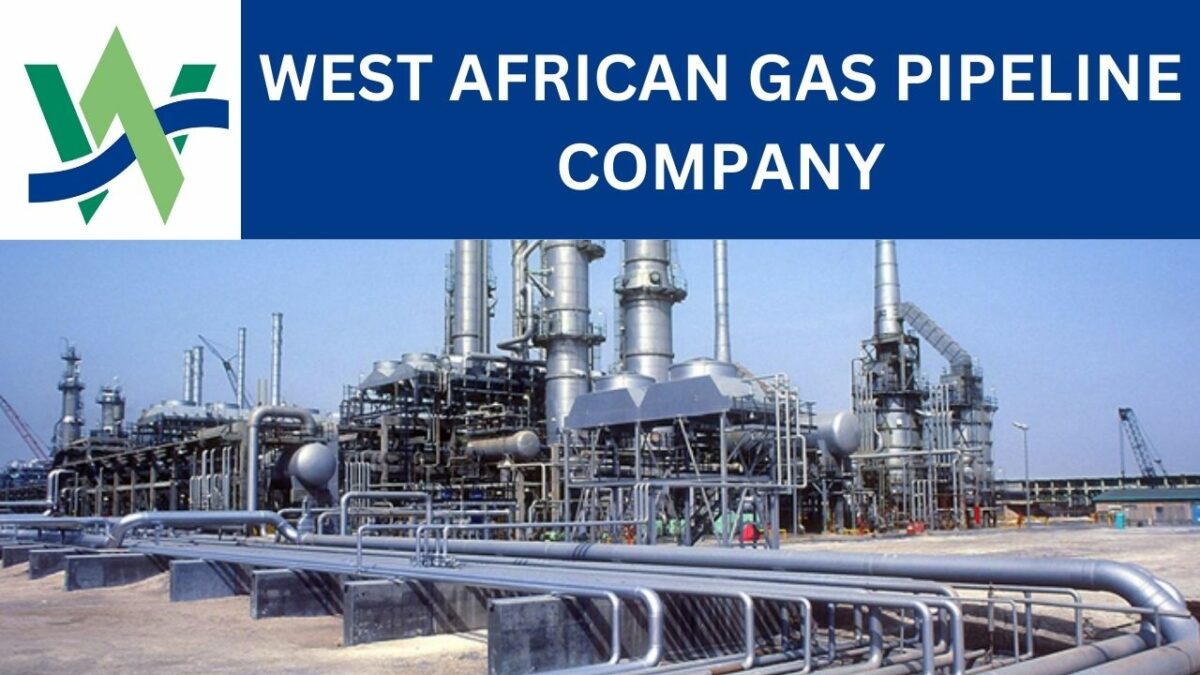
The West African Gas Pipeline (WAGP) recorded $32.8 million in corporate income tax remittances to state parties in 2025, a 156 per cent increase from 2024, and a 99.8 per cent supply reliability rate – the highest since 2011
The director general of the West African Gas Pipeline Authority (WAGPA), Chafari Kanya Hanawa, outlined these results in her opening address to the Committee of Ministers meeting in Abuja, hosted by Nigeria, on Friday.
Hanawa explained that WAGP was conceived “to harness Nigeria’s abundant gas resources for the benefit of the wider sub-region, while promoting cleaner energy supply, economic development, and stronger cooperation.”
Since open-access in 2012, “the volume of gas transmitted increased by more than 153 per cent, rising from 30 million MMBtu in 2011 to 80 million MMBtu in 2025,” making it the best year yet, driven by Nigerian supplies and Ghana National Petroleum Corporation as a shipper via a Gas Transportation Agreement with WAPCo. The Takoradi-Tema project enabled reverse flow from Takoradi to Tema.
“These are not mere claims; they are firmly substantiated by operational performance and financial returns,” Hanawa said. WAPCo’s 2024 remittance exceeded $12 million – a first since 2011 – revised to $13.8 million after a joint 2025 tax assessment, with 2025 totals at $32.8 million.
These show “shared benefits generated by the WAGP for the State Parties, in addition to broader economic and environmental advantages”, the DG stressed.
On operations, the pipeline hit “99.8 per cent reliability rate recorded in 2025,” with WAGPA to ensure it continues; 2026 throughput “may well surpass the 2025 level” if trends hold.
Hanawa recognised NNPC Limited’s executive vice president for Gas and New Energy, Olalekan Ogunleye, for support, and noted upgrades like midline compressors.
Despite these achievements, Hanawa said that challenges included amending the WAGP Act in Ghana and Nigeria “to give WAGPA the powers to license all shippers.”
Togo completed this in February-March 2026, after Benin in 2023. Other issues are “increased gas supply to meet growing demand” and payments affecting WAPCo’s Pipeline Development Plan (PDP), adding that WAGPA and WAPCo are reviewing the PDP for projects like the African Atlantic Gas Pipeline.
As part of 2026 plans, WAGPA will convene “a workshop to assess the operations of the WAGP since 2011,” bringing stakeholders to examine opportunities; outcomes go to ministers.
Hanawa requested Touray’s support to resolve challenges in renewing WAGPA officials’ ECOWAS laissez-passer, “notwithstanding the clear legal basis of the WAGP Authority under the WAGP Treaty.
Article IV, section 2-6(3) of the treaty states that “The Director General and all staff of the WAGP Authority who report directly to the Director General shall, in the territory of each of the State Parties, have such privileges and immunities as are provided under the ECOWAS General Convention on Privileges and Immunities of 22 April 1978′.”
Hanawa said the meeting provided “a valuable platform for reviewing progress, addressing pressing issues.”
Also speaking, representative of the ECOWAS Commission, Arkadius Koumoin, ECOWAS has thrown its full weight behind expanding the WAGP, reaffirming it as a vital pillar of regional integration and pledging comprehensive support to optimise and grow this strategic asset.
Koumoin, urged stakeholders to prioritise “consolidation, optimisation, and expansion” over mere preservation during remarks at a key ministerial meeting.
“The future of WAGP cannot be limited to preservation alone,” he stated, emphasising ECOWAS’s commitment across institutional, legal, regulatory, political, and strategic fronts.
He said the Commission will work with state parties, WAGPA, WAGP operators, and others to boost long-term viability, including extension studies tied to the evolving African-Atlantic Gas Pipeline (AAGP).
According to him, this builds on a 2022 MOU with Morocco and Nigeria’s NNPC Limited, positioning WAGP within technical and steering committees for the Nigeria-Morocco initiative.
Koumoin commended the Committee of Ministers, Boards of Governors, management, and stakeholders for sustaining the pipeline since inception.
He noted that more than infrastructure, WAGP exemplifies ECOWAS’s vision: opening gas markets, balancing energy resources, enhancing security, powering electricity and industry, building investor confidence, and deepening economic interdependence.
We’ve got the edge. Get real-time reports, breaking scoops, and exclusive angles delivered straight to your phone. Don’t settle for stale news. Join LEADERSHIP NEWS on WhatsApp for 24/7 updates →
Join Our WhatsApp Channel