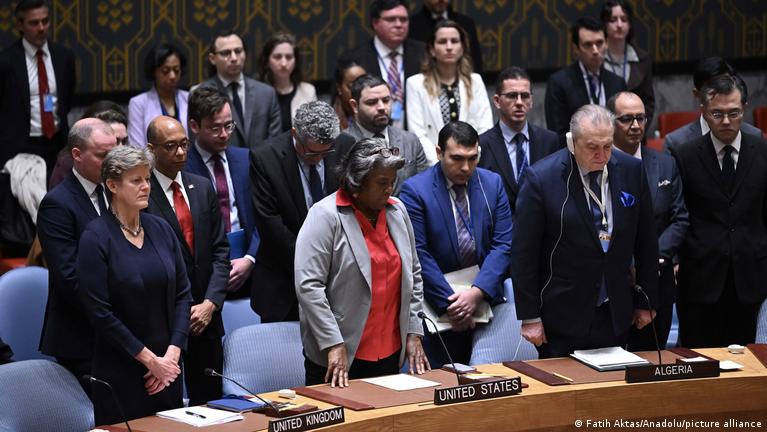
Calls for reforming the United Nations Security Council are gaining renewed global momentum as major powers and developing nations push for broader representation in the world’s most influential multilateral body.
The renewed debate comes amid rising geopolitical tensions in the Middle East and increasing concerns over the effectiveness of existing global governance structures in addressing contemporary security challenges.
Permanent members of the Security Council, including Russia and China, have repeatedly advocated the expansion of the council’s membership to include stronger representation from Africa, Asia and Latin America.
Both countries argue that the current structure, largely shaped by post-World War II realities, no longer reflects present-day geopolitical dynamics and unfairly excludes Africa from permanent participation in global security decision-making.
Moscow, however, has opposed the bid by Japan and Germany for permanent seats, insisting that Western countries are already overrepresented within the council.
China has also maintained strong reservations over Japan’s candidacy, citing unresolved historical concerns linked to Japan’s wartime actions during the Second World War and arguing that countries seeking permanent membership must demonstrate full commitment to the principles of peace and historical accountability.
Speaking on the renewed calls for reform, former Nigerian diplomat and international affairs analyst, Ambassador Suleiman Dahiru, said the exclusion of Africa from permanent membership has become increasingly difficult to justify in modern global politics.
According to him, “Africa remains one of the regions most affected by decisions of the Security Council, yet it has no permanent voice in the chamber. That imbalance undermines the credibility of the institution.”
Dahiru also argued that Nigeria remains one of Africa’s strongest contenders for permanent membership because of its contributions to peacekeeping operations and regional diplomacy.
“Nigeria has played critical roles in peacekeeping and conflict resolution across Africa for decades. If Africa is eventually granted permanent seats, Nigeria naturally stands among the leading candidates,” he said.
Nigeria formally intensified its campaign for a permanent seat during the 80th Session of the UN General Assembly in September 2025, when Vice President Kashim Shettima declared that Abuja was seeking one of the proposed African seats.
He described Nigeria as a “natural candidate” based on its population, diplomatic influence and longstanding role in promoting peace and stability on the continent.
The growing debate over Security Council reform is also unfolding ahead of the election of a new Secretary-General of the United Nations. Public hearings for candidates are expected to begin on April 21, 2026, while the election itself is scheduled for July 2026.
The tenure of current Secretary-General António Guterres will expire on December 31, 2026, after nearly a decade in office.
We’ve got the edge. Get real-time reports, breaking scoops, and exclusive angles delivered straight to your phone. Don’t settle for stale news. Join LEADERSHIP NEWS on WhatsApp for 24/7 updates →
Join Our WhatsApp Channel