The Federal Government has said Nigeria’s long-delayed Digital Switchover (DSO) programme will unlock over N605 billion in advertising revenue and generate more than $1 billion from digital spectrum auctions as the country intensifies efforts to complete its migration from analogue to digital broadcasting.
Director-General of the National Broadcasting Commission, Charles Ebuebu, and Managing Director/Chief Executive Officer of NigComSat, Jane Egerton-Idehen, disclosed this during a press conference in Abuja on Monday.
The officials said the Federal Government’s renewed “Big Picture” strategy is designed to create a commercially sustainable, technologically inclusive and nationwide broadcasting ecosystem capable of delivering universal digital access.
According to the NBC, the nationwide launch of the new digital broadcasting framework has been scheduled for 17 June 2026, while the final analogue switch-off date has been fixed for 31 December 2028.
Ebuebu said the DSO programme would unlock Nigeria’s estimated N605.2 billion advertising market by enabling verifiable audience measurement systems that improve broadcaster visibility and advertiser confidence.
He explained that the release of the 700MHz and 800MHz digital dividend spectrum is projected to generate more than $1 billion in auction proceeds, with the revenue expected to support broadband expansion and digital infrastructure development nationwide.
The NBC also noted that Nigeria’s creative economy, which currently contributes about N5 trillion to the Gross Domestic Product and employs more than 4.2 million people, would benefit significantly from the digital migration process.
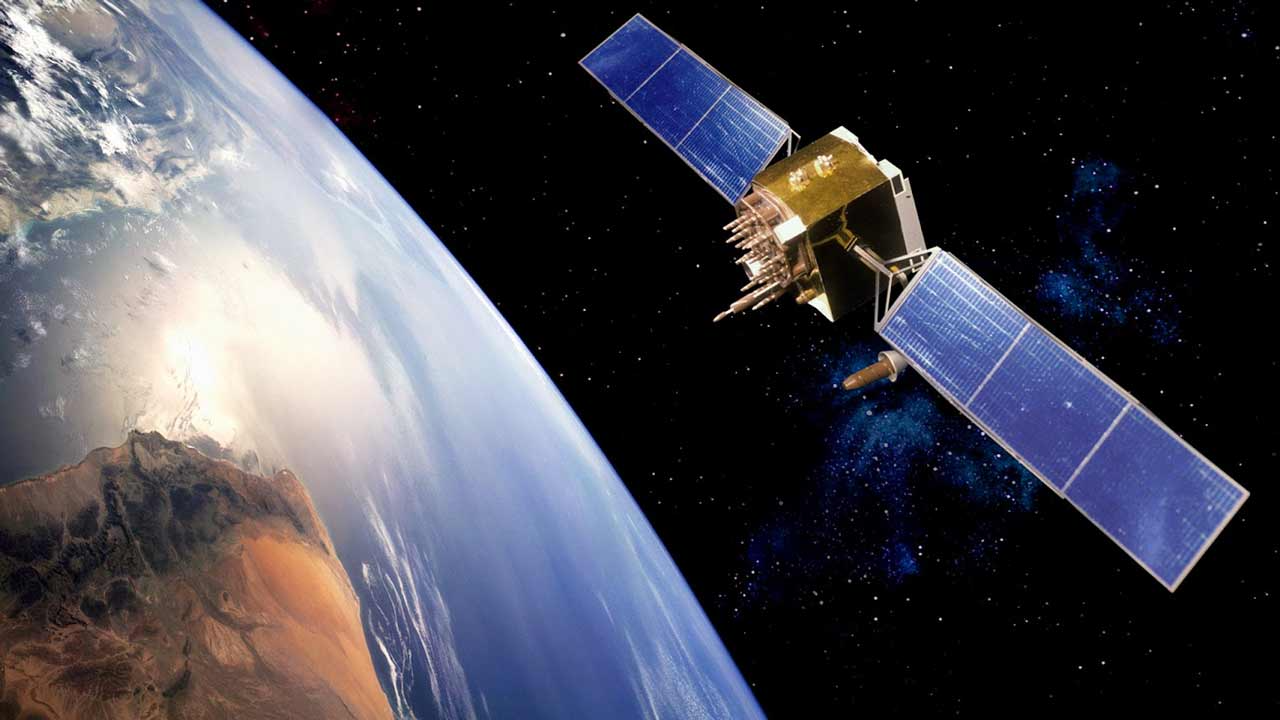
According to the Commission, the new framework would create a modern distribution platform capable of exporting Nigerian content across West Africa using NigComSat satellite infrastructure.
The NBC cited UNESCO and Deloitte benchmarks indicating that every naira invested in local content production could generate a 2.5 times multiplier effect on the economy.
Defending the adoption of a hybrid broadcasting framework, Ebuebu said Nigeria could no longer depend solely on terrestrial television infrastructure to achieve universal digital access.
The revised DSO strategy combines Digital Terrestrial Television (DTT), Direct-to-Home satellite (DTH) and Internet Protocol (IP)-based streaming services.
According to the NBC DG, the new approach aligns with the 2012 DSO White Paper, which recognised both terrestrial and satellite broadcasting standards as part of a converged national broadcasting architecture.
“The strategic mistake has been to treat DSO as a contest between technologies rather than as a national access problem,” he said.
The Commission dismissed affordability concerns, insisting that the proposed FreeTV platform would not require monthly subscription payments for basic access.
Ebuebu said open-standard DVB-S2 decoders are already available in Nigerian markets for between ₦15,000 and ₦25,000.
He added that discussions are ongoing regarding subsidy schemes and financing support for low-income households to ease the transition process.
According to NBC, the platform is expected to offer access to more than 100 television channels, including indigenous-language channels covering multiple Nigerian ethnic groups.
The Commission said the DSO programme would create substantial opportunities for local set-top box manufacturers, assemblers, and distributors, given the expected demand for millions of receiving devices nationwide.
Ebuebu added that broadcasters joining the FreeTV platform would benefit from an 18-month free carriage window funded through government intervention.
He explained that the arrangement would provide broadcasters with nationwide visibility and access to verifiable audience data through the proposed GARB audience measurement system.
“That period allows us to create visibility and build a viable marketplace before introducing broader commercial structures,” an NBC official explained.
Addressing concerns over the lifespan of Nigeria’s current broadcast satellite infrastructure, Jane Egerton-Idehen disclosed that the existing satellite is scheduled for replacement in 2028.
She said procurement and technical planning for the replacement project are already underway.
According to her, two international vendors — TELSA Linear Space and IAI — were selected after a two-year evaluation process.
Egerton-Idehen added that contingency plans have been put in place to ensure uninterrupted broadcasting services even if replacement timelines shift.
“We don’t want subscribers or viewers to worry about technology. That is our responsibility,” she said.
She also explained that the replacement satellite would maintain the same orbital slot, meaning viewers would not need to reposition dishes or replace receiving equipment during the transition.
We’ve got the edge. Get real-time reports, breaking scoops, and exclusive angles delivered straight to your phone. Don’t settle for stale news. Join LEADERSHIP NEWS on WhatsApp for 24/7 updates →
Join Our WhatsApp Channel