
The Nigerian Communications Commission (NCC) has commenced a comprehensive review of interconnection rates in the telecommunications sector, a move that industry stakeholders say could reshape competition, investment and pricing across Nigeria’s telecom market.
The review, expected to be the first major reassessment of the framework, is taking place against a backdrop of rising concerns that legacy interconnection fees no longer reflect the current operating environment, profoundly affected by soaring inflation, a weakened naira, 5G adoption, and changing customer preferences.
The interconnection rates known as Mobile Termination Rates (MTRs), are the wholesale charges telecom operators pay one another for completing calls across different networks. Although the charges are not paid directly by subscribers, industry experts note that they influence retail call and SMS tariffs, competition and network investments.
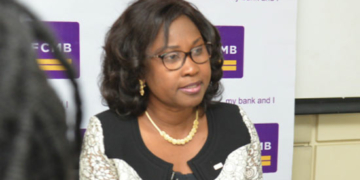
Speaking in Lagos during a stakeholders consultative forum, Head of Competition and Tariff Unit at the NCC, Omotayo Mohammed, described the exercise as a critical regulatory intervention aimed at aligning the commission’s framework with developments in the telecommunications ecosystem.
Mohammed said, “For regulation to remain effective in a fast-moving market, our frameworks must evolve in step with it. She added that the review is being conducted under the provisions of the Nigerian Communications Act to ensure that tariffs remain cost-reflective, fair and non-discriminatory.
According to the NCC, the current interconnection regime was established in 2018, while the last amendment in 2022 focused only on international termination rates. Since then, operators have had to contend with rising energy costs, inflationary pressures, foreign exchange volatility and significant investments in next-generation technologies.
A partner at KPMG, Wole Adenekan, said a cost-reflective pricing structure is essential for sustaining investment and competition in the sector.
According to him, “A mis-set MTR can enable dominant operators to foreclose smaller competitors through high termination barriers. A cost-reflective rate supports a level competitive playing field.”
He added that rates set too low could discourage infrastructure investment, while excessive charges would ultimately be transferred to consumers through higher retail prices.
Adenekan further observed that since the last review, substantial naira depreciation, inflationary pressures, escalating energy costs, and rapid technological advancements have fundamentally reshaped operators’ cost
structures.
He also pointed out that the deployment of 5G networks, the integration of artificial intelligence and Internet of Things solutions, coupled with intensifying competition from over-the-top platforms, have significantly transformed both network utilisation and revenue-generation models.
While industry operators welcomed the review, arguing that sustainable pricing remains critical to maintaining service quality and expanding digital infrastructure. Chairman of the Association of Licensed Telecommunications Operators of Nigeria (ALTON), Gbenga Adebayo, said the sector has attracted significant investments following recent tariff adjustments.
Adebayo stated, “In 2025, the sector recorded total capital expenditure of approximately N2.13 trillion, while planned capital expenditure for 2026 stands at approximately N1.86 trillion. All thanks to the tariff increase.” He added that operators remain committed to expanding network infrastructure and improving service delivery across the country.
During the review, operators must submit comprehensive financial and operational records, including data on revenues, costs, profitability, capital expenditures, service standards, and subscriber usage.
Additionally, the NCC and KPMG will conduct a comparative analysis of Nigeria’s regulatory framework against those of South Africa, Kenya, Indonesia, and Malaysia before finalising their recommendations.
Stakeholders say the broader significance lies in whether the review succeeds in balancing consumer protection with the financial sustainability of an industry that underpins Nigeria’s digital economy.
While for telco consumers, the outcome of the exercise could influence future call and SMS pricing.
Even as telcos are investing billions of naira annually in network upgrades and expansion, the stakeholders aims that a transparent and cost-reflective interconnection regime will be essential for sustaining growth, competition and service quality in the years ahead.
We’ve got the edge. Get real-time reports, breaking scoops, and exclusive angles delivered straight to your phone. Don’t settle for stale news. Join LEADERSHIP NEWS on WhatsApp for 24/7 updates →
Join Our WhatsApp Channel