The G7 is considering a proposal to reduce dependence on a single supplier of rare earths to below 60 per cent by 2030 and eventually to 50 per cent, as it seeks to diversify critical mineral supply chains currently dominated by China.
The group says it has launched 195 critical minerals initiatives since early 2026, representing €64 billion ($73.5 billion) in investments, equity stakes and offtake agreements.
Under the current arrangement African producers could attract additional Western investment, but concerns remain over local value addition, pricing mechanisms and Africa’s role in shaping future supply chains.
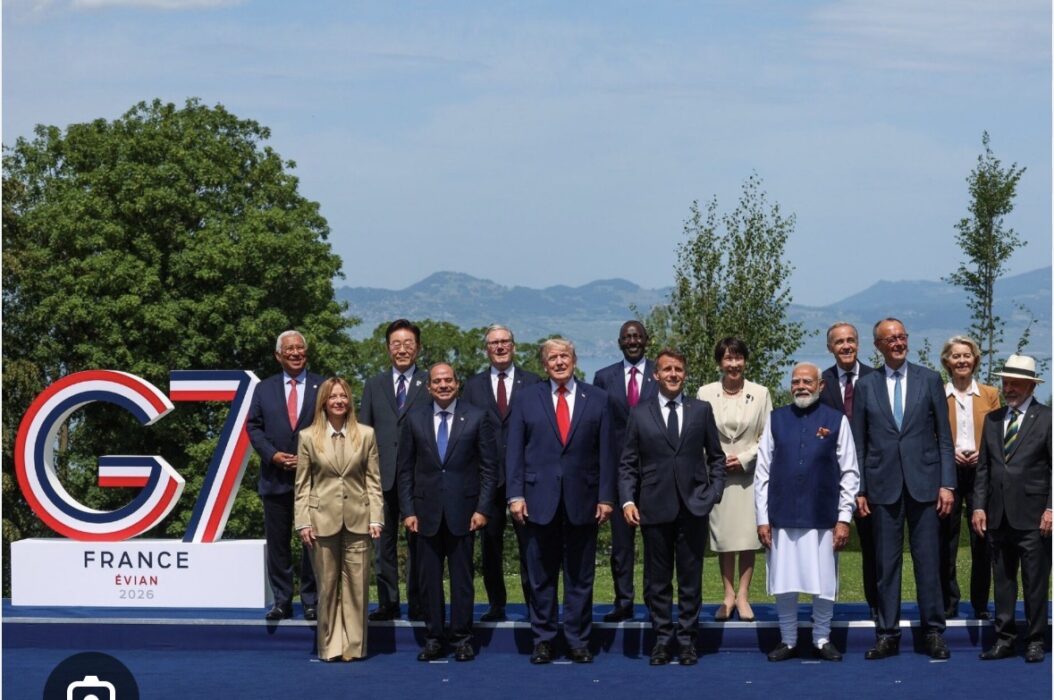
The G7 concluded three days of talks on June 17 and issued a new declaration focused on securing critical mineral supply chains. The group, which represents seven economies accounting for roughly 40 per cent of global GDP, outlined a more ambitious strategy than previous declarations and raised important questions about the implications for global supply chains, particularly in Africa.
The summit, held in Evian, brought together leaders from France, Germany, Canada, the United States, Italy, Japan and the United Kingdom, as well as partner countries including Australia, which supported the declaration on critical minerals.
Compared with the declaration adopted last year in Canada, the most significant development involves the establishment of initial diversification targets for supply chains that currently depend heavily on China.
Although the declaration does not explicitly name Beijing, the G7 acknowledged its dependence on a single supplier for rare earths and committed to reducing that share to below 60% by 2030, with a longer-term objective of reaching 50% as soon as possible.
China currently controls more than 60% of global rare earth supply and holds most of the world’s refining capacity. The G7 expects to establish similar targets for other critical minerals before the end of this year.
The declaration also highlighted plans to support local value creation, develop strategic stockpiles, accelerate recycling activities and introduce trade-related tools such as quotas and price floors. In addition, the group announced stronger traceability measures and launched a “G7 Critical Minerals Resilience and Production Alliance.”
The measures largely extend initiatives that G7 members have already pursued individually through their critical minerals security strategies. However, the declaration could further organize global supply chains around targeted partnerships with producing countries, including African nations.
The G7 said it had accelerated its efforts in this area and launched 195 initiatives since the beginning of 2026. These initiatives represent €64 billion, or approximately $73.5 billion, in investments through equity participation and offtake agreements.
Several Western-backed investments in Africa have already emerged during this period. In the Democratic Republic of the Congo, the entry of Orion Critical Minerals, a consortium backed by Washington, into Glencore’s copper and cobalt assets attracted significant attention.
In Namibia, Japan has expanded its presence in the Lofdal rare earth project, where it already holds an ownership stake. Elsewhere, some projects have begun shifting strategically toward Western supply chains. Developers of the Longonjo rare earth project in Angola and the Songwe Hill rare earth project in Malawi are targeting the U.S. market.
The issue of local value creation also deserves close attention because several African governments have made downstream processing and local beneficiation conditions for accessing mineral resources. However, the G7 declaration remains vague regarding the practical scope of this commitment, particularly concerning whether partner countries that contribute to mineral supply chains will benefit from these policies.
The proposal to establish minimum prices for critical minerals has also gained momentum in recent months. The United States has largely championed the initiative as a response to what Western governments describe as a Chinese strategy of keeping prices low to strengthen the competitiveness of Chinese companies relative to Western rivals.
Supporters of the proposal argue that a price-floor mechanism could improve the economic viability of mining projects located outside Chinese-controlled supply chains, including projects in Africa. However, implementation remains uncertain because the declaration only lists the proposal among options under consideration.
This cautious approach reflects reports from Reuters earlier this week indicating that disagreements persist around a U.S. proposal based on an artificial intelligence model developed by the Pentagon.
Attention will now shift to the implementation of the G7’s commitments, particularly those involving Africa, which holds roughly 30% of global critical mineral reserves. As critical mineral security becomes an increasingly important geopolitical issue, African countries will need to advance and protect their own strategic interests.
We’ve got the edge. Get real-time reports, breaking scoops, and exclusive angles delivered straight to your phone. Don’t settle for stale news. Join LEADERSHIP NEWS on WhatsApp for 24/7 updates →
Join Our WhatsApp Channel