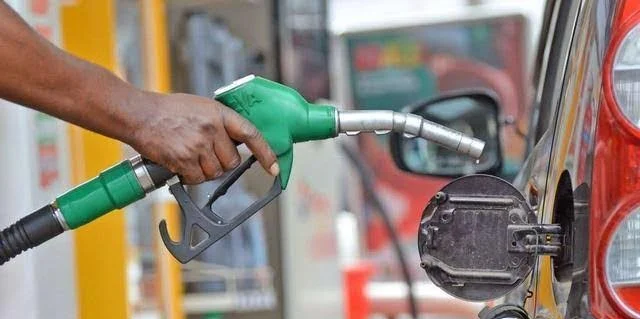
Nigeria’s fuel market delivered its latest blow on Thursday, 16 July 2026. Fuel importers notified petroleum marketers across the country that depot prices of Premium Motor Spirit would rise from N1,230 per litre to N1,350 per litre, effective the following morning. Pump prices of between N1,380 and N1,400 per litre are the anticipated retail consequence. For millions of Nigerians already strained beyond endurance, this is not a market signal. It is a sentence.
The trigger is external and, in part, genuine. The resumption of US-Iran hostilities over the Strait of Hormuz has disrupted global tanker traffic through a corridor that carries roughly twenty-seven per cent of the world’s maritime oil trade. Ocean freight rates have surged sharply. According to data from the Major Energies Marketers Association of Nigeria, the estimated import parity price of petrol moved from N1,134 per litre on 9 July to N1,182 per litre by 15 July — a rise of forty-eight naira in less than a week. In a fully deregulated downstream market, that external shock lands on the Nigerian consumer with a speed that no existing cushion can interrupt.
The structural irony of the moment deserves to be named plainly. Nigeria is an oil-producing nation that cannot adequately refine the oil it produces. The Dangote Refinery, presented across the deregulation debate as the domestic anchor that would eventually shield Nigerians from precisely this kind of import-cost volatility, switched its pricing template from naira to US dollars on 13 July 2026, citing a mismatch between naira-denominated crude receipts and dollar-denominated costs. That decision invalidated all existing naira proforma invoices with immediate effect and pushed depot prices at several locations up by as much as N113 per litre overnight. The refinery that was to be the answer has become, at least for this moment, part of the question.
The macro-economic setting in which this shock arrives is one of studied fragility. The National Bureau of Statistics reported on 15 July that headline inflation eased a marginal two basis points to 15.91 per cent in June 2026. The relief in that number, such as it is, conceals a more painful truth. Food inflation, which governs the survival calculus of the poor, rose on a month-on-month basis to 3.75 per cent in June, up from 2.98 per cent in May. In Kogi State, year-on-year food inflation reached 53.02 per cent. These are not abstractions. A petrol price shock of this magnitude — flowing inevitably into transport fares, farm-to-market logistics, the generator fuel costs of hospitals and businesses, and the daily operating expenses of every roadside trader — will reopen inflationary wounds that monetary tightening has only partially closed. The Central Bank, whose Monetary Policy Committee convenes on 20 and 21 July, will find itself defending a position against a supply-side pressure that interest rates were never designed to address.
The human geography of this crisis is familiar and unrelenting. The keke driver raises his fare. The tomato seller calculates what it now costs to bring her produce from farm to market. The district hospital stretches its generator budget further into the drugs allocation. The parent quietly removes one course from the family’s dinner and calls it economy. These cascades are not hypothetical projections. They are the documented lived experience of every fuel price shock in Nigeria’s post-subsidy history. Government should not require reminding. It should be governing as though it remembers.
NNPC Retail deserves acknowledgement for reducing its pump price to N1,110 per litre on 13 July — a welcome gesture of market solidarity at a moment of rising depot costs. The NMDPRA also issued fresh import licences for the third quarter of 2026 to a range of marketers, signalling competitive intent. But these measures address the surface without reaching the architecture. Nigeria remains structurally exposed: an energy-producing nation whose consumers absorb every gyration of the global crude market because domestic refining capacity remains insufficient and the exchange rate transmits foreign price shocks into local purchasing power with brutal fidelity.
We therefore call on the Federal Government to act across several fronts simultaneously, because the crisis is itself simultaneous. The NMDPRA must publish weekly landing cost data transparently, so that depot price adjustments can be interrogated against verified input costs and profiteering distinguished from genuine pass-through. NNPC must sustain its current retail position and consider absorbing a portion of the import cost shock rather than transferring it whole to Nigerians who have already endured subsidy removal, naira devaluation, and multiple rounds of price adjustment since 2023. The Federal Ministry of Finance and the Central Bank must urgently revisit the naira-for-crude arrangement with Dangote Refinery to restore a degree of domestic pricing insulation. The refinery’s dollar-pricing decision is commercially rational from its own perspective. It is nonetheless a sovereign policy problem that demands a sovereign policy response.
Nigeria’s deregulation of the downstream petroleum sector was correct in principle. Markets, properly supervised, allocate resources more efficiently than subsidies manage. But deregulation without a social protection floor, without transparent pricing mechanisms, and without functioning domestic refining capacity is not reform. It is exposure dressed in the language of reform. The N1,350 depot price is not merely a market event. It is a message to every Nigerian who has waited, with thinning patience, for the cost-of-living crisis to turn a corner. The government owes them more than market forces. It owes them governance.
We’ve got the edge. Get real-time reports, breaking scoops, and exclusive angles delivered straight to your phone. Don’t settle for stale news. Join LEADERSHIP NEWS on WhatsApp for 24/7 updates →
Join Our WhatsApp Channel