| Committee gives IG 48 hours to produce ‘fake’ DG | Forged State House letter gave phantom agency recognition – Accountant-General
The House of Representatives Ad Hoc Committee investigating the controversial Presidential Foreign Investment Promotion Council (PFIPC) has uncovered 29 documents suspected to have been forged in what lawmakers described as an elaborate scheme to confer legitimacy on the non-existent agency.
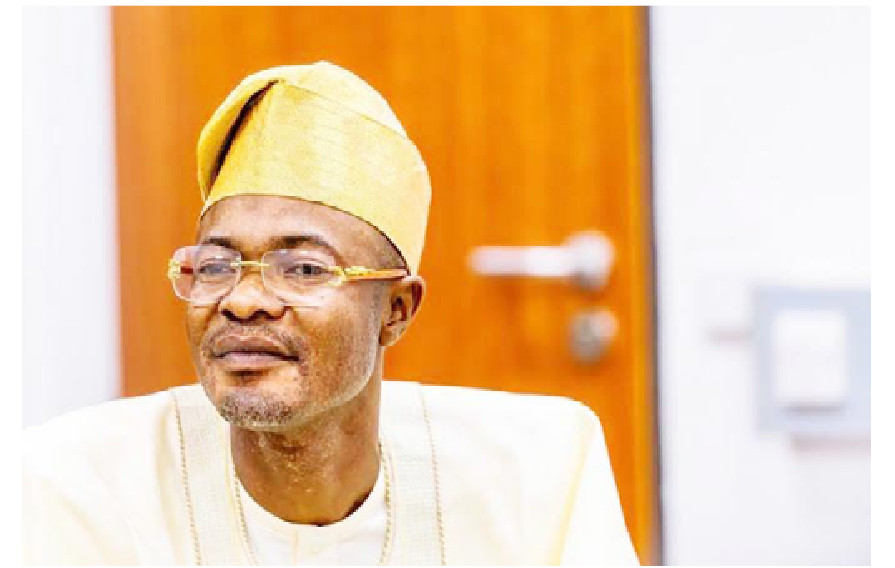
The committee also gave the Inspector-General of Police (IGP), Olatunji Disu, a 48-hour ultimatum to produce the self-acclaimed director-general of the council, Adeyemi Adeniyi, before lawmakers to answer questions over the alleged fraud.
Chairman of the committee, Hon. Yusuf Gagdi (APC, Plateau), disclosed the development on Monday during the panel’s resumed investigative hearing, saying the scale of the alleged forgery had become far more extensive than initially thought.
“So, it is not only a letter that was suspected to be forged? We are dealing with documents that include what is said to be a forged Act of the National Assembly in an attempt to establish a fake agency,” Gagdi said.
He added that investigators had identified about 29 allegedly forged documents, including purported approvals from the State House, the Office of the Secretary to the Government of the Federation (SGF), the Office of the Head of the Civil Service of the Federation, the Federal Ministry of Finance and several other government institutions.
According to him, representatives of many of the affected institutions had already appeared before the committee and categorically disowned the documents attributed to their offices.
The committee subsequently directed its Clerk, Baba Kaigama, to formally notify the Inspector-General of Police to ensure Adeyemi appears before the panel by noon on Wednesday.
Explaining the decision, Gagdi said the committee could no longer proceed without hearing directly from the suspect.
“This committee clearly needs the suspected DG to appear before this committee. People’s names are involved. People’s integrity is involved. Institutional names are involved. Institutional integrity is involved.
“It is not an option now. We will need him here to confirm some documents for us in such a way that will not undermine our investigation to enable us to submit our report on time,” he said.
He stressed that while the committee wanted answers, it had deliberately refrained from compelling the police to divulge information that could compromise ongoing criminal proceedings.
“We are avoiding a situation whereby they will be pushed to make statements that will undermine their ongoing investigation,” Gagdi said, adding that the House investigation would continue independently and could make recommendations for further action by relevant security agencies.
The directive followed testimony by the Nigeria Police Force confirming that petitions from the Office of the Chief of Staff to the President triggered criminal investigations into Adeyemi for allegedly impersonating the director-general of both the Presidential Economic Advisory Council (PEAC) and the Presidential Foreign Investment Promotion Council.
Representing the IGP, Assistant Commissioner of Police Bashir Abdullahi told lawmakers that the police had already filed an eight-count charge against Adeyemi before the Federal High Court.
“The Nigerian Police Force investigated part of this case late last year and filed eight charges before a Federal High Court. The case is ongoing,” he said.
Abdullahi disclosed that the suspect had been arrested and arraigned, but cautioned against disclosures that could prejudice ongoing investigations and judicial proceedings.
“Wedon’t want to say things that are under investigation. It is definitely going to prejudice the ongoing investigation and make people have opinions that may prejudge the outcome of an investigation or judicial decision,” he stated.
The police further confirmed receiving a petition dated October 17, 2025, from the Office of the Chief of Staff to the President alleging that Adeyemi falsely presented himself as the director-general of both the Presidential Economic Advisory Council and the Presidential Foreign Investment Promotion Council.
According to the police, the petition alleged that Adeyemi used the purported office to obtain accommodation within the Federal Secretariat, sought approval to recruit about 300 personnel, attempted to secure a N1.3 billion allocation in the 2026 Appropriation Act and planned to organise a World Investment Summit through the non-existent agency.
During the hearing, the committee also compared signatures on documents purportedly issued from the Office of the Chief of Staff to the President with authentic official correspondence obtained by investigators.
Asked whether the signatures corresponded, ACP Abdullahi replied: “They are not the same.”
The lawmakers said the discrepancy further strengthened suspicions that several State House documents relied upon by the purported council had been forged.
Earlier, the Accountant-General of the Federation, Shamseldeen Ogunjimi, disclosed that the Office of the Accountant-General of the Federation acted on what appeared to be an authentic State House correspondence requesting the creation of an administrative code for the Presidential Economic Advisory Council, only for investigations to later reveal that the letter never originated from the Presidency.
“A letter dated 7 November 2024, bearing a State House reference number, requested the creation of an administrative code for the Presidential Economic Advisory Council to facilitate budgeting, accounting and financial reporting,” Ogunjimi said.
He explained that in line with established procedures, the Treasury processed the request, created the administrative code and communicated its approval to the State House, with a copy sent to the Office of the Auditor-General for the Federation.
Following the approval, the office received additional requests from the purported council, including applications for self-accounting status, deployment of personnel, opening of Treasury Single Account (TSA) and domiciliary accounts, as well as funding approvals.
Ogunjimi, however, maintained that no public money was ever released.
“It is important to note that no funds were released under salaries, overhead, capital, or any form of intervention or special allocation to the council,” he said.
He further disclosed that although the council sought an establishment grant of N27.4 billion, the request was rejected because there was no budgetary provision for it.
The Accountant-General also revealed that although the Central Bank of Nigeria opened two domiciliary accounts for the organisation, they never became operational because the regulatory requirements for activation were not met.
Explaining how the alleged fraud escaped early detection, Ogunjimi said the Treasury had no reason to doubt the authenticity of the correspondence.
“The letter that the Treasury received was respectfully addressed as coming from the State House,” he said.
He further disclosed that the Treasury’s response to the State House was intercepted before it reached the Presidency.
“The letter that was written to the Treasury for us to give the administrative code was responded to by the State House. Unfortunately, as events unfolded, it was discovered that the letter did not reach the State House. It was hijacked. Precisely by the same man who claimed to be the DG.
“In our letter, we responded to the State House’s request to issue the administrative code. If it had got to the State House, definitely we would have noticed the State House never issued that letter,” Ogunjimi said.
The committee also questioned how civil servants originally posted to the Office of the Chief Economic Adviser to the President came to be attached to the purported council without the Treasury’s knowledge.
Responding, Ogunjimi said no formal communication was ever received notifying the Treasury that the officials had been transferred to another organisation.
“It was never assumed or written to us that those two officers were being taken over. The staff also never reported to the office that another council had taken over and that the name had changed.
“As far as I was concerned, we were dealing with a new agency, not the Office of the Chief Economic Adviser,” he said.
He added that when the purported council later requested five additional officers, the Treasury approved only three because its size did not justify the number sought.
“It was when all this matter came to light that I got to know that two of our staff members were actually working or were being absorbed by the agency. We never knew. We believed, based on the records available to us, that those officers were still with the Office of the Chief Economic Adviser,” Ogunjimi stated.
LEADERSHIP recalls that the House constituted the ad hoc committee to investigate how the controversial PFIPC found its way into the 2026 Appropriation framework.
The probe has already produced a series of revelations, including confirmations by the Central Bank of Nigeria that two foreign-currency domiciliary accounts were opened for the organisation but never activated, and by the Ministry of Foreign Affairs that it rejected all requests from the purported agency after due diligence exposed inconsistencies in its documentation.
We’ve got the edge. Get real-time reports, breaking scoops, and exclusive angles delivered straight to your phone. Don’t settle for stale news. Join LEADERSHIP NEWS on WhatsApp for 24/7 updates →
Join Our WhatsApp Channel