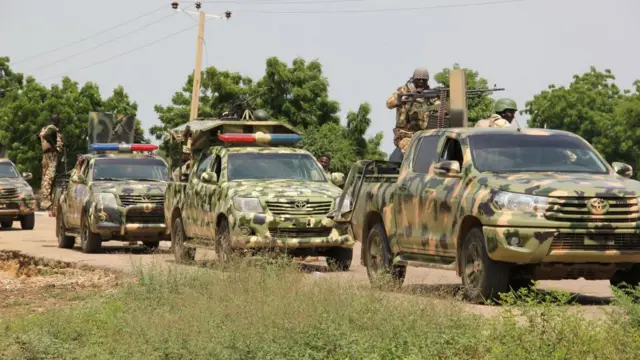
President Bola Ahmed Tinubu recently announced the establishment of four new Divisional Commands for the Nigerian Army, making it a total of 12 Divisions. The last time a new division was established was in 2013 in an attempt by the military to institutionalize its operations in the North East and also to address the threats posed by the Boko Haram insurgents. Its headquarters was located in Maiduguri and its Area of Responsibility covers Borno, Yobe, and Adamawa.
Thirteen years after, four new divisions were established to be named 5 Division with headquarters in Makurdi, Benue State, with Area of Responsibility covering Benue, Nasarawa, and Kogi states with the mandate of tackling localized security challenges across the Middle Belt, including counter-banditry, anti-kidnapping, mitigating farmer-herder conflicts, counter-insurgency, and safeguarding critical national infrastructure and major transit corridors linking the North and South.
The 9 Division with headquarters in Ilorin is meant to cover Kwara and Niger states with the operational mandate to tackle banditry, rural terrorism, kidnapping, and forest-land incursions across the Kainji/Zugurma forest axis and boundary areas, and to also enhance border security and protect vital national assets.
The 10 Division to be headquartered in Jalingo, and covering Taraba and Adamawa states, with the operational mandate of closing the operational gap between 3 Division (Jos) and 7 Division (Maiduguri) to neutralize Boko Haram/ISWAP remnants fleeing into the Mandara mountains, curb cross-border insurgency incursions, suppress communal conflict/banditry in the Mambilla plateau and riverine troughs, and reinforce border security.
The 83 Division to also be headquartered in Benin City, with Edo, Delta, and Bayelsa states and with the operational mandate of safeguarding critical oil and gas infrastructure, neutralizing crude oil theft and illegal refining networks, curbing maritime/creek militancy and piracy, and maintaining internal security across the riverine and forest terrains of the western Delta belt.
As a newspaper, we welcome development given the areas of responsibility for the new divisions and the clearly spelt-out operational mandate, which explains its strategy and the intended outcomes when fully operational.
However, there are concerns that must be addressed before the celebration, which is the issue of adequate manpower for the newly created divisions. For example, a functional division consists of between 10,000 to 15,000 troops, with between 3–4 brigade commands, with each brigade comprising 3–4 battalions and a battalion consist of a minimum of 600–800 troops. The implication is that the proposed 28,000 new recruitment ordered by the federal government can’t fill in the numbers, even though some of the divisions would absorb the existing military formations in the affected areas.
It is also our position as a newspaper that the newly established divisions might be feasible in the short run, but it might not in the long run if more recruitments are not made; even at that, there is also the issue of military assets to be deployed to these divisions. The cost of deploying military assets to these divisions might run into several billions. This is where, as a newspaper, we hold the opinion that the government must match its words with actions with the establishment of these new divisions for the Nigerian Army.
It is not yet Uhuru, given the enormity of the task ahead towards making the divisions highly functional. However, there is a ray of hope by institutionalizing military operations around these corridors that have witnessed an upsurge of criminal activities in recent times. This newspaper recognizes the thoughtfulness of the strategy, but our advocacy is that there is a lot to be done to bring the strategy to light, and in a holistic manner. Our advocacy is that if these new divisions receive the necessary manpower and logistics support, their impact would be greatly felt across the country. And to achieve this, the government must phase the development of these new divisions. For example, setting a phased recruitment policy to feed the manpower needs, and also a phased procurement process for military assets to fill these new divisions.
We’ve got the edge. Get real-time reports, breaking scoops, and exclusive angles delivered straight to your phone. Don’t settle for stale news. Join LEADERSHIP NEWS on WhatsApp for 24/7 updates →
Join Our WhatsApp Channel