
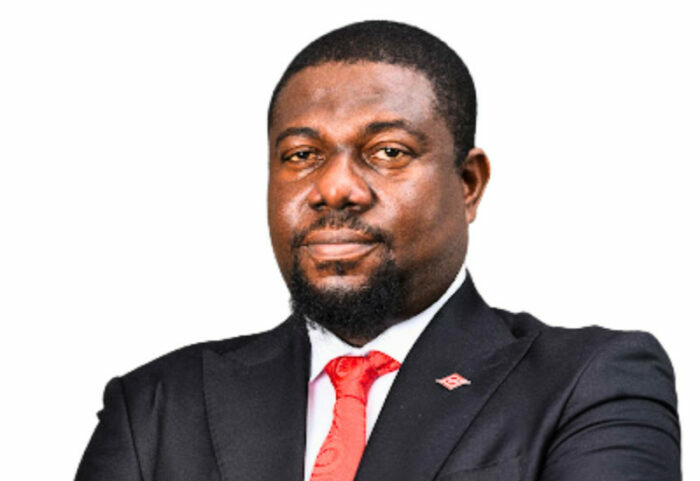
Managing director and chief executive officer (CEO) of SUNU Health Nigeria Limited, Dr Moyosore Olomola, has identified structural bottlenecks, inadequate provider accountability and funding gaps as major obstacles slowing Nigeria’s progress toward Universal Health Coverage (UHC).
In an interview, Olomola said the challenges were highlighted during a recent meeting with the chairman of the House of Representatives Committee on Health Services, where the company presented proposals aimed at accelerating health insurance coverage across the country.
He noted that while the National Health Insurance Authority (NHIA) had demonstrated commitment to expanding coverage through reforms, including the 2025 tariff review, implementation challenges continue to hinder enrolment.
“The groundwork has been laid. Our concern is that structural and operational bottlenecks on the ground are preventing that policy ambition from translating into enrolment numbers at the pace Nigeria needs,” he said.
According to him, the meeting focused on issues such as funding gaps, inadequate premium structures for the informal sector, uneven commitment by states and health insurance models that do not reflect the realities of how most Nigerians earn a living.
Olomola also raised concerns over the conduct of some healthcare providers, alleging that some hospitals deny services to insured patients or demand deposits before treatment despite beneficiaries being enrolled under valid health insurance schemes.
He said such practices undermine public confidence in health insurance and called for stronger sanctions, including delisting erring providers from the NHIA network.
“When an enrollee arrives at a hospital and is turned away or made to pay out of pocket despite being on a valid scheme, it destroys trust in the entire system,” he said.
Although about 22 million Nigerians are reportedly enrolled in the NHIA scheme, Olomola argued that the country’s low health insurance coverage is driven more by structural issues than by a lack of public interest.
He maintained that Nigerians are willing to enrol when health insurance products are affordable, accessible and claims are settled promptly.
The SUNU Health boss commended the NHIA’s target of enrolling 44 million Nigerians by 2030, describing it as achievable if supported by the right policies and investments.
He identified income volatility among the largely informal workforce as one of the biggest barriers to enrolment, noting that about 80 per cent of Nigeria’s working population earns irregular or seasonal incomes that are incompatible with conventional monthly or annual premium payment models.
To bridge the gap, Olomola disclosed that SUNU Health is developing innovative products tailored to artisans, traders, farmers and other informal workers.
According to him, the company plans to work through cooperatives, trade associations, market unions and religious organisations to promote community-based enrolment while introducing flexible weekly premium payments through USSD and mobile platforms.
He said the proposed entry-level health insurance package would cover outpatient consultations, malaria treatment, maternal care and essential medicines, while a hybrid model would protect enrollees against catastrophic hospitalisation costs.
Olomola added that SUNU Health’s partnership with telemedicine provider MobiHealth would enable beneficiaries, particularly those in underserved communities, to consult doctors remotely and access prescribed medicines through partner pharmacies.
On policy reforms, he urged the government to strengthen collaboration with private Health Maintenance Organisations (HMOs), saying they remain critical to achieving Universal Health Coverage.
He advocated a transparent tariff review mechanism, stricter enforcement of mandatory health insurance for employers, improved funding for vulnerable populations through the Basic Health Care Provision Fund, stronger provider accountability and the establishment of a formal dispute resolution mechanism between HMOs and the NHIA.
Olomola also called on state governments to increase investment in health insurance by subsidising premiums for uninsured residents and urged the NHIA to develop a unified electronic national health insurance database.
He further recommended deploying community health workers as enrolment agents and simplifying claims processing to encourage more healthcare providers to participate in the NHIA scheme.
According to him, reducing Nigeria’s high out-of-pocket healthcare spending will require disciplined implementation of reforms, stronger partnerships between the government and private sector, and sustained efforts to build public trust in the health insurance system.
“Nigeria has the demographic foundation, the regulatory architecture and a growing political will to achieve Universal Health Coverage. What is needed now is disciplined execution and a private sector that sees itself as a genuine partner in a national health mission,” he said.
We’ve got the edge. Get real-time reports, breaking scoops, and exclusive angles delivered straight to your phone. Don’t settle for stale news. Join LEADERSHIP NEWS on WhatsApp for 24/7 updates →
Join Our WhatsApp Channel