
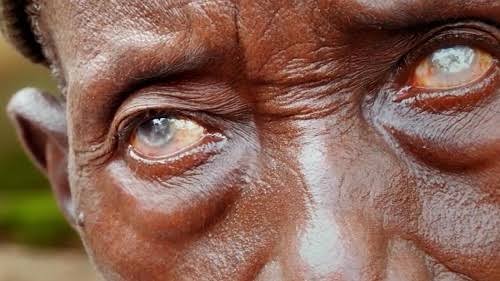
The Ophthalmological Society of Nigeria (OSN) has raised concern over the burden of sight loss in the country, saying more than 24 million Nigerians are currently living with sight loss, with 84 per cent of cases attributed to preventable and avoidable causes.
President of the society, Dr Gloria Patrick-Ferife, disclosed this yesterday in Abuja at the 51st Scientific Conference and Annual General Meeting of the OSN, themed, “Reimagining Eye Care in the Digital Era.”
She also said 4.2 per cent of Nigerians aged above 40 were blind, stressing the need for urgent action to prevent avoidable blindness and expand access to quality eye-care services.
Patrick-Ferife said the country’s eye-health burden could not be addressed by ophthalmologists alone, calling for stronger collaboration among all members of the eye-care team, including optometrists, ophthalmic nurses and opticians.
“Our job as ophthalmologists and leaders of the eye-care team is to address the over 24 million Nigerians currently living with sight loss, 84 per cent of which is due to preventable and avoidable causes,” she said.
She said the rapid development of artificial intelligence (AI), tele-ophthalmology, digital imaging, electronic medical records, simulation-based training and data-driven research presented an opportunity for Nigeria to transform the way eye care was delivered.
However, she cautioned that adopting technology should not be the ultimate goal, stressing that digital solutions must be affordable, sustainable, equitable and suited to Nigeria’s realities.
“Technology should help us detect disease earlier, strengthen training, improve research, extend specialist care and ultimately preserve sight,” she said.
According to her, the increasing use of AI in eye health must also be guided by professional ethics, patient safety, data protection and human dignity.
She urged stakeholders to ensure that digital transformation did not widen the existing gap in access to eye care, particularly for underserved communities, elderly people and rural populations.
Also speaking, Minister of State for Health and Social Welfare, Dr Adekunle Salako, said geographical barriers, uneven distribution of health workers and socioeconomic disparities had continued to limit access to specialised eye care in Nigeria.
He said millions of Nigerians continued to suffer from conditions such as cataract, glaucoma, refractive errors and diabetic retinopathy.
Salako said digital technology offered an opportunity to take eye-health services beyond tertiary hospitals and into primary healthcare facilities and rural communities.
He listed tele-ophthalmology, remote screening, handheld smartphone-based fundus cameras, digital screening tools and AI-enabled diagnostic algorithms as some of the technologies capable of expanding access.
The minister disclosed that the Federal Ministry of Health and Social Welfare had signed a Memorandum of Understanding with Peak Vision, a digital eye-health company, to deploy an AI-powered device for rapid eye screening.
He said the technology would support school health programmes and strengthen the integration of eye health into the primary healthcare system.
Salako also disclosed that the ministry had developed data collection and reporting tools for eye health to improve routine data collection at facility level and support evidence-based decision-making.
He said the government was also expanding health insurance coverage in collaboration with the National Health Insurance Authority to improve access to essential eye-care procedures and reduce out-of-pocket spending.
On efforts to address avoidable blindness, Salako said the Jigibola 2.0 mobile eye-care programme had screened almost two million people and provided more than 1.3 million free reading glasses across the federation.
According to him, the programme is being expanded under the Renewed Hope Health Connect initiative, with a target of providing at least five million free pairs of spectacles and conducting 25,000 free cataract surgeries by the end of 2027.
He added that the National Eye Health Strategic Development Plan 2024–2028 was being implemented, with government working to integrate basic eye screening, refractive services and rapid referral pathways into primary healthcare.
The minister, however, said government interventions alone could not close the eye-care gap, urging the OSN and other stakeholders to strengthen research, training and policy collaboration.
He challenged ophthalmologists to develop affordable and locally relevant digital solutions that could function in low-resource and off-grid settings.
He also called for the training of the next generation of ophthalmologists to effectively use digital health technologies while maintaining the standards of traditional clinical practice.
President of the Nigerian Medical Association (NMA), Prof Afekhide Ernest Omoti, said Nigeria’s significant burden of blindness and visual impairment made it imperative for the country to harness emerging technologies to improve access to quality eye care.
Omoti, a professor of ophthalmology, said digital innovation could make eye care more accessible, efficient, precise and patient-centred, particularly for underserved and rural populations.
He, however, stressed that innovation must remain anchored on professional ethics, patient safety, equity, human dignity and high standards of clinical practice.
He commended the OSN for its contributions to professional excellence, continuous medical education, research and innovation over more than five decades.Omoti reaffirmed the NMA’s commitment to collaborating with the OSN and other medical specialty societies to strengthen Nigeria’s health system and ensure that doctors are equipped to provide safe, effective and compassionate care.
We’ve got the edge. Get real-time reports, breaking scoops, and exclusive angles delivered straight to your phone. Don’t settle for stale news. Join LEADERSHIP NEWS on WhatsApp for 24/7 updates →
Join Our WhatsApp Channel