In moments of crisis and war, with the attendant destruction, loss of life, and other humanitarian catastrophes they bring about, fortunes and wealth emerge that challenge the mind.
The question often arises if the war could be justified because it created wealth or condemned because it created a situation that led to a few taking advantage of human misery to satisfy perhaps unintended pecuniary benefits.
The United States of America-Israel war against Iran brings forth that curious dilemma whereby, while countries are reeling under extraordinary energy costs, businesses are smiling at the banks and wishing that the perceptible good time never ends.
Outside Nigeria, major oil companies like Aramco, Exxon, BP and Chevron are believed to be reaping massive profits from the Iran conflict just as households are straining to cope with daily energy needs as prices hit the roof.
The companies benefitting from this awkward development can always claim that they are businesses taking advantage of a situation that may be considered ugly to enhance corporate calculations that generate profit and wealth. It may be difficult to question the rationality of it all, especially as moralists argue that it amounts to making gains from the pains of the ordinary people. But businesses will counter on legal grounds.
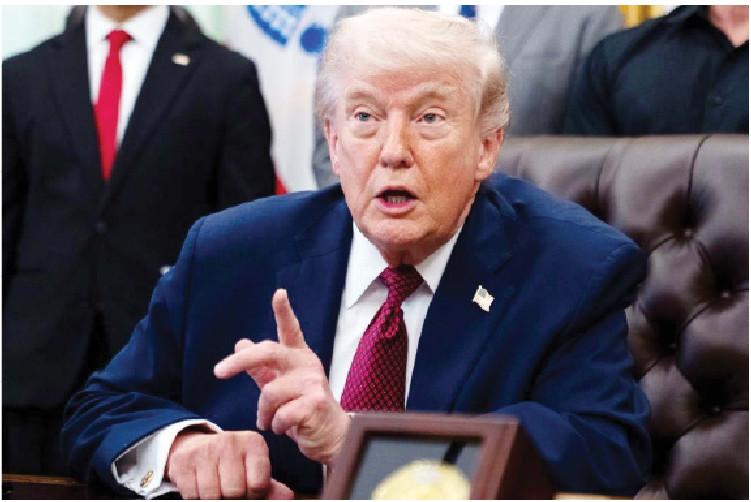
The United States President Donald Trump, whose policy precipitated this debate this time round, has joined the fray in a feigned indignation at how major oil companies are benefitting excessively from the market disruptions caused by the US-Israeli war on Iran, demanding that they reduce fuel prices and return part of their increased earnings to consumers.
He criticised the record profits posted by oil giants, including ExxonMobil and Chevron, arguing that the companies were taking advantage of supply concerns triggered by the conflict.
“They’re making too much money based on a shortage,” he said.
Environmental groups also criticised the earnings of major oil companies, describing the profits as excessive amid rising energy costs and concerns over climate impacts. “These profits feel almost criminal”, they lamented.
The surge in oil prices contributed to significant earnings growth for major energy companies, with ExxonMobil and Chevron recording combined profits of more than $26 billion in the three months ending in June.
Chevron posted a record quarterly profit of $12.2 billion, representing a fivefold increase from the same period last year, while ExxonMobil reported second-quarter earnings of $14.5 billion — more than double its profit from a year earlier and its strongest quarterly performance since Russia’s invasion of Ukraine in 2022.
Another oil major, BP announced that its quarterly profit had doubled to $5.7 billion, as the company benefited from volatility in global energy markets.
The oil companies, while acknowledging the financial pressures facing households, maintained that fuel prices were largely determined by international oil markets.
“The reality is, we produce a global commodity, and the product we sell hangs off that global commodity price.”
Interpreting this position, the corporate chief could well be saying, ” We did not create the situation. We are businessmen responding to opportunities as they arise”.
As realistic as this argument may suggest, it brings to the fore the recurring clash between morality and law in business practices. The response to this has always been that profit-making ought to wear a human face. That is the argument of Trump. That is the argument of the environmentalists, and that is our argument as a newspaper. It demands an expansion of the tenet of corporate social responsibility(CSR) in terms of policy formulation and execution
But it would be unfair to single out the oil companies when discussing issues concerning those who reap bountifully from what is essentially a human crisis.
President Trump, in the middle of the Iran war, invited the chief executives of the arms industry to the White House and pressured them to quadruple their production, assuring them of a ready market for their products, which would, in turn, lead to an exponential increase in earnings.
Our concern is that all these beneficiaries from the crisis may not want it to end. These industrial complexes are wont to regard these humanitarian cataclysms as low-hanging fruit for business to explore and exploit. This is the painful reality that ought to influence the policies and actions of decision-makers in political offices.
Much as we agree with President Trump and others who run the world on this point of being humane in business operations, they also owe the citizenry who suffer the consequences of such hastily conceived ideas and principles some thought in the processes that lead to inconvenient conditions affecting the unintended.
In our opinion, harsh and indigestible policies, even in peacetime, create pains that question the rationality of their authors.
We, as a newspaper, are compelled to posit that in wartime as in peacetime, the interest of humanity must be the undergirding basis for policy decisions.
This consideration must also impel businesses to bring the profit motive under effective control and intentionally exercise restraint in the face of an obvious possibility.
We’ve got the edge. Get real-time reports, breaking scoops, and exclusive angles delivered straight to your phone. Don’t settle for stale news. Join LEADERSHIP NEWS on WhatsApp for 24/7 updates →
Join Our WhatsApp Channel