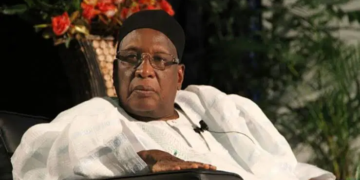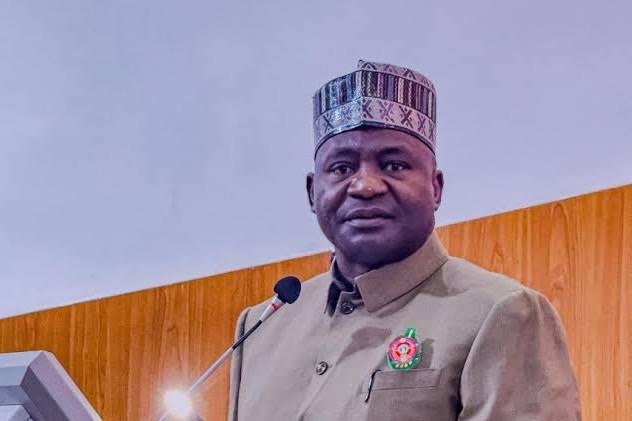
The bitter verbal confrontation between the Minister of Defence, General Christopher Musa (retd.), and the former Governor of Kaduna State, Malam Nasir El-Rufai, has once again dragged Nigeria’s fragile security architecture into the arena of partisan politics. Appearing on a national television broadcast, General Musa publicly accused the former governor of orchestrating divisive policies, overseeing catastrophic security failures, and actively complicit in planned killings across Southern Kaduna. In a swift counter-offensive, the El-Rufai family, through their legal representatives, issued a stern seven-day ultimatum demanding a complete retraction, a public apology, the immediate production of evidence or threatening legal action and demanding N10 billion in damages.
While headline writers may frame this feud as a clash or another round of political mudslinging between high-profile figures, it is our view that this public spectacle with deep gravity. It represents a profound breakdown in institutional discipline. Transforming grave intelligence assessments and accusations of mass atrocities into media headlines strikes a direct blow against standard judicial protocols, professional intelligence gathering, and the integrity of the state apparatus.
To understand the weight of these statements, one must examine the documented history of security management in Kaduna State between 2015 and 2023. During Malam Nasiru El-Rufai’s tenure, communities across Southern Kaduna such as KasuwanMagani, Kajuru, Zangon Kataf, and Kauru, suffered recurring massacres, rural banditry, and widespread destruction of livelihoods.
Public outrage during that era was compounded by the government’s official posture of inflammatory utterances such as that of the former governor’s public comments, including his admission that his administration tracked down and paid foreign Fulani herders to stop revenge killings in the state. There was also the complain of perceived negligence by some communities who repeatedly accused the state government of apathy, imposing protracted curfews on victims while failing to apprehend perpetrators. There was also accusation of criminalisation of victims whereby some community leaders, traditional rulers, and vocal critics from Southern Kaduna were claiming to have been subjected to arrests and detentions while violent non-state actors operated with relative impunity. These historical grievances were there, and if confirmed, the desire for justice across affected communities is legitimate.
However, we firmly frown at the Minister of Defence choosing a television broadcast to deliver such sweeping accusations. As the head of the nation’s defense establishment, General Musa possesses the authority, machinery, and state apparatus to initiate formal investigations through law enforcement and intelligence agencies.
Airing these accusations on national television raises a troubling question: if the Federal Government possesses actionable evidence linking a former governor to crimes against humanity, banditry patronage, or planned killings, why has no formal indictment been filed with the appropriate legal authorities for further investigations and prosecution? Similarly, arriving at a time when political realignments are taking shape ahead of the next election cycle, and with El-Rufai operating within opposition politics, the Minister’s timing risks reducing serious security concerns to political leverage. The action may also raise a concern on the erosion of institutional integrity especially when security agencies are losing their professional authority and engaging in public disputes rather than pursuing judicial remedies.
Our position therefore is, if the state holds proof of atrocities committed during the previous administration in Kaduna State, the appropriate recourse is not a media trial. The Federal Government must move beyond political commentary and commit to institutional action through initiating judicial prosecution. The Attorney-General of the Federation and relevant security agencies can review all existing dossiers, commission a thorough judicial inquiry, and formally prosecute any individual found culpable of facilitating mass killings, regardless of political status.
The Minister should not depoliticise national security architecture. He must maintain strict separation between operational intelligence and political debates. Public statements should be confined to verified operational updates. The people of Southern Kaduna and all victims of insecurity across the North deserve formal judicial closure, restitution, and protection, not political grandstanding.
Nigeria cannot build a durable security framework on media warfare. The rule of law requires that allegations be tested in a court of competent jurisdiction. It is time to replace political rhetoric with strict evidentiary standards and institutional accountability.
We’ve got the edge. Get real-time reports, breaking scoops, and exclusive angles delivered straight to your phone. Don’t settle for stale news. Join LEADERSHIP NEWS on WhatsApp for 24/7 updates →
Join Our WhatsApp Channel