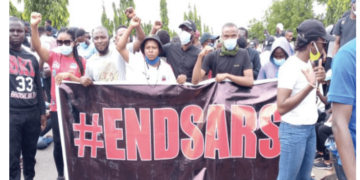
The Department of State Services (DSS) marks 40 years this year carrying a reputation it earned honestly, if not proudly. For most of its history, the agency Nigerians nicknamed the Yellow House was known less for protecting citizens than for the opposite: prolonged detentions without trial, raids on newsrooms, and a pattern of treating dissent as a security threat rather than a democratic right.
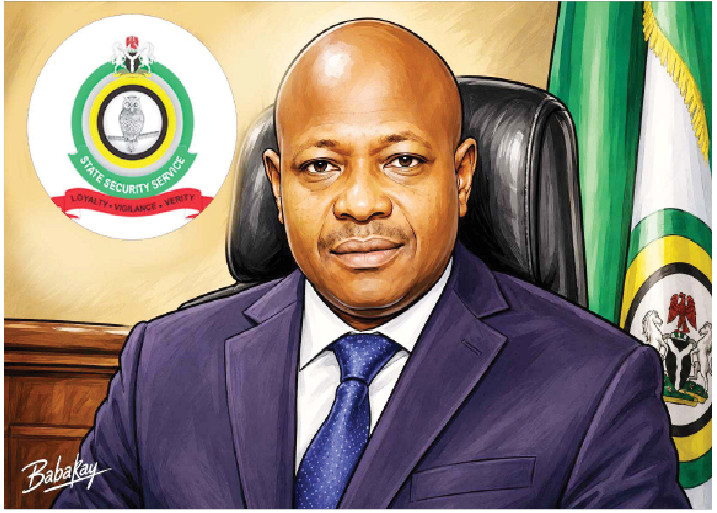
Any accounting of the last two years under Director-General Adeola Oluwatosin Ajayi has to start from that baseline, because the changes being credited to his tenure only look significant against the weight of everything that came before them.
Measured against that history, the record since Ajayi replaced Yusuf Bichi in August 2024 is genuinely notable. The agency’s decision to publicly acknowledge past operational errors and human rights violations, and to pair that acknowledgment with actual compensation and lifetime medical care for victims of wrongful detention, breaks with a decades-long institutional habit of silence that outlasted several previous administrations.
A directive barring the service from being used to settle civil disputes, channelling such matters back toward the courts instead, addresses one of the more common complaints Nigerians have levelled against the DSS for years: businesspeople and private citizens dragged into detention over what were, in truth, commercial disagreements dressed up as security concerns.
The shift toward engaging journalists through dialogue and formal retraction requests, rather than arrest, represents a real change in posture from an agency whose past conduct made independent reporting on security matters genuinely dangerous, and the recognition the Director-General has received from press bodies reflects a shift the media itself has felt directly.
The operational record cited alongside these reforms also deserves acknowledgment on its own terms. The conviction of Ansaru commanders Mahmud Usman, alias Abu Bara’a, and Abubakar Abba, also known as Mahmud Al-Nigeri, linked to the attack on Wawa Cantonment in Niger State, the interdiction of an arms dealer moving military-grade rifles across Plateau State, the capture of a bandit kingpin whose network terrorised rural highways, and a joint interception of an arms cache in Zamfara alongside the military’s Operation Hadarin Daji, are the kind of quiet, unglamorous intelligence work that dismantles the infrastructure of insecurity more effectively than the theatrical mass raids the agency favoured in earlier eras.
The stated preference for silent, structural containment over the loud, camera-ready arrests of the past reflects a maturity that professional intelligence services elsewhere have long practised, and one Nigeria’s own service has historically resisted in favour of public spectacle. Fewer parades of handcuffed suspects and more successful prosecutions is, on the evidence presented here, a trade Nigerians should welcome rather than mourn.
The reach of these prosecutions extends beyond the men who pulled triggers or planted bombs, and that distinction matters. The convictions of Safiya Salihu and Halima Abdullahi for providing support to a terrorist network show an agency going after the financiers, couriers and facilitators who keep extremist groups running, not only the fighters who carry weapons. Four terrorists connected to the 2022 attack on St Francis Catholic Church in Owo, Ondo State, were sentenced to death, closing out one of the more harrowing atrocities of recent years with an actual courtroom outcome rather than an unresolved case file.
Three members of a cross-border terrorism and illegal arms-trafficking syndicate received death sentences in Sokoto, and in Ekiti, two kidnappers convicted over the abduction of a National Youth Service Corps member received the same sentence. Coordinated operations in Oyo and Kwara states against kidnapping networks, and the rescue of a Nasarawa State University lecturer, Dr Samuel Okunsebo, point to an agency willing to follow cases through to a rescued victim rather than treating a kidnapping as closed once the ransom demand goes quiet.
Internally, the dismissal of 115 personnel found to have violated service rules signals a willingness to discipline the agency’s own ranks rather than protect erring officers by default, and improvements to staff housing, healthcare, recreational facilities and childcare reflect a recognition that an agency asking more of its personnel owes them more in return.
None of that, however, should be mistaken for a settled institutional overhaul, and this newspaper wants to be precise about why. Every reform described in this record, the compensation scheme, the restraint around civil disputes, the cooperative posture toward the press, rests on the disposition of one Director-General rather than on any change to the law governing how the DSS operates.
Nigeria has been here before with other security institutions: a reform-minded leader arrives, genuine improvements follow, and then a successor with different instincts quietly lets the old habits return, because nothing was ever written into statute to prevent it.
The DSS Act that governs this agency’s powers has not changed. The compensation policy praised here exists at the discretion of the current leadership, not as an enforceable right victims of wrongful detention can claim regardless of who occupies the Director-General’s office. A directive against civil-dispute detentions is only as durable as the person who issued it.
That gap between good practice and codified law is precisely where Nigerians should direct their attention now, while the goodwill exists to close it. The National Assembly should use this moment of genuine reform to legislate what has so far only been policy: a statutory compensation framework for victims of wrongful detention with published, auditable criteria rather than case-by-case discretion, an independent oversight or ombudsman mechanism with the authority to review detention practices without needing the agency’s own cooperation to function, and a legal restriction, not merely an internal directive, against using national security powers to resolve private commercial disputes.
None of these proposals would compromise the agency’s legitimate intelligence functions, which properly remain shielded from public scrutiny for reasons of operational security. They would ensure that the civil-liberties gains of the last two years survive the next change of leadership, whenever it comes.
At 40, the DSS has produced two years that look, on available evidence, meaningfully different from the “less than four decades that preceded them. That is worth saying plainly, and worth crediting to the leadership that made the choice. But an institution with this history does not earn lasting trust through the discretion of one good tenure. It earns that trust when the reforms Nigerians are applauding today are written into law, and can survive whichever Director-General succeeds this one.
We’ve got the edge. Get real-time reports, breaking scoops, and exclusive angles delivered straight to your phone. Don’t settle for stale news. Join LEADERSHIP NEWS on WhatsApp for 24/7 updates →
Join Our WhatsApp Channel