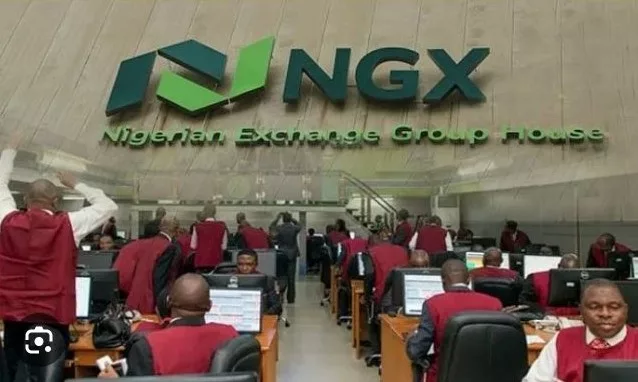
Twenty-two companies listed on the Nigerian Exchange Limited (NGX) are facing growing financial pressure as several listed companies become dependent on borrowed funds to finance their operations.
In a data obtained by Vanguard, the companies carried combined debt of N21.3 trillion in the second quarter of 2026, according to an analysis of their financial positions, with 11 recording debt-to-equity ratios above 2.0.
A company’s debt-to-cash ratio measures how large its debt is relative to the cash and cash equivalents it has available.
While debt is not necessarily a sign of financial weakness, the growing concern is the relationship between companies’ obligations and their ability to generate cash. Where liabilities continue to rise faster than internally generated funds, businesses can become increasingly exposed to interest costs, refinancing pressures and working-capital constraints.
The companies covered include VFD Group, United Capital, UACN, TotalEnergies Marketing Nigeria, Tantalizers, SCOA Nigeria, Nestlé Nigeria, Neimeth International Pharmaceuticals, MTN Nigeria, Mecure Industries, Infinity Trust Mortgage Bank, FTN Cocoa Processors, Ecobank Transnational Incorporated, Dangote Sugar, Conoil, C&I Leasing, BUA Cement, Aradel Holdings, AIICO Insurance, Access Holdings, Abbey Mortgage Bank and Fortis Global Insurance.
Access Holdings recorded the largest debt exposure at N7.27 trillion, followed by Ecobank Transnational Incorporated with N5.36 trillion, MTN Nigeria at N2.78 trillion, Aradel Holdings at N1.87 trillion and United Capital at N1.22 trillion.
Other major exposures included BUA Cement at N663.34 billion, Dangote Sugar at N584.61 billion, Nestlé Nigeria at N445.11 billion and UACN at N308.78 billion.
The leverage picture becomes more pronounced when debt is compared with shareholders’ equity. FTN Cocoa Processors recorded the highest debt-to-equity ratio at 28.61, followed by SCOA Nigeria at 14.37 and United Capital at 6.52.
Nestlé Nigeria had a ratio of 5.74, Fortis Global Insurance 4.66, UACN 4.10, Neimeth International Pharmaceuticals 3.29, Mecure Industries 3.0, MTN Nigeria 2.98, VFD Group 2.40 and Infinity Trust Mortgage Bank 2.18.
FTN Cocoa’s position is particularly notable because its N22.42 billion debt was set against shareholders’ equity of only about N783.65 million. SCOA Nigeria, meanwhile, had negative shareholders’ equity of N563.76 million, meaning its reported liabilities exceeded its equity base.
Analysts, however, caution that the figures should not be interpreted as evidence that all 22 companies are facing imminent failure.
Mr. Tunde Oyediran, a stockbroker, emphasized the importance of maintaining a balanced debt-to-cash ratio for companies.
He explained that a high debt-to-cash ratio can signal financial distress, as it reflects the company’s ability to meet its liabilities.
“The debt-to-cash ratio should ideally be low, because a high ratio indicates that a company may struggle to satisfy its creditors when they demand repayment,” he noted.
According to him, when creditors seek to collect on debts, a company’s inability to fulfill its financial obligations can lead to significant problems. This lack of capacity to pay raises concerns about the company’s financial health and long-term viability.
Oyediran elaborated on the implications of a high debt-to-cash ratio, pointing out that a thorough analysis must consider the balance sheet, particularly emphasizing the relationship between assets and liabilities.
“Cash is classified as an asset, while liabilities are represented on the credit side of the balance sheet.
“If the liabilities outweigh the assets, it creates an unhealthy financial situation for the company, particularly concerning short-term obligations. In such cases, a company may find itself in a precarious position, raising risks not only for itself but also for its stakeholders,” he explained.
He noted that maintaining a low debt-to-cash ratio is crucial for ensuring financial stability and fostering trust with creditors.
The chief operating officer at Investdata Consulting, Ambrose Omordion, said investors should examine earnings, cash flow, interest coverage, debt maturity and the purpose for which borrowings were raised before determining the level of risk associated with a company’s debt.
According to him, high leverage can magnify returns where borrowed funds are invested profitably, but can equally magnify financial pressure when earnings and cash flows weaken.
He said rising leverage could make profits and dividends more sensitive to interest rates and business conditions, while refinancing risks could increase when significant borrowings mature.
We’ve got the edge. Get real-time reports, breaking scoops, and exclusive angles delivered straight to your phone. Don’t settle for stale news. Join LEADERSHIP NEWS on WhatsApp for 24/7 updates →
Join Our WhatsApp Channel