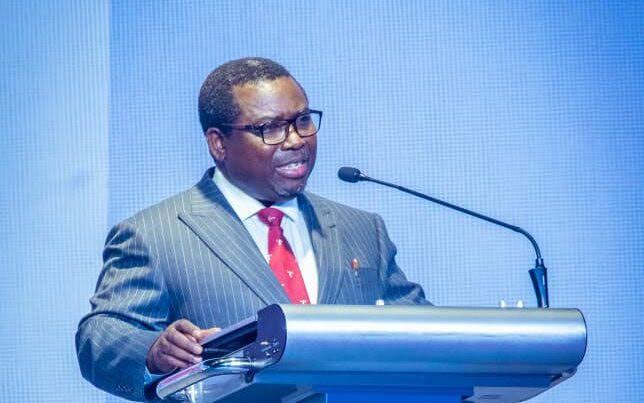
Chairman of the Independent National Electoral Commission, (INEC), Prof. Joash Amupitan, has declared that he will work with civil society organisations and technology firms to ensure the sanctity of the 2027 general elections.
He declared that, “algorithms will not, and must never, decide the 2027 vote.”
Amupitan said technology must serve democracy rather than replace the will of the electorate.
“Technology, no matter how sophisticated or autonomous it becomes, remains an instrument — a tool designed to serve human agency, institutional efficiency and administrative transparency,” he said.
Amupitan, therefore, cautioned against allowing artificial intelligence (AI) to determine the outcome of Nigeria’s 2027 general election.
He said the choice of who leads the country must remain exclusively with Nigerians through their votes.
The INEC chief spoke in Abuja, yesterday, at the AI Democracy Forum, themed, “Will Algorithms Determine the 2027 Vote? Safeguarding Nigeria’s 2027 General Election in the Age of Artificial Intelligence.”
The forum was organised by Yiaga Africa, the Centre for Journalism Innovation and Development (CJID) and DataHyte Foundation.
Amupitan, however, remarked that AI could significantly influence the information available to voters, electoral logistics and the activities of those seeking to undermine the democratic process.
He said the commission would work with civil society organisations, technology firms, regulatory bodies and security agencies to protect the electoral system against emerging threats.
The INEC chairman said Nigeria’s 2027 election would be one of the most complex electoral exercises, involving more than 103 million registered voters and 176,846 polling units across the 36 states and the Federal Capital Territory.
He disclosed that the commission had procured additional Bimodal Voter Accreditation System (BVAS) machines to strengthen its technological capacity ahead of the polls.
According to him, INEC has also processed more than 15,000 candidate nominations through its electronic nomination portal, involving 22 political parties.
He said AI could improve election planning through predictive logistics, supply chain monitoring, cybersecurity and the detection of irregularities in election result sheets.
The technology, he added, could also help identify duplicate voter records and make voter education materials available in indigenous languages.
However, Amupitan warned that the misuse of AI posed serious threats to electoral credibility.
He identified deepfake videos, cloned audio recordings, automated social media accounts and targeted disinformation as potential tools for manipulating voters before election day.
“The greatest threat we face is not the hacking of a ballot box, but the hacking of the voter’s mind,” he said.
He warned that fabricated recordings of candidates, election officials and security personnel could spread rapidly online, misleading voters and undermining confidence in the electoral process.
The INEC chairman also expressed concern over the use of AI to manipulate political conversations, amplify false narratives and exploit ethnic, religious and socio-economic divisions.
He said opaque algorithms could introduce bias into election administration, potentially leading to unfair resource allocation and decisions that would be difficult to explain or independently audit.
To address the threats, Amupitan disclosed that INEC had established a specialised AI unit within its Information and Communications Technology Directorate.
He said the unit would use digital monitoring tools, deepfake detection software and data analytics to identify threats to the electoral process.
The commission, he added, was developing a digital strategy to monitor the information environment and working with technology platforms to debunk falsehoods and label AI-generated content relating to elections.
Amupitan insisted that critical electoral decisions would not be left entirely to automated systems.
“No critical electoral decision, result collation, voter accreditation or candidate qualification will ever be fully automated or delegated to an autonomous system,” he said.
He called on technology companies, including Meta, X, Google, TikTok and Telegram, to take greater responsibility for preventing the spread of election-related disinformation on their platforms.
He urged the companies to strengthen the detection of synthetic impersonation, improve transparency in political advertising and restrict manipulative targeting based on sensitive personal characteristics.
The INEC chairman also called on political parties and candidates to sign an ethical AI code of conduct, committing themselves to avoiding deepfakes, deceptive automated accounts and other forms of digital manipulation.
He urged media organisations and fact-checkers to establish digital forensic desks to verify online content before publication or broadcast.
“Speed must never compromise verification,” he warned.
Amupitan further urged security agencies to strengthen their capacity for cybercrime investigations and digital forensics, while calling on the judiciary to prepare for disputes involving AI-generated evidence and digital campaign violations.
He said safeguarding the 2027 election required coordinated action by INEC, political parties, civil society groups, the media, technology companies and other stakeholders.
“Algorithms may predict patterns; they may optimise routes, and they may even suggest preferences. But they do not have a conscience, they do not have a country, and they do not have a vote,” he said.
He maintained that the outcome of the 2027 general election must reflect the freely expressed will of Nigerian voters, not decisions generated by machines.
In his welcome address,the Executive Director of Yiaga Africa, Samson Itodo, has warned organisations deploying artificial intelligence tools to aggregate results ahead of the 2027 general elections against undermining electoral integrity, insisting that only the Independent National Electoral Commission can declare election results.
Itodo said the growing use of artificial intelligence in election monitoring must be guided by accuracy, transparency and auditability to prevent the technology from becoming a tool for political manipulation.
The Yiaga Africa director said public confidence in elections remained low, with many Nigerians doubting whether their votes would count.
“The climate of distrust in the electoral process is palpable, and you can feel it,” he said.
Itodo attributed the distrust partly to technological glitches experienced during the 2023 general elections, which, he said, continued to raise concerns about the credibility of the process.
He said the challenge before electoral stakeholders was to take concrete steps to rebuild public confidence ahead of the 2027 elections.
“One thing is clear: yes, trust levels are low, but the question is, are we doing something to inspire trust and rebuild public confidence in the electoral process?” he asked.
Itodo acknowledged efforts by INEC and other stakeholders to restore confidence, but stressed that rebuilding trust required collective responsibility.
He identified artificial intelligence as one of the tools that could help strengthen confidence in the electoral process if properly deployed.
The Yiaga Africa chief commended INEC for its leadership in adopting AI for elections, describing the commission’s efforts as worthy of recognition.
However, he warned that technology alone could not guarantee credible elections without the integrity of those managing it.
“One thing is to deploy technology; it is another thing for the personal integrity of those managing those technologies to be there,” he said.
“If an AI tool is operated by a compromised individual, rest assured that the outcome will be compromised as well.”
Itodo said discussions at the forum would examine how to govern AI systems, maximise their benefits and mitigate the risks they posed to the 2027 elections.
He also expressed concern over the growing number of AI-powered platforms designed to aggregate election results ahead of the polls.
According to him, while independent organisations can monitor and aggregate results to provide oversight, they must not usurp INEC’s statutory responsibility.
“It is our position that only INEC can declare results, can declare winners in an election, because that is the position of the law,” he said.
In her goodwill message, Luminate Associate Tarri Wills said technology should serve the interests of citizens rather than expose them to harm.
Wills described Luminate as a global philanthropic organisation working at the intersection of technology, human rights and social justice.
“As I highlighted earlier, we believe that technology should work for people rather than harm them,” she said.
She said the forum came at a time when artificial intelligence was attracting global attention because of its potential to transform society and the risks associated with its misuse.
Wills said the gathering provided an opportunity for Yiaga Africa and its partners to examine how technology was shaping Nigeria’s electoral information environment.
She expressed hope that the discussions would encourage state and non-state actors across the country to harness technology for the benefit of Nigerians.
The Programme Officer for Regional Peace and Security at the European Union Delegation, Vittorio Capaci, said the debate over AI and elections must address public trust, access to reliable information and confidence in democratic institutions.
He said artificial intelligence was not inherently a threat, noting that it could improve access to information, encourage civic participation and strengthen electoral processes.
However, Capaci warned that the misuse of the technology could worsen the spread of false information and undermine democratic institutions.
“Artificial intelligence is not a threat per se, and it offers significant opportunities,” he said.
“At the same time, its misuse can amplify disinformation, enable the creation of convincing deepfakes, manipulate public debate, and undermine trust in electoral institutions.”
He said the challenge was to ensure that the technology strengthened citizens’ ability to make informed choices rather than distorted public debate during elections.
The Chairman of Senegal’s Electoral Commission and Chairman of the ECOWAS Network of Electoral Commissions, Abdoulaye Sylla, said African countries must ensure that artificial intelligence strengthened, rather than weakened, the credibility of elections.
Sylla said electoral integrity must remain anchored in transparency, accountability, fairness, inclusiveness and respect for citizens’ fundamental rights.
“The challenge before us is therefore not whether artificial intelligence will influence our democracies, but how we can ensure that its use strengthens, rather than undermines, the credibility of our electoral processes,” he said.
He warned that technology must not become a substitute for independent institutions, human judgement or democratic accountability.
Sylla said the network recognised the importance of developing guidelines for the use of artificial intelligence in elections across Africa.
He described Nigeria’s preparations for the 2027 general elections as an opportunity for INEC, government institutions, civil society groups, technology experts, political parties and development partners to develop a common approach to managing AI-related electoral risks.
He called for practical measures, including improved digital and AI literacy, safeguards against AI-generated electoral manipulation, stronger institutional preparedness and greater cooperation among stakeholders.
Sylla said such measures would help electoral authorities and other actors respond more effectively to emerging threats while protecting the credibility of democratic processes.
We’ve got the edge. Get real-time reports, breaking scoops, and exclusive angles delivered straight to your phone. Don’t settle for stale news. Join LEADERSHIP NEWS on WhatsApp for 24/7 updates →
Join Our WhatsApp Channel