The Petroleum Technology Development Fund (PTDF) has urged the United Kingdom to reduce tuition fees and visa rejections affecting Nigerian scholars studying in British universities.
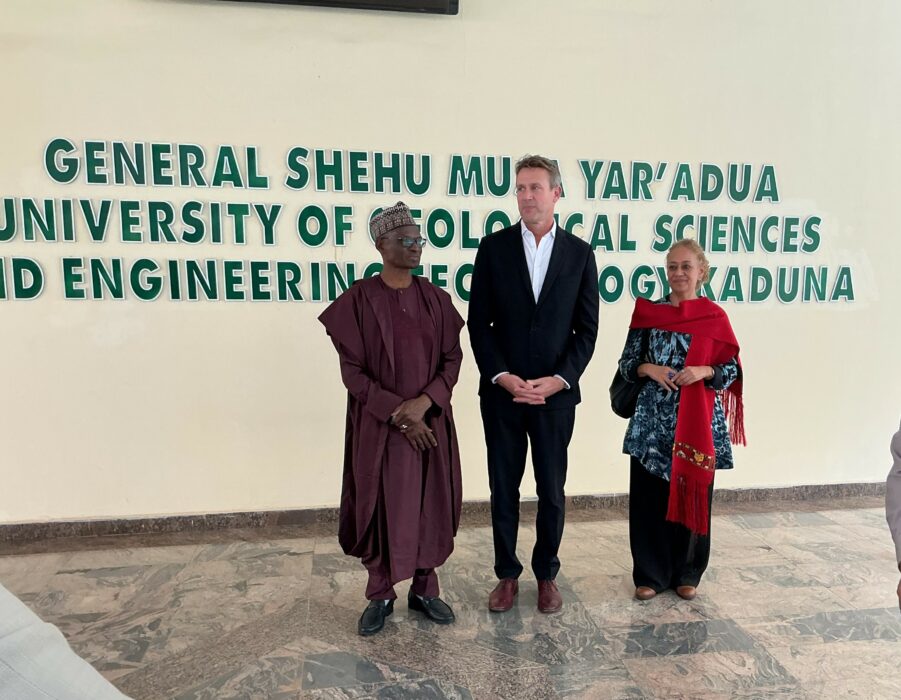
The executive secretary of the Fund, Professor Shu’aibu Shehu Aliyu, made the appeal on Tuesday during a high-level bilateral meeting with the British High Commissioner to Nigeria, Mr Pete Vowles. The meeting took place at the General Shehu Musa Yar’adua University of Geological Sciences and Engineering Technology, Kaduna.
Aliyu said the Fund was facing several challenges with its UK partners, which he wanted brought to the High Commissioner’s attention.
“I would like to take this opportunity to highlight several challenges we are facing with our UK partners for the High Commissioner’s attention,” he said.
He listed the challenges as high tuition fees compared with other European countries, and visa rejections. He added that the Fund also wanted a plan to monitor its scholars in the UK, with support from the UK government and the host universities.
Responding, Vowles said the British High Commission acknowledged the difficulties, particularly those relating to visas and increases in tuition fees.
“We will take these concerns away as a team and communicate them to the relevant stakeholders within the UK system,” he said.
The High Commissioner noted that the PTDF and the High Commission had worked together to simplify the process. He said the PTDF’s recognition as a government-approved sponsor should make things easier for its scholars.
“Having the PTDF recognised as a government-approved sponsor will hopefully make the process much smoother,” he said. He added that the recognition showed how highly the UK government values its partnership with the Fund.
Aliyu said the UK had for decades been a key partner in the Fund’s efforts to build local capacity in Nigeria’s energy sector. He said the PTDF had partnered with 24 British universities, which had helped train thousands of Nigerian engineers, geoscientists, researchers and energy leaders.
He said the Fund had sponsored nearly 15,000 Nigerians through its Overseas Scholarship Scheme and In-Country Scholarship Scheme. As of July 2026, he said, 1,571 scholars were studying in 15 countries across more than 120 partner institutions, while demand for PTDF scholarships continued to grow.
The Executive Secretary also spoke about the Split-Site PhD Programme, which lets scholars do part of their doctoral studies in Nigeria and part in the UK. He said the programme cuts the cost of overseas education and strengthens local institutions. The Kaduna university runs it with the University of Portsmouth, the University of Strathclyde and Robert Gordon University.
Aliyu proposed a Joint Working Group of PTDF officials, UK university representatives and industry stakeholders. He said the group would develop a framework to hold both sides accountable and turn academic collaboration into measurable national impact.
He said the Fund looked forward to a “swift, productive, and mutually rewarding partnership” in December, when the Foreign, Commonwealth and Development Office’s International Education Chief is expected to visit Nigeria.
Vowles said the UK would keep exploring ways to help talented Nigerian scholars access its education system. He expressed hope that the partnership would remain mutually beneficial.
We’ve got the edge. Get real-time reports, breaking scoops, and exclusive angles delivered straight to your phone. Don’t settle for stale news. Join LEADERSHIP NEWS on WhatsApp for 24/7 updates →
Join Our WhatsApp Channel