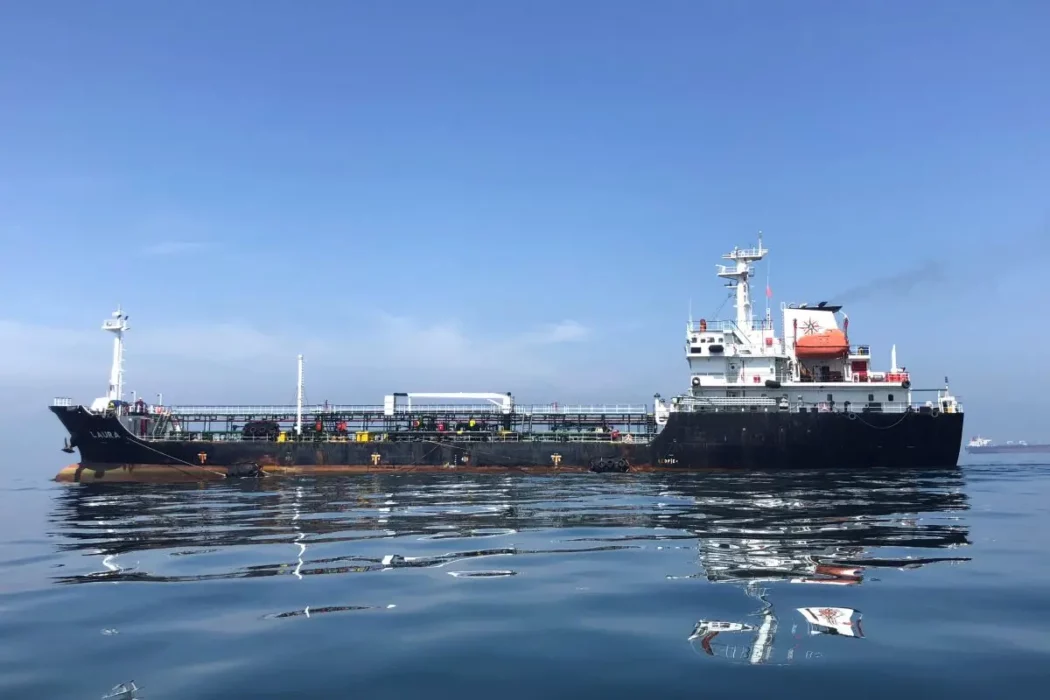
Indigenous shipowners seeking to access the $360 million Cabotage Vessel Financing Fund (CVFF) face fresh hurdles as participating banks reportedly demand cargo or service contracts and collateral worth at least 135 per cent of loan amounts, raising concerns over the implementation of the long-awaited intervention scheme.
An investigation by LEADERSHIP revealed that the stringent lending conditions imposed by the 12 approved Primary Lending Institutions (PLIs) could frustrate efforts to disburse the fund to local shipowners, months after the Minister of Marine and Blue Economy, Adegboyega Oyetola, directed its release.
The banks are reportedly insisting that applicants provide cargo or service contracts, preferably direct agreements with international oil companies (IOCs), as a condition for accessing the loans.
However, industry stakeholders said the requirements failed to reflect the realities of Nigeria’s maritime sector, where many indigenous shipowners operate ageing vessels, acquire ships through bareboat charter arrangements or depend on third-party contracts and subcontracting opportunities.
LEADERSHIP gathered that many IOCs impose strict age limits on vessels used in their operations, making it difficult for owners of older ships to secure direct contracts that would satisfy the banks’ requirements.
The insistence on direct contracts, despite the prevalence of third-party arrangements and subcontracting in the industry, has further complicated shipowners’ efforts to benefit from the scheme.
The 12 approved PLIs include Fidelity Bank, Stanbic IBTC Bank, United Bank for Africa (UBA), Zenith Bank, Lotus Bank, Union Bank, First Bank, Jaiz Bank, SunTrust Bank and Globus Bank, among others.
The federal government had initially appointed five banks — Union Bank, Zenith Bank, Polaris Bank, UBA and Jaiz Bank — as PLIs for the disbursement of the fund.
The participating banks are expected to provide loans at single-digit interest rates to qualified applicants, with full repayment due within eight years of disbursement.
Despite the government’s renewed commitment to releasing the fund, the additional lending requirements have raised questions about how many indigenous shipowners can meet the conditions and secure financing to acquire vessels.
The CVFF was established under the Coastal and Inland Shipping (Cabotage) Act of 2003 and is financed through a two per cent surcharge on contracts performed in Nigeria’s coastal trade.
It was designed to provide long-term, low-interest financing to indigenous shipowners for vessel acquisition and strengthen local participation in the maritime industry.
ONLY TWO APPLICATIONS SECURE BANK APPROVAL
The Managing Director of Flotilla Academy of Marine Technology (FAMT), Adakole Ejegbudu, faulted the banks’ reported demand for existing cargo contracts, warning that the requirement could undermine the fund’s objective of building indigenous shipping capacity.
Ejegbudu, a maritime expert, said the demand had become a major obstacle to accessing the facility, despite strong interest among local shipowners and available cargo opportunities in Nigeria’s maritime and offshore sectors.
He said he attended stakeholder workshops on the fund in May last year and January this year, adding that the strong turnout at both meetings demonstrated operators’ willingness to access the facility and expand their businesses.
According to him, the problem was not a lack of interest but the conditions imposed by participating lending institutions during the loan approval process.
He disclosed that since the application portal opened in February, just over 20 companies had completed their applications and forwarded them to the participating banks, but only two had reportedly secured approval and been sent to the Nigerian Maritime Administration and Safety Agency (NIMASA).
“The portal opened in February. Just over 20 companies have completed their applications and been handed to the PLIs. From what we understand, only two have been approved by the banks and sent to NIMASA,” he said.
Ejegbudu said the gap between the number of interested applicants and those whose applications had progressed through the banking stage suggested that something was wrong with the process.
He added that his engagements with at least four banks confirmed that applicants were being asked to present existing cargo contracts before their loan applications could be approved.
“This was not a condition when the fund was introduced. NIMASA’s own position was that it would work with NNPC, NLNG and exporters to secure cargo for Nigerian vessels. Cargo was meant to be supported by government, not demanded from applicants upfront,” he said.
He argued that making existing cargo contracts a prerequisite for financing defeated the purpose of the CVFF, which was established to help indigenous operators acquire vessels, expand their fleets and compete more effectively in the maritime sector.
According to him, the condition favoured companies that already had the capacity to secure cargo contracts over smaller operators seeking financing to build that capacity.
“As it stands, only companies that can prove they don’t need the money are getting it. The fund was created to grow indigenous capacity, not to reward those who already have it,” he said.
DANGOTE REFINERY, OFFSHORE PROJECTS OFFER OPPORTUNITIES
Ejegbudu maintained that Nigeria had sufficient business opportunities to support vessels financed through the scheme, citing activities around the Dangote Refinery, new oil fields and offshore projects.
He listed tankers, anchor-handling tugs, platform supply vessels and barges among the vessel categories for which demand was growing, arguing that well-maintained ships would find employment in the current market.
“A sound vessel in good condition will find cargo in today’s climate. That is verifiable. Dangote Refinery alone generates more demand than we can meet. New fields and offshore projects are driving demand for service vessels,” he said.
On the requirement for applicants to provide a 15 per cent equity contribution, Ejegbudu acknowledged that the condition posed a challenge and had discouraged some prospective beneficiaries.
However, he described it as a manageable hurdle compared with the demand for existing cargo contracts, arguing that private financiers could provide the equity once a bank approved an application and made the contribution a condition for accessing the loan.
“Once a bank approves and makes the 15 per cent a condition before drawdown, financiers who understand the industry will step in. Approval unlocks equity. So the 15 per cent is a secondary issue. Cargo backing is the main one,” he said.
Ejegbudu also addressed NIMASA Director-General, Dr Dayo Mobereola’s reported position that banks were not demanding cargo contracts from applicants.
He said he accepted the agency chief’s statement in good faith but suggested there might be a communication gap between the regulator and participating banks.
“I take the DG at his word as a man of integrity. That tells me the banks may not be giving him the full picture. Applicants are hearing something different from what NIMASA is hearing,” he said.
EXPERT SEEKS REVIEW OF LENDING CONDITIONS
To address the bottleneck, Ejegbudu called for the removal of existing cargo contracts as a precondition for loan approval, arguing that the requirement was not part of the fund’s original terms.
He proposed that banks accept letters of intent or other evidence of market demand in place of firm contracts, while NIMASA establishes a formal cargo-assurance framework in collaboration with the Nigerian National Petroleum Company Limited (NNPC), Nigeria LNG Limited (NLNG) and Dangote Refinery.
He also suggested that cargo commitments could be treated as a post-delivery covenant, with charter receivables assigned to lending banks as additional security after vessels had been acquired and deployed.
Beyond reviewing the lending conditions, he urged NIMASA to request written explanations from each participating bank on applications that had been delayed or rejected.
According to him, the exercise would help the agency identify the specific requirements preventing applicants from accessing the fund and determine whether the obstacles were consistent with the scheme’s objectives.
“Remove the cargo-backing condition and everything else will fall into place. The money is there and the market is there. Let the fund do what it was created to do,” he said.
CVFF DELAYS RAISE QUESTIONS OVER NATIONAL CARRIER
The immediate past president of the Africa Shipowners Association (ASA), Captain Ladi Olubowale, expressed displeasure that more than two decades after the fund was established, indigenous shipowners were still waiting to access the financing.
He said the difficulties surrounding the CVFF should serve as a warning to the federal government about the challenges of establishing a successful national shipping carrier without first developing the indigenous shipping industry.
“If Nigerians want to know whether a new national carrier will succeed, they should look at the Cabotage Vessel Financing Fund (CVFF),” he said.
Olubowale explained that the fund was established to provide indigenous shipowners with low-interest, long-term loans to acquire vessels, enabling Nigerians to build, man, own and flag their ships.
“For more than 20 years, that money sat unused. By last year, the fund was estimated at about $700 million. Successive governments promised to release it. A former transport minister even claimed presidential approval for disbursement before leaving office, and nothing followed,” he said.
According to him, the current administration has taken steps towards disbursement, including opening an application portal in January 2026, making an initial $25 million available and increasing the number of participating banks from five to 12.
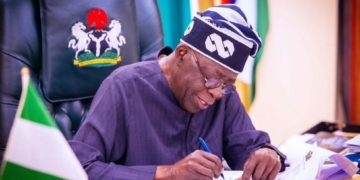
He added that President Bola Tinubu approved the disbursement in September, but the pace of processing applications remained a source of concern.
“Yet the numbers tell a sobering story. By the minister’s own account in September, NIMASA had received 92 applications. Of these, 20 had been passed to the lending banks, and only one had been reviewed and forwarded for final approval,” he said.
Olubowale noted that an industry research group had reported in May that no beneficiary had publicly confirmed receiving funds. He added that the minister issued another directive the previous week, asking NIMASA and the participating banks to accelerate the process.
“Twenty-three years after the law was passed, Nigerian shipowners are still waiting for vessels the fund was meant to buy,” he said.
He warned that continued delays could undermine the development of a sustainable indigenous shipping industry, which he described as a critical foundation for any successful national carrier.
According to him, a national shipping line depends on a strong base of indigenous shipowners, Nigerian seafarers, local ship repair yards and financial institutions that understand the peculiarities of maritime financing.
“The CVFF was designed to build exactly that base. If Nigeria cannot move money it already has into the hands of its own shipowners, it is fair to ask how it will run a national carrier that must compete with the world’s largest shipping companies,” he said.
VESSEL SHORTAGE HINDERS SEAFARER TRAINING
Olubowale also highlighted the implications of the shortage of vessels for the training and certification of Nigerian seafarers.
He explained that thousands of young Nigerians had received training in nautical science and marine engineering under the Nigerian Seafarers Development Programme, but many were struggling to obtain the sea time required to complete their professional certification because of the shortage of ocean-going vessels.
“This month, the Ijaw Youth Council said more than 100 cadets sponsored over a decade ago are still waiting to complete their certification. Every vessel the CVFF finances, and every ship a national carrier puts to sea, is a classroom for these young officers. Without the ships, the training is money spent on a promise,” he said.
To address the challenges, Olubowale urged the federal government to treat shipping as a national strategic priority rather than merely a business venture.
He called for a clear sequence of reforms, binding deadlines for CVFF disbursement and greater transparency in the administration of the fund.
He also urged NIMASA to publish the names of approved beneficiaries, the amounts disbursed and the vessels acquired with the loans to build stakeholders’ confidence and ensure accountability.
On the proposed national carrier, Olubowale said the government must establish a professional management structure insulated from political interference.
“The NNSL did not fail because Nigerians could not run ships. It failed because politics was allowed to run the company,” he said.
NIMASA DENIES KNOWLEDGE OF CARGO GUARANTEE DEMAND
Responding to the allegations that banks were demanding cargo guarantees, NIMASA Director-General, Dr Dayo Mobereola, said he was unaware of any bank making such guarantees a condition for accessing the fund.
Mobereola maintained that indigenous shipowners should leverage established business arrangements to secure financing, arguing that operators who had sustained their businesses for 20 to 30 years should be able to apply similar arrangements under the CVFF scheme.
“I have heard the argument that banks are demanding cargo guarantees from shipowners before granting financing, while the shipowners contend that they cannot obtain such guarantees because of the nature of international trade.
“However, I want to point out that most indigenous shipowners have been operating for the past 20 to 30 years. How have they been operating during this period? How have they been financing their vessels? They have been using existing business arrangements to sustain their operations, and that is the same system we are applying here.
“I am not aware of any bank that is requesting a cargo guarantee as a requirement for the CVFF financing,” he said.
The NIMASA chief executive disclosed that some shipowners had submitted applications and were engaging with their banks to fulfil the requirements for accessing the fund.
“Some shipowners have applied and are currently discussing with their banks to fulfil the necessary conditions. Once those requirements are met, the applications will be processed and the funds released,” he said.
He added that the immediate priority was for applicants to complete the required banking procedures to enable disbursement to proceed.
We’ve got the edge. Get real-time reports, breaking scoops, and exclusive angles delivered straight to your phone. Don’t settle for stale news. Join LEADERSHIP NEWS on WhatsApp for 24/7 updates →
Join Our WhatsApp Channel