The Nigerian Independent System Operator (NISO) has said it is widening its role from running the national grid to coordinating a power industry that now includes state markets and private network owners.
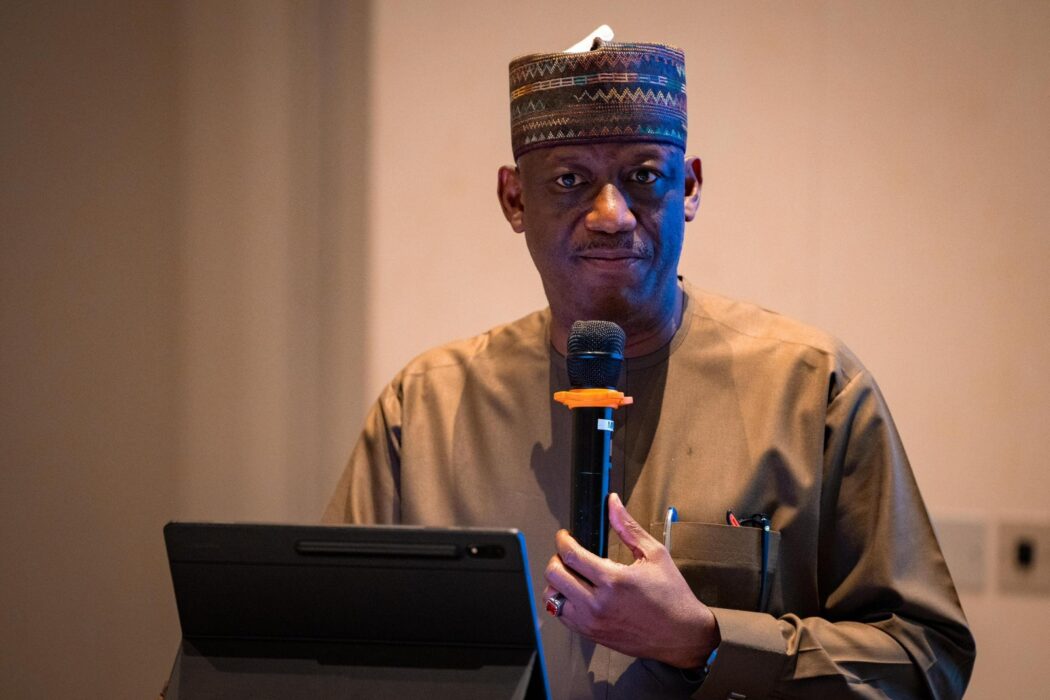
The managing director/chief executive officer of NISO, Engr. Abdu Bello Mohammed, made the disclosure in an address at the Africa Energy Leadership Summit 2026, in Lagos, titled “Emerging Roles of the Nigerian Independent System Operator (NISO) in a Decentralised Electricity Industry: Coordinating Markets, Integrating Infrastructure and Enabling Investment.”
Mohammed said the Electricity Act 2023 changed the structure and governance of Nigeria’s power industry. One of its most significant provisions, he said, lets state governments legislate, establish electricity markets and regulate generation, transmission and distribution within their territories.
He said this has made room for several electricity markets to operate alongside the national market. The industry now includes state electricity markets and State Electricity Regulatory Authorities, independent generation and distribution investments, independent transmission and distribution network providers, embedded generation, renewable energy and distributed energy resources, bilateral electricity transactions, and a larger role for private investors.
“Our position is clear: decentralisation should create more opportunities and more investment, not more fragmentation,” he said.
Mohammed said the changes bring new complexities and posed a series of questions that, in his words, define NISO’s emerging responsibilities.
He asked how independently developed networks will operate in harmony with the national grid, and how electricity flows between state markets and the national market will be coordinated. He also asked how technical standards, operational protocols, metering, data exchange and settlement will stay consistent, and how infrastructure development will be coordinated to avoid duplication, stranded investments and incompatible network configurations.
The most important question, he said, is how to protect the integrity, reliability and security of the national system while states and private investors pursue their own power development goals.
Mohammed said NISO was established after the unbundling of the Transmission Company of Nigeria (TCN) and is responsible for system operation, electricity market administration and system planning within its statutory and regulatory framework.
System operation has traditionally meant balancing generation and demand, managing transmission constraints, coordinating generation dispatch and keeping the national grid stable. He said those duties remain fundamental.
But with multiple markets, new transmission providers, independent distribution networks and decentralised generation, he said, a broader approach is needed. NISO is therefore evolving into a “neutral technical integrator, system coordinator, market facilitator” and provider of system-wide planning and operational information.
He stressed that this does not make NISO a regulator of state electricity markets, and does not reduce the statutory responsibilities of the Nigerian Electricity Regulatory Commission (NERC) or State Electricity Regulatory Authorities. NISO’s job, he said, is to provide the technical, operational, planning and market coordination interfaces that let different institutions and market participants work efficiently within the wider electricity industry.
He outlined five areas where NISO is advancing this role.
1. Coordinating markets and regulators: Mohammed said Nigeria needs effective coordination between the national market and the state markets, especially where state networks connect to the national transmission grid, exchange power across state boundaries or depend on shared transmission infrastructure.
NISO is engaging state governments, State Electricity Regulatory Authorities, NERC, distribution companies, generation companies and other participants. It aims to put in place structured arrangements covering: technical and operational interfaces between state markets and the national grid; grid connection requirements and network access; coordination of electricity flows and cross-boundary transactions; metering, telemetry, energy accounting and settlement interfaces; exchange of operational information and system planning data; coordination of planned outages, maintenance and emergency response; and Harmonisation of relevant technical and operational protocols.
He said NISO is also promoting a proposed NISO–States Electricity Market Technical Working Group as a regular forum for common technical, operational and institutional issues. He described it as a foundation for a coordinated national electricity ecosystem in which states can pursue their ambitions while staying compatible with the national grid.
2. Integrated infrastructure planning: Mohammed identified fragmented investment as one of the main risks of decentralisation. A state could plan a generation project without enough thought for how the power will be evacuated. An industrial cluster could build its own transmission or distribution network without coordinating with surrounding networks. Independent transmission developers could propose lines that overlap with existing or planned national grid investments.
Without coordination, he said, such projects can lead to unnecessary costs, underused assets, network constraints and stranded infrastructure.
NISO is therefore strengthening its planning capacity through three initiatives.
The first is Integrated Resource Planning. It brings demand forecasts, generation expansion options, renewable energy resources, transmission development, storage and new demand centres into one framework. The aim, he said, is to move from isolated projects to a least-cost, technically feasible approach.
The second is GIS-based network planning, which uses Geographic Information Systems to build geographically referenced network databases. These will map existing and proposed transmission infrastructure, substations, generation facilities, distribution networks, load centres and major industrial developments. Mohammed said this will improve spatial demand forecasting, help identify infrastructure gaps and investment opportunities, and give states, investors and developers a common planning reference.
The third is coordinated transmission and network expansion planning. NISO is working with TCN, state electricity institutions and independent network developers so that proposed projects are assessed against system-wide requirements, operational constraints and long-term network goals. He said this matters more as independent transmission and distribution providers become more active.
“Ultimately, our ambition is to ensure that electricity infrastructure investments are complementary, technically compatible, economically justified and capable of supporting the long-term development of the Nigerian electricity industry,” he said.
3. Digitalisation and real-time visibility
Mohammed said the future industry will depend on accurate, timely and reliable information, and that a decentralised sector cannot be coordinated with fragmented data, manual reporting and limited visibility of network conditions.
He said NISO is pursuing four technology initiatives: SCADA/EMS: an integrated Supervisory Control and Data Acquisition and Energy Management System to improve real-time monitoring, supervisory control, network analysis, generation dispatch, contingency assessment and decision-making. He said it will help NISO spot emerging risks and coordinate responses to disturbances across the grid; IoT and telemetry: IoT-enabled metering and telemetry at strategic points on the value chain, including generation stations, transmission substations and distribution interfaces. This is meant to close information gaps, especially at facilities not yet fully linked to the central SCADA/EMS; Phasor Measurement Units (PMUs) and Wide Area Monitoring Systems: PMUs give high-speed, time-synchronised readings of voltage, current, frequency and phase angles at widely spread locations. Fed into a Wide Area Monitoring System, he said, they will improve understanding of system behaviour, allow early detection of instability, strengthen disturbance analysis and support better grid security decisions. He said this will matter more as the grid takes on more generation sources, variable renewable energy and multiple network operators.
Centralised data centre: a centralised data platform for the Nigerian electricity supply industry to consolidate, validate, manage and share key industry information. It will support planning, operational coordination, market administration, performance monitoring and policy and investment decisions, and give authorised stakeholders access to consistent, validated data.
Mohammed said a decentralised industry with many participants needs strong institutional processes, reliable data and transparent commercial arrangements. Investors, he said, must be confident that transactions can be properly measured, accounted for and settled, and that market administration is fair and the rules are applied consistently.
We’ve got the edge. Get real-time reports, breaking scoops, and exclusive angles delivered straight to your phone. Don’t settle for stale news. Join LEADERSHIP NEWS on WhatsApp for 24/7 updates →
Join Our WhatsApp Channel