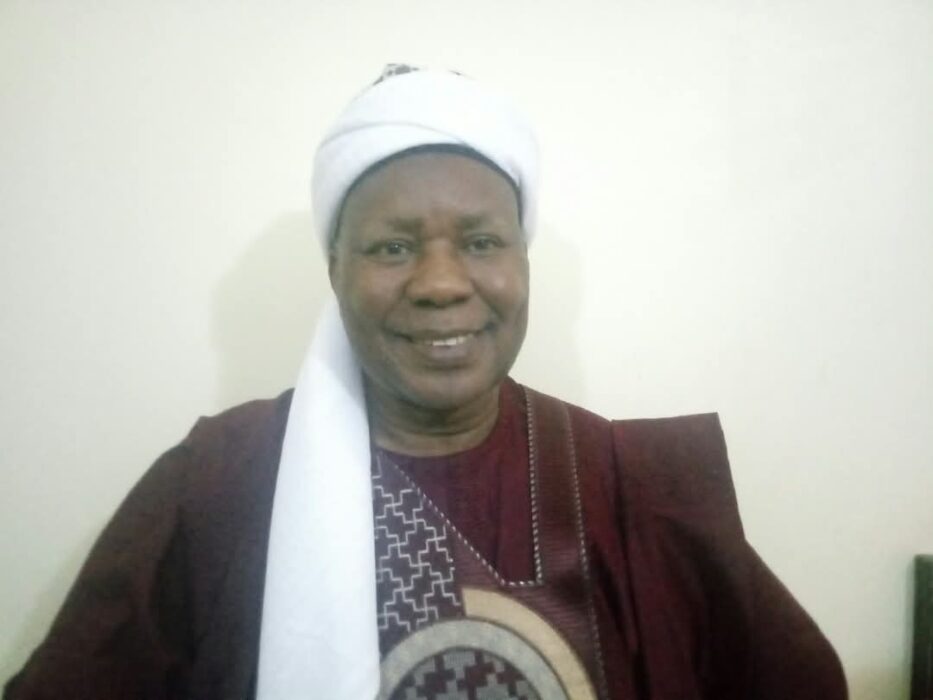
The newly turbaned Durumbun Gusau, Prof. Aminu Ibrahim Gusau, has called for stronger collaboration between the federal and Zamfara State governments, improved intelligence gathering and greater community participation to address the persistent security challenges in the state.
He made the call while speaking on Sunday with reporters in Gusau, the state capital, after he was conferred with the traditional title of Durumbun Gusau by the Emir of Gusau, His Royal Highness, Alhaji Abdulkadir Ibrahim Bello.
He expressed appreciation for the honour, saying tackling insecurity required a comprehensive approach involving security agencies, government institutions, traditional rulers, community leaders and other relevant stakeholders.
Prof Gusau described insecurity as a major obstacle to Zamfara’s development, stressing the need for the Federal Government to work closely with the state government to develop and implement effective security strategies.
He noted that Governor Dauda Lawal had demonstrated commitment and was making concerted efforts towards addressing the security situation. Still, he observed that constitutional control of the military and police largely rests with the Federal Government.
According to him, both levels of government need to establish a coordinated framework that would allow them to jointly assess security challenges, develop workable strategies and deploy professionals with the necessary experience.
The traditional title holder also emphasised the importance of credible intelligence gathering, warning that corruption, betrayal and poor coordination could undermine security operations.
He said security strategies should not be restricted to security personnel alone but must incorporate communities, which he described as important stakeholders in the fight against banditry.
He advocated engaging competent retired military and police personnel, particularly those with proven records of commitment and professionalism.
He maintained that there were experienced security professionals outside active service whose knowledge and expertise could contribute significantly to restoring peace in Zamfara.
Prof Gusau, who is also a former director at the Economic and Financial Crimes Commission (EFCC), called for the identification and engagement of individuals capable of developing practical solutions rather than those primarily interested in financial benefits.
He cautioned against allowing corruption and personal interests to undermine government efforts, insisting that addressing insecurity required sincerity, accountability, cooperation and innovative thinking.
He stressed that prayers remained important in overcoming the security challenges, but should be complemented by practical and sustained efforts by the government and citizens.
On his traditional title, Prof Gusau described the honour bestowed on him by the Emir as memorable and emotional, saying it reflected the importance of doing what is right and leaving a positive legacy for society.
He expressed appreciation to the Emir for recognising his contributions and pledged to continue supporting the traditional institution and contributing to the emirate’s development.
He described the Emir as an industrious, humble and dedicated traditional ruler who had demonstrated strong commitment to the welfare and development of his people.
He also commended Governor Lawal, whom he described as dynamic and energetic, for his efforts to improve governance and address the challenges facing the state.
The Durumbun Gusau explained that he was born and raised in Gusau, where he began his educational journey before proceeding to Government Secondary School, Gumi, now known as Unity Secondary School.
He later pursued an academic career at the University of Kansas in the United States, where he lectured for more than ten years and served as Programme Director of the Africana Leadership Institute (ALI).
He subsequently returned to Nigeria after being invited to participate in a recruitment process for the position of Director of Administration and Human Resources at the Nigerian Railway Corporation, where he served for nine years.
He later joined the EFCC, where he first served as Director of Planning, Policy and Statistics, and subsequently as Director of Organisational Support, overseeing up to eight units and serving as coordinating director.
He retired upon attaining the age of 60, coinciding with the completion of his secondment.
Prof Gusau, who described himself as retired but not tired, said he had remained actively engaged in public enlightenment, professional development and leadership advocacy.
He explained that his post-retirement engagements focused on three major areas: anti-corruption, contemporary leadership and ethical values in the workplace.
He said his professional experience at the EFCC informed his anti-corruption advocacy, while his leadership lectures focused on the changing demands of leadership in a rapidly evolving world.
He also highlighted the importance of emotional intelligence and understanding the employee life cycle, from first appointment to retirement, stressing that every worker should strive to leave a positive legacy.
Prof Gusau said he had conducted several lectures and engagements, particularly in Kano State, with the support of Governor Abba Kabir Yusuf, and remained committed to sharing his experience for the benefit of society.
He expressed optimism that with genuine cooperation, credible intelligence, responsible leadership and collective determination, Zamfara and Nigeria could overcome their security challenges.
We’ve got the edge. Get real-time reports, breaking scoops, and exclusive angles delivered straight to your phone. Don’t settle for stale news. Join LEADERSHIP NEWS on WhatsApp for 24/7 updates →
Join Our WhatsApp Channel