
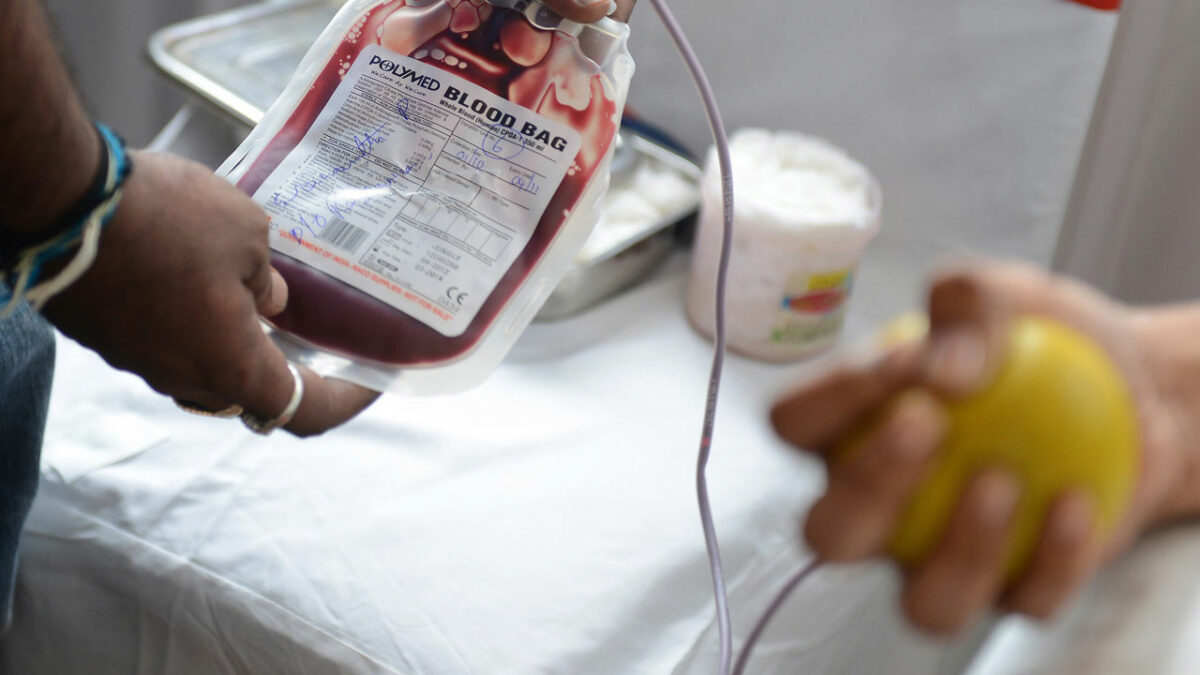
From mothers battling excessive bleeding during childbirth to accident victims rushed into emergency wards and patients undergoing major surgeries, the availability of blood often stands between life and death..
In such critical moments, the availability of safe blood is not merely a medical necessity but a lifeline that determines whether a patient survives.
Yet, for millions of Nigerians who may require blood transfusion at one point or another, accessing this life-saving resource remains a major concern, as the country’s blood collection capacity falls significantly short of its needs.
The National Blood Service Agency (NBSA) has disclosed that its centres collected only between 24,000 and 25,000 units of blood in 2025, a figure it described as grossly inadequate for a country with a population of over 200 million.
The disclosure has again drawn attention to the country’s persistent blood supply challenges and the urgent need to build a sustainable culture of voluntary, non-remunerated blood donation.
According to the agency, Nigeria needs at least two per cent of its population to donate blood to improve availability and ensure that patients requiring transfusion can access safe blood without unnecessary delays.
The Director-General of NBSA, Prof. Saleh Yuguda, made this known at a media roundtable on voluntary blood donation organised in Abuja in collaboration with the International Society of Media in Public Health (ISMPH).
Yuguda, who was represented by the Head of Operations Centre, NBSA, Dr Aliyu Dahiru Waziri, said despite efforts to improve blood collection and strengthen transfusion services, inadequate voluntary donations remained a major obstacle to achieving sufficient national blood reserves.
He said, “Although the agency has been doing quite a lot in the past few years to make sure this mandate is being met, we still have some challenges when it comes to the total units of blood we are able to generate.
“As of last year, if we only take the census in the National Blood Service, we will only be talking about 24,000 or 25,000 units of blood generally. But when having a population of more than 200 million people, we should be talking about at least two per cent of our population giving blood. So there is a huge gap that we need to fill.”
Blood transfusion remains an essential component of healthcare delivery, particularly in emergencies and the treatment of conditions that require regular blood replacement.
Women experiencing complications during pregnancy and childbirth, accident victims, surgical patients and people living with certain blood disorders depend on timely access to safe blood.
When blood is unavailable, families may be forced to move from one hospital or blood bank to another in search of donors, often at a time when every minute matters.
The shortage also places additional pressure on healthcare workers and families already struggling with the financial and emotional burden of medical emergencies.
Beyond the challenge of inadequate collection, misconceptions and social attitudes towards blood donation continue to undermine efforts to encourage voluntary participation.
The Programme Manager, Social and Behaviour Change Communication of ISMPH, Samiru Isa, identified misconceptions, fear of infections, and cultural and religious reservations as some of the major barriers to voluntary blood donation in Nigeria.
For many people, concerns about weakness, loss of blood, contracting infections or the possibility of developing health complications discourage them from donating.
Such fears, whether based on misinformation or inadequate understanding of the donation process, have contributed to the reluctance of many otherwise eligible individuals to become regular donors.
Isa said the media roundtable was organised to strengthen collaboration between journalists and relevant stakeholders, adding that the newly inaugurated Media Cell for Safe Blood would facilitate access to credible information, promote responsible health reporting and sustain public awareness.
The formal inauguration of the Media Cell for Safe Blood at the event is expected to strengthen collaboration between journalists and health stakeholders, improve access to credible information and promote a better understanding of voluntary blood donation.
We’ve got the edge. Get real-time reports, breaking scoops, and exclusive angles delivered straight to your phone. Don’t settle for stale news. Join LEADERSHIP NEWS on WhatsApp for 24/7 updates →
Join Our WhatsApp Channel