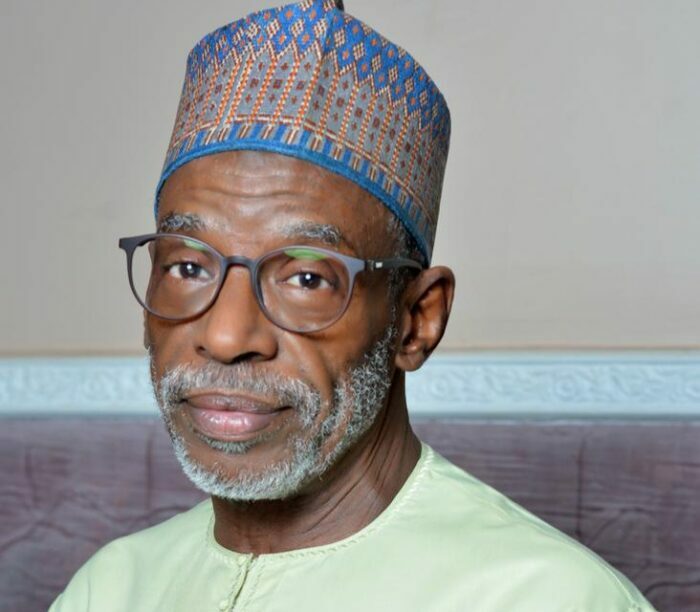
By Malam Nafiu Baba Ahmad
Even as the dust is still not settled over Plateau, I find myself compelled to speak again—because silence at a moment like this does not soothe; it hardens. The news that reached us from Angwan Rukuba in Jos—another brutal taking of innocent lives—has not faded into mere headlines. It has lingered like smoke in the mind: heavy, persistent, and accusing. In such circumstances, words alone can never bring back the dead, yet words can either numb the conscience or awaken it. Today I choose the latter, not for condemnation’s sake, but for life’s sake.
I write as Secretary-General of the Supreme Council for Shari’ah in Nigeria (SCSN). I speak on behalf of the Council with our deepest outrage and grief at the recent killings of innocent citizens at Angwan Rukuba, Jos, Plateau State. This heinous act is not only a tragedy in itself; it is yet another tragic reminder of the fragility of human life in our nation, and of the urgent need for decisive and responsible action by the authorities charged with protecting our people.
Let me be plain. The cycle we have witnessed is wearing us down. Violence occurs; grief follows; public statements are issued; condemnation echoes; then, too soon, the next outrage arrives. The pattern is becoming painfully predictable, and what is happening to our country demands more than routine denunciations. If condemnation has become a habit, then it must be replaced by conduct. The primary responsibility of government at all levels is the protection of lives and property. This responsibility cannot be deferred, cannot be diluted by political convenience, and cannot be satisfied with speeches that dissolve the moment the microphones are switched off.
I have witnessed communities in Plateau—people of many faiths, many backgrounds, and many lived experiences—trying to rebuild their days around the ruins left behind by violence. Yet what is rebuilding, if the foundations of safety remain unstable? What is progress, if families continue to bury one another, and if those who survive do so with fear as their constant companion? The injustice is not only in the killings; it is also in the helplessness that follows, the sense that the nation is repeatedly caught unprepared.
At the heart of this matter is something Islam has placed beyond argument: the sanctity of human life, regardless of religious or ethnic identity. Allah SWT says in the Glorious Qur’an: “Whoever kills a soul unless for a soul or for corruption [done] in the land, it is as if he had slain mankind entirely; and whoever saves one, it is as if he had saved mankind entirely.” (Qur’an 5:32). These words are not poetry to be admired from a distance. They are a moral law that binds the conscience of anyone who claims faith. When an innocent life is taken, it is not merely an assault on a family; it is an assault on the very meaning of humanity.
Likewise, the Prophet Muhammad sallallaahu alayhi wa sallam is reported in Sahih Bukhari as saying: “A believer remains within the scope of his religion as long as he does not kill unlawfully.” In these injunctions, there is clarity. The unlawfulness is not measured by tribe, region, or creed. The unlawfulness is not negotiated by politics or excused by rumour. It is measured by a divine principle. The taking of innocent life—whether Muslim or Christian, whether neighbour is Hausa, Berom, Yoruba, Igbo, or any other of our peoples—is a grave crime before Allah and a violation of the very essence of humanity.
And so, when I look at the nature and pattern of the attack at Angwan Rukuba, I cannot ignore the disturbing questions it raises. The incident strongly suggests a level of planning and coordination—an intention not only to harm, but to provoke wider communal conflict in an already fragile environment. That is precisely what must be addressed: the impulse of violence must be disrupted before it spreads. When the mechanism of hatred is allowed to work unhindered, grief becomes contagious, and the community that should be protected becomes the stage on which more suffering is performed.
This is why we urge the authorities to take seriously the possibility of well-funded and highly coordinated networks, including those who may be operating from outside the immediate area of conflict. We must investigate thoroughly, responsibly, and without theatrics—because speculation can inflame, and assumptions can misdirect enforcement. Yet concern alone is not enough. The concern must be translated into robust intelligence work, regional cooperation, and firm state action. If guns are obtained, if movements of armed fighters occur, if clandestine financing fuels destruction, then those channels must be traced, understood, and shut down.
Here, I must also speak to the role of local enablers—anyone who provides cover, information, recruitment, or logistics to violence. Sometimes the harm does not come only from the distant. Sometimes it is sustained by proximity: by those who exploit socio-religious fault lines to foment discord, to weaken national cohesion, and to keep the cycle of violence alive for selfish geopolitical or economic interests. Whether the actors wear uniforms or hide behind anonymity, whether they claim ideology or profit from instability, they must be urgently identified, exposed, and decisively dealt with. The law must reach them. The state must act with courage and consistency, not only when emotions are high, but also when the community is tired, and distraction sets in.
At the same time, I acknowledge that the wider context cannot be ignored. We are deeply alarmed by the escalating insecurity across the North-East and North-West regions of Nigeria, where communities continue to suffer from insurgency, banditry, and mass killings. Equally distressing is the recent loss of our gallant officers and soldiers who have paid the ultimate price in the line of duty. Their sacrifices cannot be reduced to a line in a condolence message. Their sacrifices must be honoured by a renewed, effective, and genuinely strategic national security response—one that takes intelligence seriously, guards its operational integrity, and prioritises the protection of civilians with the seriousness it deserves.
To those who are mourning in Plateau State, I extend the Council’s heartfelt condolences to the Government and people of Plateau State, and to all families who have lost their loved ones in this tragic incident and in similar acts of violence across the country. My prayer is that Allah SWT grants their families the strength to bear these irreparable losses. In moments like this, faith is not only an assurance of reward; it is also a demand for patience that does not become passivity. It is a demand that grief should not become fuel for revenge, and that sorrow should not be permitted to rot into hatred.
I therefore call on religious leaders across all faiths to rise to this critical moment—not by amplifying anger, but by guiding their followers towards restraint, peace, and mutual respect. Every sermon should be a bridge, not a match. Every prayer should be a request for justice, as well as for wisdom and protection. Citizens must also play a proactive role in identifying and shaming individuals or groups who incite violence and hatred within our communities. Silence or neutrality in the face of incitement does not remain neutral for long; it emboldens perpetrators. To hear a threat and do nothing is to assist, even if unintentionally.
Yet I do not place the entire burden on the public alone. The state must not shift responsibility onto communities while it fails to execute its own duties. Security personnel must be vigilant and impartial in how they handle breaches and incitements. Impartiality is not an ornament for official statements; it is the foundation of trust. When citizens believe the rules apply unevenly, they begin to protect themselves outside the lawful order—and insecurity multiplies in various forms.
This is why a thorough and credible investigation of the triggers is essential. We must examine what is visible and vocal in the desire to deepen hostility against specific faiths in and around Plateau State. We must assess the immediate facts, but we must also interrogate the wider arrangements that made violence possible in the first place. Accordingly, steps must be taken to ensure that communities feel safe. Safety is not merely the absence of gunfire; it is the presence of competent protection. It is the confidence that a mother can send a child to learn, that a farmer can go to the land, and that a trader can return home without the dread that hatred will decide the day’s outcome.
Religious leaders should cooperate with the Government and support each other to find peace and avoid escalating the conflict with rumours and unfounded accusations. Rumour spreads faster than truth, and in Plateau, such speed has repeatedly turned tragedy into a chain reaction. When people speak with responsibility—when they verify before they conclude—communities are protected not only by patrols but also by conscience.
Finally, I urge all Nigerians to remain vigilant, law-abiding, and united against those who seek to divide us. We must collectively reject violence and commit ourselves to prayers and constructive efforts towards peace, justice, and national development. Unity is not agreement on everything; unity is a shared commitment to the dignity of every human being under the law.
But unity must be matched by action. We cannot accept a situation in which the lives of citizens—whether they live in villages, towns, or on the outskirts of cities—are treated as collateral damage in struggles beyond their control. Plateau has already suffered far too much loss of life. A solution must be found to the endless loss of life in the Plateau—one that combines intelligence with discipline, community engagement with firm law enforcement, reconciliation with accountability, and long-term security planning with immediate protection.
This is where I believe the authorities must work harder: not with performative urgency, but with operational seriousness. They must strengthen early warning systems, improve coordination among security agencies, prosecute offenders without delay, and ensure that investigations lead to outcomes that restore confidence. They must also invest in prevention—because it is cheaper to prevent a tragedy than to mourn it repeatedly. Address root causes such as access to weapons, impunity, misinformation, and the exploitation of communal vulnerabilities. Build security arrangements that protect all citizens without discrimination based on tribe, region, or professed religion. In a country as diverse as ours, fairness is not only moral; it is strategic.
Nigeria must not continue on this dangerous path. The time for decisive action is now—not tomorrow, not after another funeral, not after another village mourns. Let the sanctity of life be the standard by which policy is measured and operations are judged. Let the protection of every soul, regardless of identity, be the measure of whether leadership is truly serious.
I offer these words with a sincere hope: that this grief will become a turning point, and that the nation will choose life over destruction. May Allah SWT guide all concerned authorities to do what is right, to act with justice, and to end the cycle of killings in Plateau.
- Nafiu Baba Ahmad, mni,
Secretary General,
Supreme Council for Shari’ah in Nigeria.
We’ve got the edge. Get real-time reports, breaking scoops, and exclusive angles delivered straight to your phone. Don’t settle for stale news. Join LEADERSHIP NEWS on WhatsApp for 24/7 updates →
Join Our WhatsApp Channel