After 26 years of democratic rule, Nigeria’s manufacturing sector remains a small slice of the economy, contributing roughly nine to 10 per cent of gross domestic product and showing little sign of structural transformation, the Centre for the Promotion of Private Enterprise (CPPE) said on Thursday.
In a report titled “Manufacturing Under Democracy: A Story Of Resilience Amid Structural Adversity,” CPPE chief executive Dr Muda Yusuf said the stagnant share of manufacturing in GDP highlights the failure of successive policy pronouncements and reform initiatives to deliver decisive industrial growth.
Yusuf described industrialisation as essential for quality jobs, value addition and export competitiveness, and warned that the collapse of public refineries, textile mills and other plants has eroded Nigeria’s industrial base.
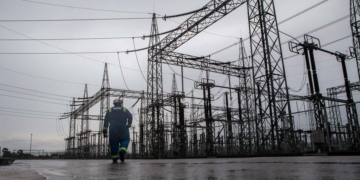
He noted isolated successes — notably cement and food-and-beverage firms and the Dangote Refinery — but said reviving manufacturing will require addressing structural constraints such as unreliable power, weak logistics (especially rail), high financing costs, inconsistent policy frameworks and smuggling that undermines tariff protections.
Yusuf decried that the period delivered only modest industrial outcomes despite successive policy pronouncements, leaving the economy dependent on primary commodities and imports.
He stated that 26 years after the return to democratic governance, Nigeria’s manufacturing sector remains largely trapped in a low-growth equilibrium.
“The sector’s contribution to GDP has hovered around nine to 10 per cent for most of the period, underscoring the absence of a decisive industrial transformation despite successive policy pronouncements and reform initiatives,” he noted.
According to Yusuf industrialisation is the engine room of economic transformation. It creates quality jobs, deepens value addition, strengthens export competitiveness and reduces vulnerability to external shocks.
“Yet, Nigeria’s democratic journey has delivered only modest industrial outcomes, leaving the economy heavily dependent on primary commodities and imports.”
He noted the collapse of public refineries, textile mills, tyre and battery plants as symbols of industrial erosion, arguing that industrialisation cannot flourish under structural inefficiencies and policy uncertainty.
He added that despite these setbacks, there is an opportunity to rejuvenate these industries and cultivate new growth, ensuring that indispensable industrial clusters once again become drivers of economic activity.
He also added that “there are notable success stories in Nigeria’s manufacturing landscape that can serve as catalysts for growth. The cement industry is a remarkable showcase of one of the nation’s industrial triumphs, while the food and beverage sector has continued to grow, demonstrating adaptability even in a complex operating environment.
“Moreover, the emergence of the Dangote Refinery represents a landmark investment poised to elevate Nigeria as a competitive player in the manufacturing and processing space. This venture highlights the potential of private sector leadership and investment in driving industrial ambition.”
To unlock the full potential of the manufacturing sector, Yusuf said, “it is critical to address structural constraints. Improving power supply is vital; enhancing energy reliability and reducing costs through sustainable solutions will empower manufacturers and bolster competitiveness.
“Additionally, investing in logistics infrastructure, particularly rail transport, will facilitate cost-effective cargo movement, reducing production and distribution expenses. Tackling the challenges of high financing costs is equally crucial; creating favourable lending conditions will encourage long-term investments in industrial growth.”
He noted that establishing a consistent policy framework will be essential for restoring investor confidence, saying that “a balanced approach that supports local industries while integrating competitive practices will foster resilience and solidify Nigeria’s manufacturing base.
“Furthermore, reinforcing border enforcement and addressing smuggling will enhance the effectiveness of tariff protections, creating a level playing field for domestic manufacturers against foreign competition.”
He pointed out that to strengthen Nigeria’s industrial footprint, a concerted effort to support indigenous manufacturing over the next two decades will be crucial. By leveraging existing successes and addressing structural challenges, Nigeria can pave the way for a vibrant, competitive manufacturing sector that not only drives economic growth but also empowers citizens and communities.”
We’ve got the edge. Get real-time reports, breaking scoops, and exclusive angles delivered straight to your phone. Don’t settle for stale news. Join LEADERSHIP NEWS on WhatsApp for 24/7 updates →
Join Our WhatsApp Channel