Global human rights group, Amnesty International (AI) and a coalition of civil society organisations, have condemned comments by the Minister of the Federal Capital Territory (FcT), Nyesom Wike, over what they described as a “violent” remark directed at Channels Television anchor, Seun Okinbaloye.
LEADERSHIP reports that the controversy stemmed from a statement made by Okinbaloye during a live broadcast of ‘Politics Today’, a Channels Television current affairs programme, on Thursday, where he warned about perceived threats to Nigeria’s multi-party democracy.
Okinbaloye had said: “I am particularly pained because when one party stands in the middle of a ballot, we are looking for the rest of the political parties. When some of us talk, it looks like our mouths are smelling. And we have been on this ground for a while,” Okinbaloye said.
“There are a lot of experienced men in the ADC who should have seen the devil in some of the issues that have been raised in the past months. Particularly, it looks like one of the hopes of the opposition going into 2027. If this hope is dashed, we are doomed democratically.”
His remarks were made against the backdrop of the controversy surrounding the derecognition of the African Democratic Congress (ADC) leadership by the Independent National Electoral Commission (INEC).
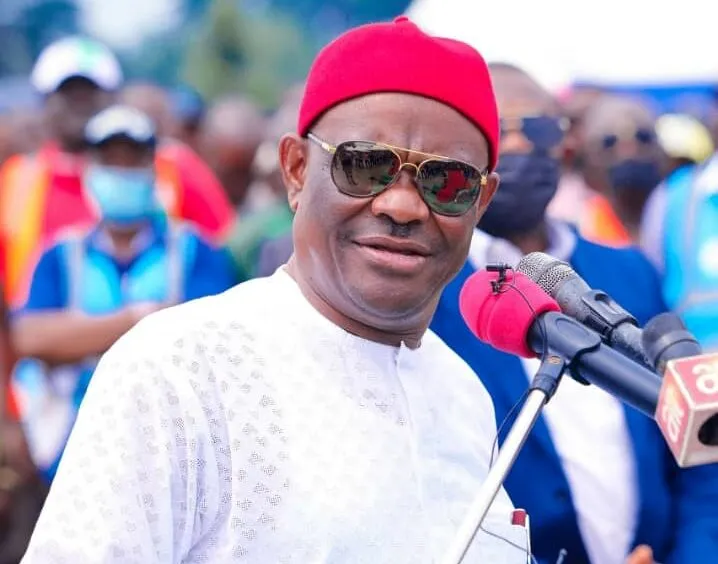
But, reacting passively during his monthly media chat on Friday, Minister Wike expressed anger at theTV journalist’s comments, stating, “I was thoroughly surprised yesterday when I was watching Seun’s Politics Today. If there was any way to break the screen, I would have shot him. How can an interviewer say we cannot allow a one-party state?
“You are now telling them your own view, as an interviewer, that you can’t allow a one-party state. I was just taken aback. I am not saying I will kill him. I am just angered that he made that kind of statement on national television. This is not the kind of journalism I have seen people do.”
The remark has since drawn widespread criticism.
In a statement issued on Saturday, Amnesty International described Wike’s comment as “reckless and violent,” calling for an immediate apology and retraction.
“Amnesty International strongly condemns the reckless and violent language of the Minister of the Federal Capital Territory (FCT), Mr. Nyesom Wike, in which he stated that he could respond to a statement by a journalist with shooting. Mr. Wike stated on live television that: ‘If there’s any way to break the screen, I would have shot him…’”
“Apart from inciting violence, Wike’s remarks violated Nigeria’s broadcasting code that the Nigerian Broadcasting Commission (NBC) is supposed to enforce.
“What Wike said carries the danger of normalising violence and encouraging the targeting of journalists for just doing their job. This level of violent intent coming from a member of Nigeria’s federal cabinet is unlawful and unacceptable. Mr. Wike must withdraw his violent statement immediately and apologise,” the group said.
Similarly, a coalition of 14 civil society organisations, including the International Press Institute, Media Rights Agenda, Enough is Enough Nigeria, Centre for Journalism Innovation and Development and YIAGA Africa, condemned the minister’s outburst, describing it as a threat to press freedom.
“The undersigned network of press freedom, freedom of expression and civil society organisations strongly condemns the recent remarks made by the FCT Minister, Mr. Ezenwo Nyesom Wike, who stated during a live media chat aired on Channels Television on Friday, 3 April 2026, that: ‘If there was any way to break the screen, I would have shot him,’” the groups said.
“The statement was undisguisedly directed at journalist Seun Okinbaloye, a political correspondent and anchor of Channels Television’s Politics Today programme, criticising his interviewing style and views expressed during his latest show.
“Although Minister Wike later clarified that he did not intend to physically harm the journalist, we are of the firm view that even such hypothetical expressions of violent intent constitute a conditional threat and cannot be dismissed as harmless. Even if meant humorously, such rhetoric can be perceived as intimidation by both the journalist and the audience.”
The groups warned that such rhetoric contributes to a climate of fear and undermines democratic values.
“We assert that conditional threats or violent statements against journalists contribute to a climate of fear, undermining the fundamental principles of a free and independent press, especially as journalists play a crucial role in informing the public and holding power to account.
“Threats or violent language, whether explicit or veiled, not only endanger individual reporters but also erode public trust in democratic discourse. Public officials must demonstrate respect for these principles and uphold standards of decorum and restraint in all communications.”
They further highlighted the risks faced by media practitioners in the country.
“With a press freedom index ranking of 122 out of 180 countries, Nigeria remains one of West Africa’s most dangerous and challenging countries for journalists. Media professionals are routinely monitored, attacked, and arbitrarily arrested, particularly during electoral campaigns. Incidents like this can further imperil journalists and highlight the urgent need for balanced and responsible political engagement, especially from public officials,” the statement added.
We’ve got the edge. Get real-time reports, breaking scoops, and exclusive angles delivered straight to your phone. Don’t settle for stale news. Join LEADERSHIP NEWS on WhatsApp for 24/7 updates →
Join Our WhatsApp Channel