Despite growing digital transformation across Africa, millions of schoolchildren, particularly in rural and underserved communities, remain cut off from quality online learning because of limited internet access and inadequate digital infrastructure.
Against this backdrop, Airtel Africa has pledged to connect 5,000 schools across its 14 African operating countries to free internet connectivity by 2027 through the Airtel Africa Foundation in partnership with the United Nations Children’s Fund (UNICEF), in a move aimed at narrowing the continent’s widening digital education divide.
The telecommunications operator said the initiative builds on its existing $57 million partnership with UNICEF, launched in 2021, which has already connected 3,296 schools, providing digital learning opportunities to more than two million learners and approximately 40,000 teachers across Africa. In addition, 64 digital learning platforms have been zero-rated, enabling more than 11 million users to access educational content at no cost.
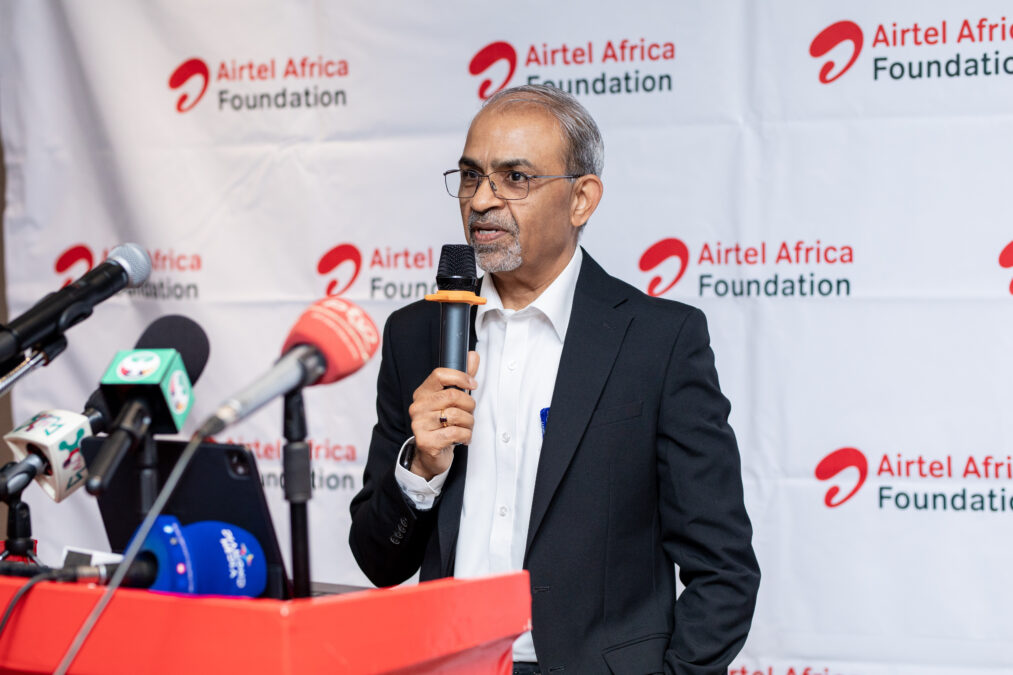
Airtel Africa Chief Executive Officer, Sunil Taldar, during a visit to St. Monica’s Girls School in Lusaka, Zambia, one of over 300 schools already connected under the initiative, remarked that expanding meaningful connectivity remains critical to improving learning outcomes and equipping young Africans with digital skills.
“Students are accessing best-in-class education from the curriculum developed by UNICEF in partnership with various Ministries of Education and provided through Airtel’s connectivity. We are also training teachers so that they deliver digital education effectively. We aim to continue deepening meaningful connectivity in schools by providing free internet access, zero-rated platforms and training teachers across the continent,” Taldar said.
Experts have repeatedly identified poor internet penetration, unreliable electricity supply, limited access to digital devices and insufficient teacher training as some of the biggest barriers to digital education across Africa. While internet coverage has expanded significantly in recent years, many schools—particularly those in remote communities remain without reliable broadband access, limiting students’ ability to benefit from online educational resources.
Commenting, Headmistress of St. Monica’s Girls’ School, Sr. Matilda Soloko, said internet connectivity has transformed the learning experience for students, as the impact of the programme is already being felt in participating schools.
“Being among the first schools connected in the initial stage, our learners have been able to study using the learning portal, and their studies have been intensified. We remain grateful to Airtel and UNICEF,” she said.
Also, UNICEF Zambia Country Representative, Dr. Saja Farooq Abdullah, described the initiative as an important intervention in addressing inequality in education through digital inclusion.
“What this partnership has brought is really bridging the equality gap and the digital divide. It is making sure that every child learns wherever they are. It was exciting and interesting to see and hear from the girls how they can learn at their own pace, how they can review the materials, and how they do their homework with comfort,” Abdullah said.
Also commending the collaboration, Zambia’s Director of Secondary Education, Yvonne Mwemba Chuulu, said partnerships between governments and the private sector are essential to expanding access to quality education.
“At the Ministry of Education, we cannot do it alone, and we are grateful for the partnership that we have today. Our children can learn in a blended fashion, where we have a teacher who is also employing digital devices. We have also heard from the learners that they can access the portal when they are at home, which is a good thing because our learners continue to learn in the comfort of their homes,” Chuulu stated.
While, the School Connection programme currently operates in 13 African countries—Chad, Congo, the Democratic Republic of Congo, Gabon, Kenya, Madagascar, Malawi, Niger, Nigeria, Rwanda, Tanzania, Uganda and Zambia. Through free internet connectivity, zero-rated educational platforms and teacher training, the initiative aims to provide children, particularly those in underserved communities, with the digital tools and skills required to participate effectively in an increasingly technology-driven world.
Consequently, the telco’s commitment comes as governments and development partners across Africa intensify efforts to close the continent’s digital divide, with improved school connectivity increasingly seen as a key driver of inclusive education, digital literacy and long-term socio-economic development.
We’ve got the edge. Get real-time reports, breaking scoops, and exclusive angles delivered straight to your phone. Don’t settle for stale news. Join LEADERSHIP NEWS on WhatsApp for 24/7 updates →
Join Our WhatsApp Channel