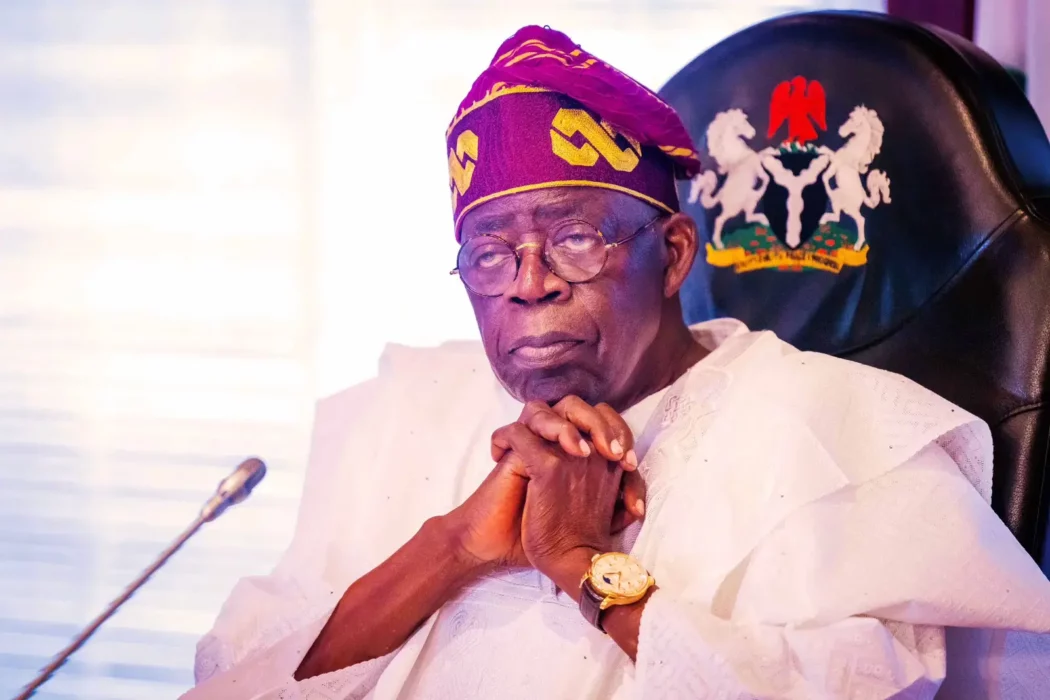
The recent meeting and exchange between President Bola Ahmed Tinubu and the Catholic Bishops at the Presidential Villa, Abuja, has, expectedly, generated mixed reactions across the political divide.
The Catholic Bishops Conference of Nigeria (CBCN), led by its new president, Most Rev Dr Matthew Ndagoso of Kaduna Archdiocese, had visited the president to raise concerns about some of the challenges facing Nigerians, including insecurity, economic hardship and the need for credible elections.
The president responded by defending his administration’s scorecard. However, when the discussion turned to politics and credible elections, he dismissed concerns about the neutrality of the Independent National Electoral Commission (INEC) and declared that “all is fair in politics”.
That controversial declaration has understandably raised concerns about the health and future of Nigeria’s democracy.
For such a statement to come from the president of a country that has long struggled to conduct free, fair and credible elections, it sends a disturbing signal about the direction of the nation’s democracy under the Tinubu administration. It could also be interpreted to mean that the president and the ruling All Progressives Congress (APC) are prepared to win elections by whatever means necessary.
When Most Rev Dr John Cardinal Onaiyekan interpreted the president’s statement in a television interview following the meeting, Tinubu’s media aides faulted him and sought to impugn his objective assessment of the issue. Unfortunately, however, the Presidency has yet to offer an official and convincing contextual explanation of what the president meant by the statement.
As a newspaper, we are worried, like many other Nigerians, about the implications of the president’s position for the nation’s democracy and, ultimately, its development.
After decades of flawed electoral processes that have produced disputed and doubtful outcomes, including the election that brought Tinubu to power, Nigerians may be forgiven for expecting that a politician who fought in the trenches against military dictatorship during the General Sani Abacha junta, and who spent many years in opposition politics, would use his presidency to strengthen and consolidate Nigeria’s democracy.
Unfortunately, Nigerian elections have continued to be bedevilled by various forms of malpractice perpetrated by desperate politicians, sometimes with the connivance of electoral officials and security agents. These acts are often aimed at subverting the will of the people as expressed through their ballots.
Is the president, therefore, suggesting that it is right and proper to attain political power through foul means? If that is the implication, then Nigeria’s laws clearly say otherwise.
The Electoral Act 2022, particularly Sections 120–129, criminalises various electoral offences, including voter-registration fraud, bribery, undue influence, disorderly conduct, ballot manipulation, electoral violence and misconduct by electoral officials. Similarly, the 1999 Constitution, as amended, provides the broader constitutional framework for free, fair and credible elections.
Worryingly, this is not the first time President Tinubu has made a statement that could be interpreted as showing a willingness to place political victory above democratic propriety. Ahead of the 2023 general election, when he was the presidential candidate of the ruling APC, he famously declared that power was not served on a platter, but that those who were ready to “snatch it and run with it” would get it.
We wish to remind the president that, regardless of his personal or political views, he is bound by the laws of the land, which he swore to uphold and defend.
As a newspaper, therefore, we make this unequivocal declaration: all is not fair in politics.
The president’s unpresidential remark has serious implications for the polity as the nation approaches the 2027 elections. It could embolden politicians and other aspirants to resort to desperate measures in their quest to win elections at all costs. Such a mentality can only encourage electoral violence, manipulation and fraud. Ultimately, it would undermine the fundamental principle that, in an electoral democracy, political power derives from the will of the people.
Such a position could also deepen voter apathy in a country already struggling with low participation in elections. In the 2023 general election, fewer than 30 per cent of registered voters cast their ballots. When citizens lose faith in the electoral process, democracy itself is weakened.
The way forward, we think, is for President Tinubu to recant the statement and apologise to Nigerians for what was, at best, an unfortunate and unpresidential remark. More importantly, he must live up to his constitutional oath by defending the Constitution and other laws of the land with the seriousness they deserve, irrespective of personal or partisan interests.
To demonstrate his commitment to credible elections, we urge the president to work closely with the National Assembly to fast track the passage of the Electoral Offences Commission Bill into law.
A dedicated and effective framework for investigating and prosecuting electoral offences would go a long way towards deterring politicians and other actors who seek to undermine Nigeria’s electoral democracy.
Nigeria has suffered enough from elections in which the will of the people is subverted. The 2027 elections must not become another opportunity for political actors to test how far they can go in the pursuit of power.
Finally, we declare that all is not fair in politics, and it must never be. There are rules that ensure fair competition and all constituted authorities are bound to ensure that political actors play by them.
We’ve got the edge. Get real-time reports, breaking scoops, and exclusive angles delivered straight to your phone. Don’t settle for stale news. Join LEADERSHIP NEWS on WhatsApp for 24/7 updates →
Join Our WhatsApp Channel