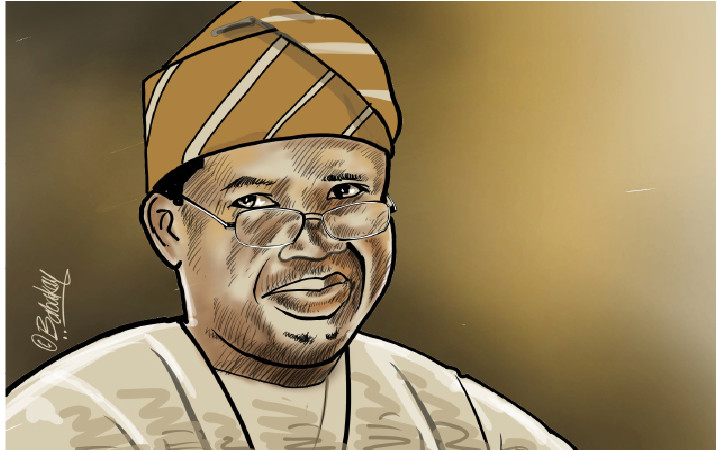
As preparations for the 2027 polls intensify, chairman of the Independent National Electoral Commission (INEC), Professor Joash Amupitan, seems to be nearing his limit. He is entangled in a series of relentless calls for his resignation amid allegations of perceived bias, which gained momentum after a tweet supposedly from him emerged. How he navigates this ongoing challenge remains to be seen.
I do not envy Amupitan, nor do I pity him. The way the Professor of Law and Senior Advocate of Nigeria (SAN) has become entangled in this controversy highlights one of the many frustrations of holding public office in Nigeria, especially when the role is as sensitive as chairing the election management body.
Self-inflicted misfortune
But make no mistake. Amupitan has nobody but himself to blame. He is responsible for his own misfortune. The fact that he agreed to serve as INEC chairman, knowing full well that he had publicly aligned with the ruling All Progressives Congress (APC) is something I still cannot understand. Was he thinking Nigerians wouldn’t raise eyebrows?
It is clear that the new INEC boss has his hand in the cookie jar. Tweets from an account linked to him exposed his sympathy for the ruling APC. The denials, rebuttals, refutations, and attempts to distance him from the tweet have failed. There are unmistakable digital footprints indicating that the tweet was from the University of Jos law professor.
What this implies, and why Nigerians are calling for his resignation, is that the integrity of the 2027 elections is already being questioned months before the polls. Can Nigerians trust the results Professor Amupitan will declare at the end of the polls? Will he remain impartial against the ruling APC, especially given that he previously tweeted that victory is certain for the APC in response to a pro-APC post?
In discussing Prof Amupitan’s continued stay as INEC chair, Nigerians are worried about two issues: the posting of a pro-APC tweet and the attempt to conceal it by changing the X handle to present it as a parody account. Both raise serious doubts about his ability to oversee a credible election and have fueled renewed calls for his resignation.
Trust issues
Is Amupitan the owner of the account that tweeted “victory is sure,” clearly in support of the APC? Was that the same account that was hurriedly turned into a parody account to mislead Nigerians? If the answers are affirmative, he does not deserve to remain in office as INEC chair. He cannot be trusted to conduct a credible poll.
It is hard to believe that a man who, just three years ago, behaved in a way that suggested support for a political party perceived as consistently trying to weaken opposition forces and entrench itself, can now be trusted to conduct a credible poll.
One of the most jejune excuses and attempts to deodorise Amupitan’s tweet came from Senate President Godswill Akpabio. He said the INEC chairman merely said victory is sure.
“He didn’t say victory is sure for APC. He didn’t say victory is sure for PDP. He just says victory is sure,” Akpabio, in his usual peak of buffoonery, said while speaking during the commissioning of the Nigeria Revenue Service building.
But what Senate president conveniently overlooked was that Amupitan was replying to a tweet by an APC member, assuring him that an APC victory was guaranteed. The original tweet celebrated the APC’s success in an Igbo-dominated area, one where even the tweeter admitted had been challenging for the party to win.
A curious juxtaposition of Amupitan’s tweet and INEC’s decision to derecognise the ADC leadership further deepens doubts about the electoral body’s commitment to fairness, which is an essential ingredient for a credible poll. INEC claimed it was acting on a court directive that the status quo antebellum be maintained.
There is a link. An INEC chairman who seems supportive of the ruling party takes steps to derecognise the leadership of a coalition of opposition parties, ready to challenge the ruling party, hiding under a court order for which he should have sought interpretation. If this is not a warning sign for a country heading towards a contested election, then nothing else is. To that extent, the call for Amupitan to resign demonstrates genuine patriotism.
Bigger problem
However, the calls for his resignation have also highlighted the need to review the process for appointing the INEC chairman. Why should a president, who belongs to a political party with a vested interest in an election, be solely responsible for appointing the chairman of the nation’s electoral umpire?
Credible elections in Nigeria still seem like a distant dream, even when the country had INEC chairmen who were not directly affiliated with the ruling party. Now that we have one who is widely perceived by opposition members as aligned with the ruling party, can anything positive emerge from the electoral process?
Nigeria’s journey to credible elections has been long and challenging. Since 1999, the number of litigations at election petition tribunals has continued to increase after each electoral cycle, a sign that the process remains flawed.
Elections in Nigeria are often rigged, and the electoral body is frequently complicit. This partly explains why many Nigerians have lost confidence in the system. Ultimately, the method of appointing an INEC chairman plays a critical role in the integrity of the electoral process. There is a fundamental flaw in the current approach.
The constitution clearly gives the president the power to appoint, subject to parliamentary approval. In effect, it allows partisan actors—the president and the parliamentarians—to appoint those who will oversee elections in which they or their party have a direct stake.
In fairness to the framers of the constitution, section 14(2a) of the Third Schedule to the 1999 Nigerian Constitution, as amended, provides for political neutrality and states, inter alia: “a member of the Independent National Electoral Commission shall be non-partisan and a person of unquestionable integrity.”
However, like many things in Nigeria, this provision is more often breached than observed. There have been several instances of members of the ruling party being appointed as Resident Electoral Commissioners and assigned to oversee elections in different states. That is a credible election sacrificed on the altar of partisanship.
What is clear is that the process lacks transparency. It weakens INEC’s credibility and compromises its impartiality. That is unacceptable in any democratic society.
The controversy surrounding Professor Amupitan shows that the country may be heading towards yet another round of flawed and highly contested elections that will end up in court. How much more will Nigeria spend on another exercise that may prove just as disappointing?
Prof Amupitan now faces a dire dilemma: resign honourably or remain as INEC chairman and oversee an election that many, especially within the opposition coalition, have already lost faith in. Whatever choice he makes, history will judge him. But Nigeria must endure and emerge stronger for future generations.
Post-election Litigation Budget
Nigerians should be concerned by the staggering N135 billion allocated by President Bola Ahmed Tinubu for post-election litigation. This sum far exceeds the budgets of some vital sectors, including primary healthcare. Why should a government that promised to conduct credible elections allocate such a substantial amount to legal disputes after the polls?
We’ve got the edge. Get real-time reports, breaking scoops, and exclusive angles delivered straight to your phone. Don’t settle for stale news. Join LEADERSHIP NEWS on WhatsApp for 24/7 updates →
Join Our WhatsApp Channel