As the curtain falls on 2025, it feels fitting to pause, breathe, and look back thoughtfully and honestly at the questions, arguments, hopes, and discomforts that shaped my weekly conversations with readers of my back-page column in Leadership this year. Columns, after all, are not just opinion pieces; they are a public diary of our collective anxieties and aspirations. They capture what worried us, angered us, inspired us, and what we dared to imagine differently.
If there was a single thread running through my writing in 2025, it was this: Nigeria and indeed Africa stand at a crossroads where governance, justice, technology, faith, gender, and accountability can no longer be treated as separate conversations. They are deeply intertwined, and our refusal to see those connections has cost us dearly.
Governance, Accountability and Insecurity
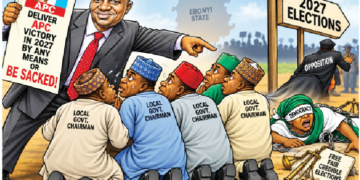
Several of my columns this year returned, again and again, to the unfinished business of accountability. From reflections on stolen wealth and repatriated assets to broader questions about elite impunity, 2025 reminded us that corruption and lack of accountability are living symbols of broken trust between citizens and the state.
I argued that recovery of stolen assets, while important, is not justice in itself. Without transparency, citizen oversight, and institutional reform, repatriated funds risk becoming recycled corruption.
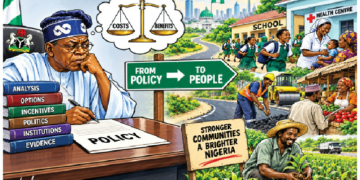
In a year when economic hardship deepened for many households, governance failures felt less abstract and more personal. Inflation, food insecurity, and shrinking public services sharpened the moral urgency of accountability. My columns sought to push us beyond resignation—the dangerous belief that “this is just how things are”—towards the harder work of demanding better.
On insecurity, I wrote about how the spread of violence reflects deeper governance failures, where weak institutions and eroded trust have left communities to fend for themselves, and that fear has become a daily reality for ordinary Nigerians.
Gender, Power, Disability and Inclusion
Gender equality and women’s rights remained central to my writing in 2025, not as a niche concern, but as a core governance issue. From discussions on gender-based violence to reflections on women’s leadership, I tried to make one point repeatedly clear: societies that tolerate violence and exclusion against women are societies that have made peace with injustice.
This year marked important moments of reflection for Nigeria’s women’s rights movement, including institutional milestones and anniversaries that forced us to ask difficult questions. What has changed? What has stalled? And where have we perhaps become too comfortable with symbolic progress?
In writing about gender-based violence, I resisted the temptation to focus only on sensational cases. Instead, I returned to the quieter, more pervasive forms of harm: economic exclusion, unpaid care burdens, discriminatory laws, and social norms that normalise inequality. Violence is not only physical; it is embedded in systems that deny women voice, agency, choice, power and safety.
I also reflected on the resilience of feminist organising in Nigeria, often underfunded, frequently attacked, yet persistently creative. In a shrinking civic space, women’s rights organisations have continued to document abuses, support survivors, and push for reform, even when the political rewards are minimal. work, I argued, deserves not just praise but protection and sustained investment.
I wrote about disability and inclusion not as charity, but as rights and justice, how policies often ignore the lived realities of persons with disabilities, especially women and girls, and how this exclusion compounds poverty and vulnerability.
From social protection to urban design, I argued that inclusion must be intentional. When systems are designed without the most marginalised in mind, they inevitably reproduce inequality. True inclusion requires listening to those most affected and redistributing power, not just resources.
Faith, Morality, and Public Life
One of the more sensitive but necessary conversations this year was the role of faith in public life. Nigeria is a deeply religious society, and faith leaders wield enormous influence, sometimes for good, sometimes for harm. My columns explored the tension between moral authority and political complicity, especially when religious institutions remain silent in the face of injustice or actively reinforce harmful norms.
The passing of major global religious figures in 2025 prompted reflections on legacy, humility, and moral courage. What does it mean to lead ethically in a fractured world? And how do faith institutions reconcile spiritual teachings with the realities of power, money and politics?
I argued that faith should never be a refuge from accountability. On the contrary, religious values of justice, compassion, and dignity should compel deeper engagement with social and political issues, not withdrawal. When faith aligns uncritically with power, it risks losing its prophetic voice.
Technology, Power, Climate Change and Youth
Technology also featured prominently in my writing this year, particularly around questions of accountability, inclusion, and youth futures. Nigeria’s digital economy continues to grow, yet so do concerns about exclusion, surveillance, and unregulated power. Who benefits from digital transformation? Who is left behind? And who is setting the rules?
I wrote about artificial intelligence not as a distant, abstract phenomenon, but as a present reality shaping jobs, governance, and social relations. Without clear ethical frameworks and local voices in global tech debates, African countries risk becoming testing grounds rather than decision-makers.
Writing on COP35, I focused on the persistent disconnect between global climate pledges and the lived realities of climate-vulnerable countries.
Youth, often celebrated rhetorically but marginalised in practice, were central to this conversation. Nigeria’s demographic reality demands more than slogans about innovation. It requires serious investment in education, digital skills, decent work, and platforms for meaningful participation.
Civil Society, Shrinking Space, and Democratic Resilience
2025 was not an easy year for civil society, in Nigeria or globally. Restrictions on civic space, attacks on activists, and the delegitimisation of dissent featured heavily in my reflections. Yet, amid these challenges, I also highlighted stories of courage and innovation, of organisations and individuals finding new ways to organise, advocate, and survive.
Civil society, I argued, remains one of the strongest defences against democratic erosion. But it cannot do this work alone. Media, citizens, donors, and institutions all have a role to play in defending the right to speak, organise, and hold power to account.
Looking Ahead
In a year saturated with information, outrage, and fatigue, writing a weekly column can sometimes feel like whispering into a storm. But I remain convinced that words matter. They shape narratives, challenge complacency, and create records that outlast news cycles.
This column has always been an invitation to think critically, to disagree respectfully, and to refuse easy answers. It is also a reminder that progress is rarely linear. Setbacks are real, but so is resistance.
As we step into 2026, the questions that animated my writing this year do not disappear. If anything, they become more urgent. How do we rebuild trust in institutions? How do we centre justice in economic reform? How do we ensure that technology serves people, not the other way around? And how do we protect the most vulnerable in an increasingly unequal world?
I do not pretend to have definitive answers. What I offer, week after week, is a commitment to keep asking the questions and insisting that Nigeria deserves better than cynicism.
So, on that note, it truly is a wrap for 2025. Thank you for engaging, challenging, agreeing, disagreeing, and keeping the conversation alive. Here’s to continuing the writing and questioning in the year ahead!
We’ve got the edge. Get real-time reports, breaking scoops, and exclusive angles delivered straight to your phone. Don’t settle for stale news. Join LEADERSHIP NEWS on WhatsApp for 24/7 updates →
Join Our WhatsApp Channel