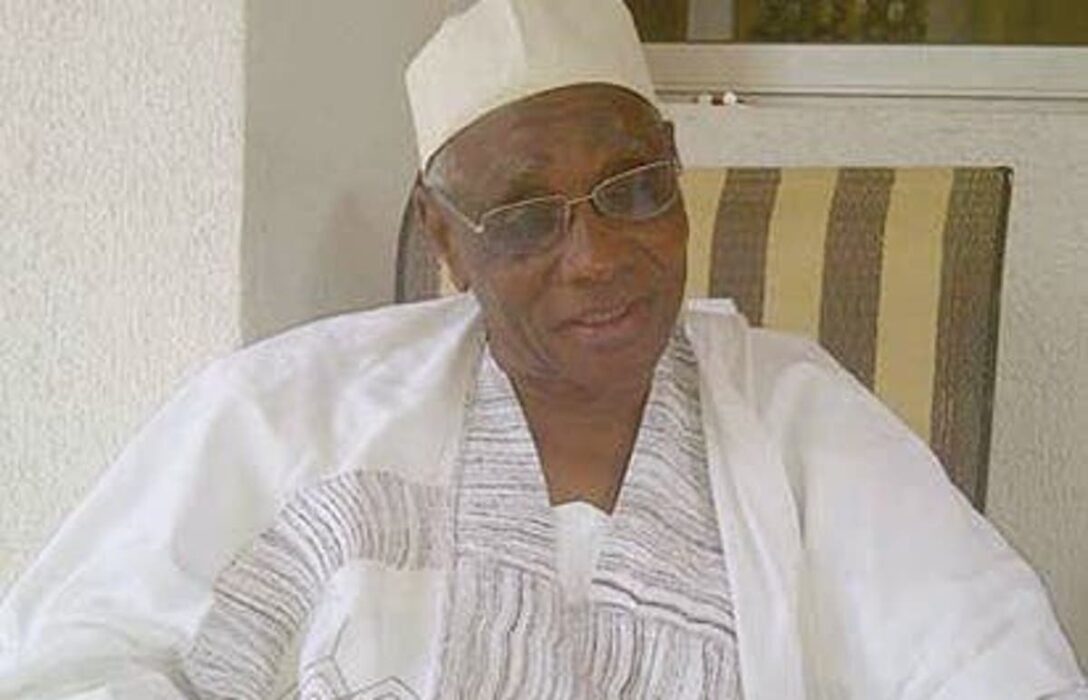
At 87, Professor Ango Abdullahi, the former vice chancellor of Ahmadu Bello University (ABU), Zaria, remains passionate and critical of Nigerian leaders at all levels for failing to serve the people and develop the country.
On December 6, 2025, it was vintage Abdullahi as he used the 2nd edition of the late Usman Katsina’s Memorial Conference organised by New Vision Development Initiative (NEVDI) in Kaduna to tell truth to power.
He ended his goodwill message with a charge to Nigerians to emulate the lifestyle of the late General Hassan Usman Katsina, who dedicated his life to selfless service to Nigeria and the North in particular.
Over the years, Prof. Abdullahi has stood as a distinguished scholar, university administrator, and an elder statesman, whose life embodies the virtues of honour, integrity and an unwavering commitment to public service.
His journey as a scholar, mentor and northern leader has earned him the admiration of colleagues, students and other Nigerians who have witnessed the depth of his character and the clarity of his vision.
In an era marked by shifting values and competing interests, Abdullahi embodies a steady moral compass and serves as a reminder of what principled leadership should be.
Born with a passion for learning and nurtured by strong values of discipline and humility, Abdullahi’s early years set the foundation for a lifetime of academic excellence. His academic career has been nothing short of inspiring, spanning his tenure as vice chancellor of the prestigious Ahmadu Bello University (ABU).
As a scholar, he distinguished himself through a deep understanding of his field, a methodical approach to research, and a commitment to truth—a principle he consistently upholds both in the classroom and beyond. His publications, lectures and mentorship have shaped the intellectual journeys of countless students who continue to draw wisdom from his teachings.
His approach to scholarship goes beyond the acquisition of knowledge; he views education as a transformative tool capable of reshaping society. This belief guided his administrative roles in the academic world, where he championed reforms aimed at improving standards, strengthening institutional integrity, and promoting fairness. His leadership style, grounded in consultation and empathy, continues to be cited as a model for administrators seeking to balance authority with accountability.
Beyond his professional accomplishments, Abdullahi is deeply rooted in community service. He has devoted significant time to youth development programmes, educational outreach initiatives and dialogue platforms that foster peace and mutual understanding.
In a region where economic and social challenges often require steady hands and wise counsel, he has consistently stepped forward as a voice of reason and a symbol of hope. Many young people describe him as a mentor who not only imparts knowledge but also models character through his everyday conduct.
What sets Prof. Abdullahi apart is his humility. Despite the accolades he has received and the influence he wields, he remains approachable and grounded.
To him, leadership is not about status but about service. It is a philosophy he practices with remarkable discipline.
In a world hungry for integrity and vision, Professor Abdullahi Ango’s life offers a timeless lesson: that honour is not a title bestowed, but a reputation built through consistent action; that integrity is not a slogan, but a daily commitment to doing what is right; and that true leadership is defined not by power, but by purpose.
As his influence continues to shape the spheres of academia, governance, and community development, Abdullahi remains a shining example of what it means to live a life of substance. His story is a reminder that Nigeria—and the world—still has leaders whose character inspires confidence and whose contributions leave an enduring mark on generations.
A distinguished figure in the field of agriculture and a respected elder statesman has left an indelible mark on Nigerian society. He is widely recognised as the chairman of the Northern Elders Forum (NEF). He does not hide his biases for the North in a strong and united country.
When the region’s interests are undermined or compromised, Abdullahi cries out until they are addressed. He is not too friendly with any government, especially at the federal level, that he cannot criticise when the North is marginalised or perceived to be ill-treated.
Born on December 13, 1938, in Old Giwa village, approximately 30 kilometres from Zaria, Abdullahi’s journey to becoming a prominent figure in academia and Nigerian politics had humble beginnings. His educational path included notable institutions such as Barewa College (1953-58), the Nigerian College of Arts, Science, and Technology in Zaria (1959-61), the University of Ibadan (1961-64) and Kansas State University in the United States.
After graduating in 1964, Abdullahi returned to Nigeria to start his career in the Northern Nigeria Ministry of Agriculture. However, his posting led him to Samaru, where Ahmadu Bello University (ABU) was taking shape. ABU was established in 1962, and the institutions in its vicinity formed the foundation of many of its early departments and faculties.
We’ve got the edge. Get real-time reports, breaking scoops, and exclusive angles delivered straight to your phone. Don’t settle for stale news. Join LEADERSHIP NEWS on WhatsApp for 24/7 updates →
Join Our WhatsApp Channel