The recent beheading of a teacher in Oyo State has jolted Nigerians into the grim reality that terrorism is no longer a distant northern tragedy. What many once dismissed as a security crisis confined to Borno and parts of the North-East has now crept steadily into the South-West, threatening communities that had long considered themselves relatively insulated from the country’s escalating violence.
For the past 15 years, Nigerians have watched as insurgents devastated the North-East. Entire communities in Borno, Yobe and Adamawa were overrun by Boko Haram and Islamic State West Africa Province (ISWAP) fighters. Thousands were killed, schools destroyed, and millions displaced. While the Nigerian military recorded some successes in weakening insurgent strongholds, the terrorists merely evolved and migrated to other parts of the country in the form of banditry.
Bandit violence soon engulfed the North-West. Kaduna, Zamfara, Katsina and Sokoto states became epicentres of mass kidnappings, cattle rustling and bloody raids on communities. Bandits took over forests, terrorised neighbourhoods and abducted travellers on highways. From the North-West, they entered the North-Central region, with Benue, Niger, Plateau and Kogi suffering repeated attacks from armed groups, and of late they have launched deadly attacks in Kwara State bordering the South-West.
Now, they have shown their ruthless presence in the South-West.
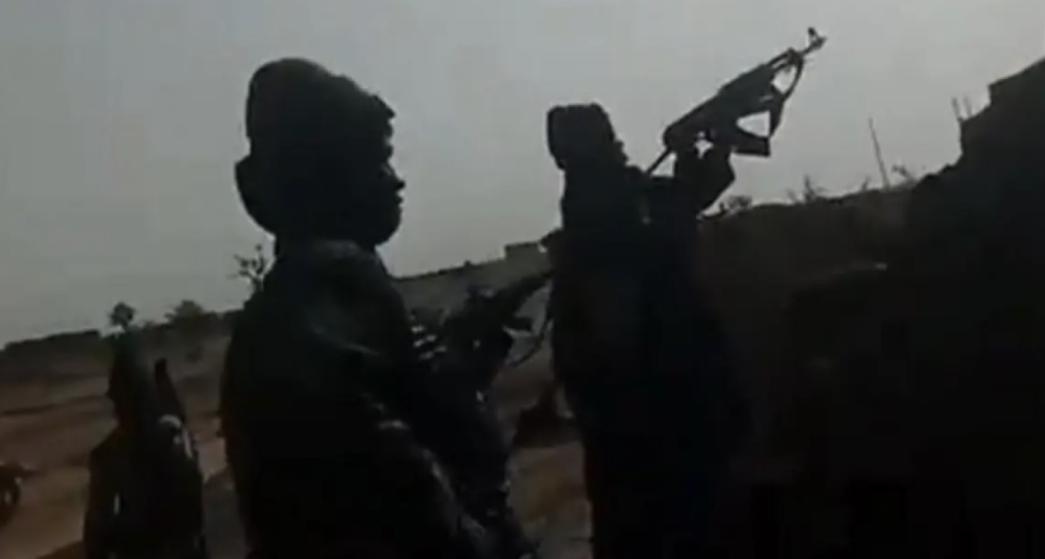
The coordinated attacks on three schools in Oriire Local Government Area of Oyo State have become a defining symbol of this new reality. Armed men stormed Baptist Nursery and Primary School, Yawota; Community Grammar School, Ahoro-Esiele; and L.A. Primary School, abducting pupils and teachers while killing at least two people. The audacity of attacking schools in broad daylight showed a frightening level of boldness with which they now operate in the once-safe region.
There are also growing reports of kidnappings and attacks across Ondo, Ekiti, Ogun and Osun States. Farmers have abandoned farmlands. Travellers now avoid certain highways. Forest communities increasingly live under fear of raids. The South-West, once viewed as relatively stable, is gradually becoming another theatre of organised criminal violence.
In recent months alone, gunmen abducted members of a family in Ijebu-Ode, attacked worshippers during a crusade in Ekiti State, disrupted communities in Kwara State bordering the South-West, and targeted police formations. The list continues to grow with disturbing regularity.
The warning signs have been growing. The worrying attacks from terrorists in the region, especially herdsmen militias, informed the establishment of the regional security outfit, the Western Nigeria Security Network, codenamed Operation Amotekun, which was officially launched on 9 January 2020 by the six governors of the region. However, the security situation in the region has gone beyond the issue of criminal herdsmen.
Pan-Yoruba socio-political organisation Afenifere has repeatedly raised the alarm over the infiltration of terrorists and kidnappers into the region. The group cited recent incidents in Ogun, Ekiti and Oyo States as evidence that armed groups are steadily expanding their operations southwards.
A few months ago, Gani Adams warned during a television interview that intelligence at his disposal indicated that terrorists had infiltrated the region and were planning attacks in South-West states, including Oyo, Ondo, Ogun, Ekiti and Lagos. Only Lagos has yet to suffer a notable attack. Yet nothing tangible was done to stop this eventuality.
Despite the Defence Headquarters’ claim that there are no terrorist operational bases following the attacks on schools in Oyo, Afenifere’s concerns cannot be dismissed with a wave of the hand.
The footage of communities and traditional institutions fleeing their domains in panic is the kind of scene once associated only with northern parts of Nigeria.
As a newspaper, we are worried, even shocked, that with insecurity in the South-West unfolding before public view, the government is still engaging in false narratives and downplaying the gravity of the situation. Rather, our political leaders are devoting most of their energy to politics and re-election rather than confronting the expanding terror attacks with the seriousness they deserve. They risk repeating past mistakes. For years, officials downplayed the gravity of the Boko Haram onslaught until it became a national catastrophe. Banditry in the North-West was initially dismissed as isolated criminality before it escalated into a vast network of organised terror. Nigeria cannot afford another cycle of denial.
The South-West’s economic importance makes the threat even more alarming. The region is home to critical commercial infrastructure, agricultural production hubs and major transport corridors linking different parts of the country. Prolonged insecurity in the region would have devastating economic and social consequences for the entire federation.
The governors and traditional authorities in the South-West must not sit and wait for the federal government. They should urgently strengthen coordination among state security outfits, especially the Amotekun Corps, while scaling up regional intelligence sharing and response mechanisms.
Community intelligence must equally be prioritised. Local hunters, vigilantes and residents often possess critical information about suspicious movements within forests and rural communities. Their integration into formal security frameworks should no longer be treated as optional.
Nigeria must enter an active modern war mode driven by surveillance and drone technology so that insurgents can be monitored from a distance and neutralised with greater efficiency.
Forest reserves and border communities require sustained surveillance and security presence to deny armed groups safe havens from which to plan and launch attacks.
Ultimately, the country needs help along these lines; the states and federal government should not hesitate to seek assistance.
The recent collaboration with the US in taking out ISIS commanders is a testament to how useful such cooperation can be. However, the fact that a Nigerian was reportedly among the most active ISIS global leaders and operated from this country should warn us about how deeply that terror group may have embedded itself within Nigeria.
Not only the South-West, but also the South-East and South-South regions must begin to act proactively and decisively now or risk suffering the fate that has befallen other parts of Nigeria. With kidnapping cells very active in Kogi and Edo States, tormenting travellers, and criminal Fulani militias operating within forests, the threat is closer than many envisage. The Oyo beheading incident and repeated attacks on villages and highways must serve as a national wake-up call. Otherwise, we will wake up one day with no country to call our own. It is that grave, and our present leaders must treat it as such.
We’ve got the edge. Get real-time reports, breaking scoops, and exclusive angles delivered straight to your phone. Don’t settle for stale news. Join LEADERSHIP NEWS on WhatsApp for 24/7 updates →
Join Our WhatsApp Channel