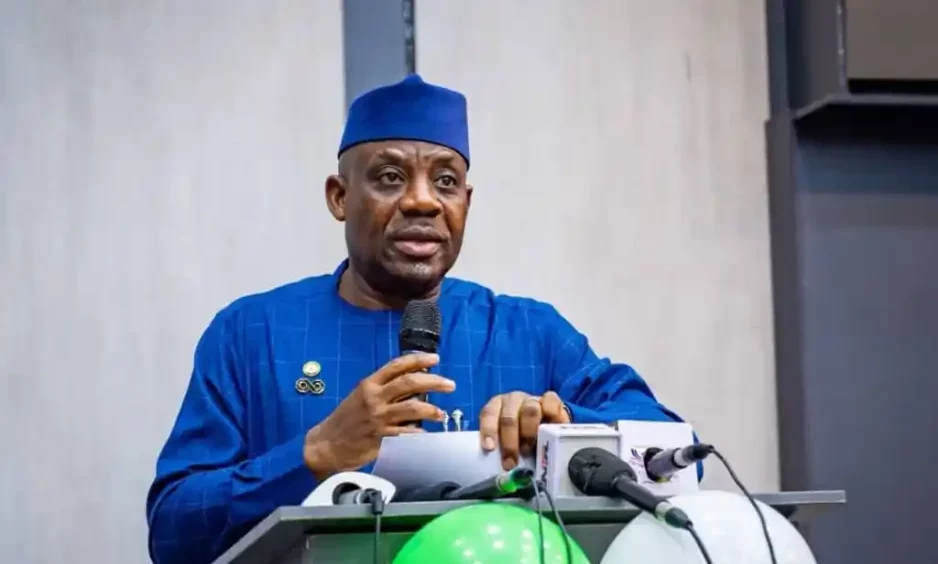
The Minister of Education, Dr Maruf Tunji Alausa, has announced a plan this newspaper considers overdue in the best sense of the word: six regional Autism Centres, one in each of Nigeria’s geopolitical zones, alongside an expansion of university training in Audiology, Speech and Language Therapy, and Occupational Therapy.
The announcement acknowledges a reality Nigerian families raising autistic children have lived with for years without much public attention from government. As the minister himself put it, “Today, many families still have to travel outside Nigeria to access care for their autistic children. This is not acceptable, and the Federal Government is determined to change that.” We agree with every word of that sentence, and we take the government at its word that it intends to act on it.
The workforce numbers behind the announcement deserve real credit. The Federal Government says it has already expanded the number of universities offering specialised training in these fields from around four to nearly sixteen, a significant jump in the pipeline of professionals Nigeria desperately needs. Audiology, speech therapy and occupational therapy have long been treated as niche specialisations within Nigerian medical education, produced in small numbers by a handful of institutions while demand for autism and ADHD services grew steadily across the country’s cities and, increasingly, its smaller towns.
Quadrupling the number of training institutions is not a symbolic gesture. It is the kind of unglamorous capacity-building that eventually determines whether a diagnosis translates into actual therapy or only into a referral letter a family cannot act on.
The government’s plan to fast-track accreditation of the Federal School of Occupational Therapy and the Occupational Therapy diploma programme at the University of Benin, creating a pathway from diploma to bachelor’s degree, addresses a genuine bottleneck in how Nigeria produces specialists in this field. A diploma-to-degree pathway that keeps working therapists in the system while they upgrade their qualifications is more practical than forcing professionals to abandon paid work for years of full-time study, and it should help retain talent that might otherwise be lost to attrition or emigration. The promised expansion of infrastructure, equipment and instructional materials to training universities from next year is the kind of follow-through that gives this announcement more credibility than most.
All of that said, this newspaper cannot let the headline figure pass without scrutiny. The Autism Centres themselves, the most concrete and visible commitment in this announcement, are not scheduled to open until 2027. For a family raising a young autistic child today, that is not a plan. It is a wait of at least two more years, during which the child will move through some of the most developmentally significant years of their life without the specialised diagnostic and therapeutic support the government itself acknowledges is currently unavailable at home. Early intervention is not a minor detail in autism care. It is widely recognised as one of the most important factors in a child’s long-term outcomes, which makes a multi-year runway before the first centre opens a genuine cost, not merely an inconvenience of planning.
Nigerians have also learned, through long experience, to treat any government infrastructure announcement dated several years into the future with a measure of caution. Ambitious plans unveiled with a specific opening year have stalled before, delayed by funding shortfalls, changes in political leadership, or the absence of anyone holding the relevant ministry to the calendar it set for itself.
Nothing in the minister’s statement addresses how much the six regional centres will cost, which budget cycle will fund their construction, or what specific milestones Nigerians should expect to see before 2027 arrives. A plan without a published, costed timeline is a statement of intent, not a commitment government can be held accountable to, and this newspaper would like to see the Ministry of Education publish exactly that before the next Appropriation Act is debated.
There is also a gap in this announcement that deserves attention alongside the physical infrastructure. Expanding the supply of trained specialists and building diagnostic centres will do little for families who do not yet understand what autism and ADHD are, or who face social stigma that keeps them from seeking a diagnosis in the first place.
Nigeria’s public health messaging around developmental conditions remains thin, and cultural attitudes in many communities still treat these conditions as something to hide rather than something to treat. A regional centre of excellence built without a parallel public awareness campaign risks standing half empty in communities where families have never been told what services exist or why an early evaluation matters. The Ministry of Education would do well to pair this infrastructure plan with a public education campaign that reaches parents long before a child ever needs to walk through an Autism Centre’s doors.
None of these concerns diminish what the government has announced. Growing the specialist workforce fourfold, fast-tracking a credible career pathway for occupational therapists, and committing, on record, to building diagnostic and therapeutic infrastructure in every geopolitical zone are all steps in the right direction, and Nigerian families raising autistic children have waited long enough to hear a government acknowledge their reality this directly. What those families need now is a published timeline with real budget figures attached to it, interim support while the centres are built, and a public awareness effort that ensures every family who needs these services eventually knows they exist. A good plan announced today is only as good as the accountability that gets it built on schedule, and Nigerians should not have to wait until 2027 to find out whether this one was real.
We’ve got the edge. Get real-time reports, breaking scoops, and exclusive angles delivered straight to your phone. Don’t settle for stale news. Join LEADERSHIP NEWS on WhatsApp for 24/7 updates →
Join Our WhatsApp Channel