
The National Automotive Design and Development Council (NADDC) and the Bureau of Public Procurement (BPP) have signed an agreement on the implementation of federal government’s “Nigeria First” policy, aimed at reshaping procurement practices and strengthening local industrial capacity.
The agreement was signed on Friday at the BPP headquarters in Abuja, formally setting the framework for Ministries, Departments and Agencies (MDAs) to prioritise Nigeria-assembled vehicles in public procurement.
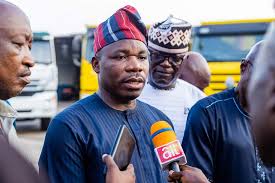
Speaking after the signing, NADDC director-general, Joseph Osanipin, described the initiative as a major shift in Nigeria’s economic and industrial direction.
Osanipin said the policy represents an “economic imperative” designed to create jobs, deepen local manufacturing, and retain value within the domestic economy.
According to him, the framework goes beyond procurement reform and is intended to rebuild the country’s automotive ecosystem while expanding industrial capacity.
“For too long, our nation has been a consumer of foreign-made automotive products, a trend that has limited our economic potential and hindered the growth of our local assemblers.Today, under the guidance of the Nigeria First Policy, we are fundamentally shifting that paradigm,” he explained.
Osanipin said the policy would drive investment in local assembly plants, strengthen technical expertise, and expand supporting infrastructure such as service centres and supply chains.
He added that prioritising local procurement would ensure that public spending on vehicles circulates within the domestic economy, rather than being repatriated abroad.
“Every vehicle procured locally creates jobs for Nigerians and ensures that the wealth generated through public expenditure remains within our economy,” he said.
The DG said strict compliance measures would be enforced, including the use of Vehicle Identification Number (VIN) verification to ensure traceability and adherence to quality standards.
Osanipin added that only assemblers with verifiable operations would be eligible for government contracts, noting that NADDC would maintain a register of compliant firms and work closely with the BPP on due diligence processes.
“To the procuring entities, I urge you to see this not as a regulatory burden but as a commitment to national development,” he said.
He also said the Council would support stakeholders with capacity-building initiatives to ease the transition into the new procurement framework.
Osanipin commended the BPP for its collaboration, describing the agreement as a foundation for a more resilient and self-sustaining automotive industry.
“In conclusion, procurement is a powerful tool for economic engineering. By choosing to buy Nigerian, we are not just acquiring vehicles; we are investing in the Nigerian dream,” he said.
We’ve got the edge. Get real-time reports, breaking scoops, and exclusive angles delivered straight to your phone. Don’t settle for stale news. Join LEADERSHIP NEWS on WhatsApp for 24/7 updates →
Join Our WhatsApp Channel