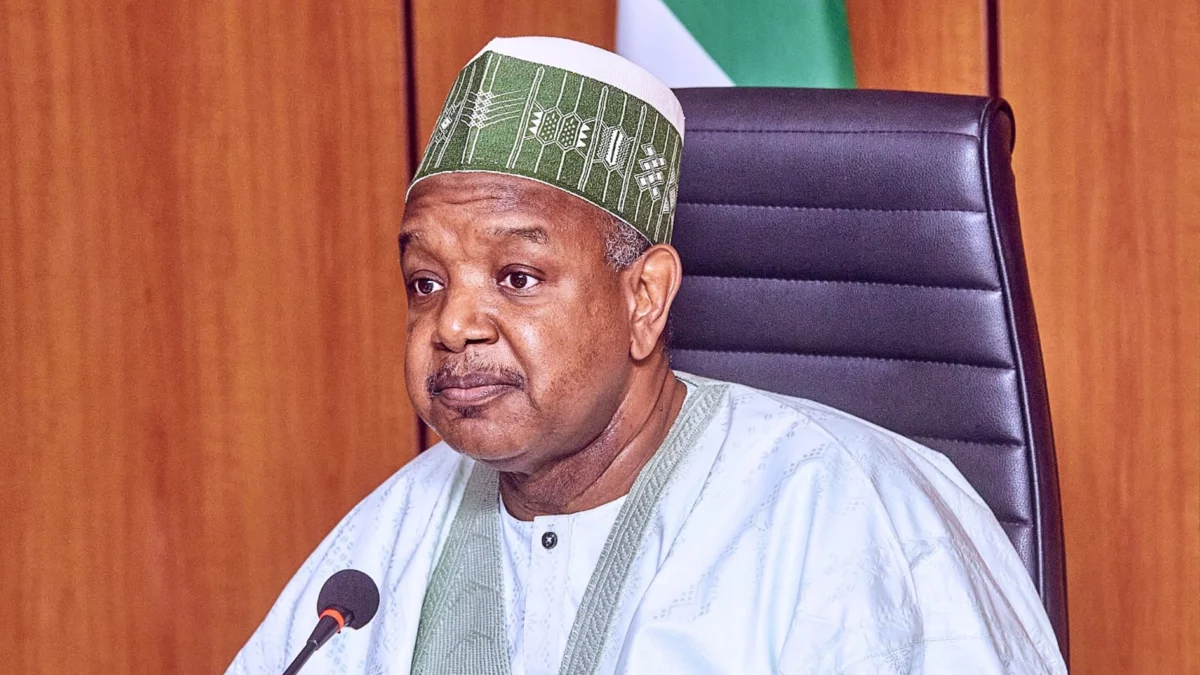
Nigeria’s budget is too small to meet its development needs, Budget and Economic Planning Minister Atiku Bagudu has argued. He compares Nigeria with countries of similar population and economy to make his point.
The minister also doesn’t think the limits on generating the revenue needed to fund a budget for a country the size of Nigeria should stop it from exploring options.
In essence, the minister is effectively telling Nigerians to brace for budget deficits every year for a long time to come. And what that deficit could look like is the $21.5bn the government just sought approval for.
But expanding the budget, regardless of the revenue currently available, raises a more fundamental question: what productive economy will generate the money to repay Nigeria’s accumulated foreign debt?
The country already owes tens of billions of dollars to foreign creditors.
Every additional loan increases future demands on government revenue and foreign-exchange earnings, particularly when debt service competes with spending on infrastructure and essential services.
The composition of Nigeria’s largest taxpayers illustrates the problem. In 2025, Seplat Energy paid N641.03bn in income taxes, equivalent to approximately $427m at an exchange rate of N1,500 to the dollar.
MTN Nigeria was also among the significant corporate contributors. Collectively, the country’s 30 largest listed companies paid N2.32 trillion in income taxes, equivalent to roughly $1.55bn.
These companies occupy important positions in oil and gas, banking, and telecommunications. Yet their contributions also reveal how heavily Nigeria depends on a relatively narrow group of profitable businesses.
The foreign-exchange dimension matters. Seplat generates foreign currency through oil and gas sales.
The real problem is that Nigeria’s industrial base is weak, and except for oil, so are exports.
Comparing Nigeria to other countries could be misleading. In South Africa, mining and other export-oriented industries generate foreign exchange, while multinational companies such as Naspers and MTN earn revenue across international markets.
Nigeria needs more businesses with these capabilities. Manufacturing, agro-processing, mining, technology, and export-oriented services must expand to generate taxable profits, productive employment, and foreign currency.
The Buhari administration relied heavily on Central Bank financing to fund deficits, contributing to monetary expansion and inflationary pressures. Tinubu inherited those distortions, while fuel subsidy removal intensified the cost of living.
Bagudu is right that development requires a bigger budget. But national planning should connect spending to realistic growth forecasts, future tax receipts, and export earnings.
Nigeria needs a bigger budget, but it also needs a productive economy and foreign-exchange earnings to pay for it.
We’ve got the edge. Get real-time reports, breaking scoops, and exclusive angles delivered straight to your phone. Don’t settle for stale news. Join LEADERSHIP NEWS on WhatsApp for 24/7 updates →
Join Our WhatsApp Channel