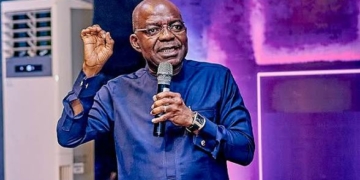

The Universal Basic Education Commission (UBEC) has unlocked over N100 billion in previously unaccessed matching grants to boost the delivery of basic education across Nigeria.
The executive secretary of UBEC, Dr Aisha Garba, disclosed this in Abuja yesterday at the opening of the commission’s 29th quarterly meeting with executive chairmen of State Universal Basic Education Boards (SUBEBs).
Garba said the funds, accessed through sustained advocacy and reforms, have enabled 30 states and the Federal Capital Territory (FCT) to draw down on grants that had remained idle for years.
According to her, the intervention has already impacted about 1.8 million children in the past year, alongside broader gains across the sector.
She noted that the meeting, themed “Accelerating Basic Education Performance Through Digitally Enabled Coordination,” shows the Commission’s renewed focus on leveraging technology to improve planning, monitoring, and service delivery.
She explained that UBEC’s shift from diagnosing systemic challenges to implementing large-scale reforms under its 2025–2031 Strategic Blueprint has begun to yield measurable results.
Garba said: “Over the past year, we have entered a decisive phase in the evolution of the Universal Basic Education programme. Throughout 2025, our focus shifted from diagnosing systemic challenges to implementing coordinated, large-scale reforms under the 2025-2031 Strategic Blueprint.
“This transition reflects our renewed role, not only as a funding institution but also as a systems enabler, driving alignment, strengthening delivery, and ensuring that impact is felt across all states.
“The results of this collective effort are already evident. Over 8.7 million learners have benefited from improved learning conditions and instructional materials. while more than 244,000 teachers have been equipped with skills in inclusive pedagogy and digital literacy.
“These gains represent meaningful progress towards improving learning outcomes across the basic education system.
“Our efforts have also been reinforced by stronger coordination and more strategic use of data. Through sustained, data-driven advocacy, we unlocked over 100 billion in previously un-accessed matching grants, with 30 states and the FCT now actively drawing down on basic education funds.
“We have adapted to the evolving needs of States’ basic education. I’m pleased to announce that the revised Matching Grants Guidelines are now finalised, streamlined, transparent, and fit for purpose, strengthening our commitment to ensure every Nigerian child reaches their full academic potential,” she stated.
Garba attributed the improved access to funds to reforms in the matching grant guidelines, which have been revised to ensure transparency, efficiency, and ease of access for states.
She noted that before these reforms, over N200 billion remained unaccessed due to bureaucratic bottlenecks and low state participation.
“Today, between 70 and 80 per cent of those funds have been accessed, with more states actively engaging the system. This marks a clear departure from the past,” she added.
The UBEC boss further revealed that within the past year, the Commission supported the construction of over 4,000 classrooms and the renovation of more than 5,000 facilities, including toilets and water systems.
She emphasised that digitisation has played a central role in the transformation, enabling states to apply for and track funds through an online dashboard—cutting processing time from several months to a more efficient, transparent system.
In his remarks, UBEC Deputy Executive Secretary (Technical), Rasaq Olajuwon Akinyemi, stressed the importance of data-driven coordination to strengthen accountability and achieve better outcomes at the school level.
Also speaking, Chairman of SUBEBs and Kwara State SUBEB boss, Shehu Adaramaja, said. At the same time, digital tools offer significant promise; states must address infrastructure gaps, workforce shortages, and capacity challenges to realise their full benefits.
He noted that effective coordination, powered by integrated digital systems, would enhance planning, improve reporting, and ensure that investments translate into measurable outcomes in classrooms.
A representative of the United Nations Children’s Fund (UNICEF), Jutaro Sakamoto, also highlighted the role of technology in strengthening education systems but cautioned that digital tools alone cannot deliver results without adequate investment in teacher capacity and human resources.
He reaffirmed UNICEF’s commitment to supporting Nigeria through data systems, digital learning platforms, and national learning assessments to improve decision-making and educational outcomes.
We’ve got the edge. Get real-time reports, breaking scoops, and exclusive angles delivered straight to your phone. Don’t settle for stale news. Join LEADERSHIP NEWS on WhatsApp for 24/7 updates →
Join Our WhatsApp Channel