In this article, MARK ITSIBOR examines the paradox of Nigeria’s economic growth figures and persistent poverty, analysing structural factors that have prevented GDP expansion from translating into widespread prosperity for ordinary Nigerians.
When the International Monetary Fund (IMF) last week upgraded Nigeria’s growth outlook to 4.4 per cent in 2026 and 4.1 per cent in 2027, it was framed as evidence of “improved macroeconomic stability” across Nigeria and sub-Saharan Africa.
The projection aligned with a similar upbeat revision by the World Bank in its 2026 Global Economic Prospects report, released on January 13, 2026, which also placed Nigeria’s growth outlook at 4.4 per cent for 2026 and 2027.
On paper, these numbers look reassuring. In global financial circles, they signal renewed investor confidence, policy credibility and the promise of recovery after years of shocks from inflation, COVID-19-induced setbacks, currency instability, insecurity and weak infrastructure.
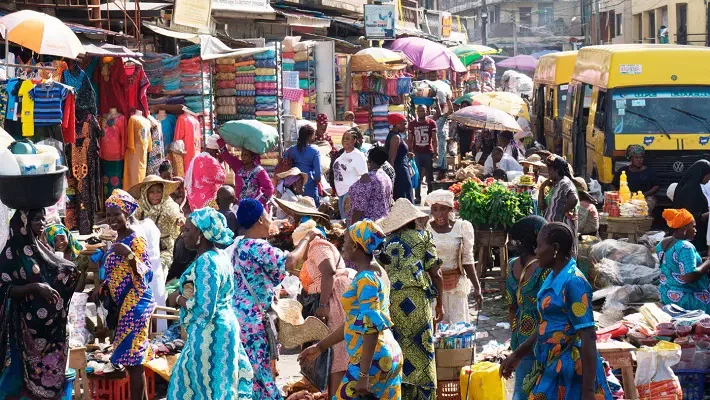
But on the streets of Nigeria, where millions struggle daily with rising food prices, unemployment, poor power supply and insecurity, the figures sound increasingly hollow.
This contradiction raises fundamental questions: Why has Nigeria’s consistent growth forecasting since 2015 failed to translate into poverty reduction? Why has “growth” not meant higher per capita income, more jobs, or improved living standards? And what, if any, real value do economic growth forecasts hold for ordinary citizens?
Economic analysts interviewed by this reporter argue that the problem is not forecasting itself, but the structure, quality and inclusiveness of growth, as well as the policy environment that shapes it.
Professor Hassan Ebhozele Oaikhenan of the Department of Economics at the University of Benin is blunt in his assessment. He describes international growth projections as largely disconnected from Nigeria’s lived reality. “I have never been enthused by these so-called growth forecasts because they are of little utility in my view. They appear largely disconnected from the reality we see around us on a daily basis,” he said.
Oaikhenan questioned how institutions in Washington can model growth for Nigeria without fully capturing the country’s structural bottlenecks.
“What sense does it make for IMF and World Bank officials, sitting in their cozy offices in Washington, to be making growth projections for the Nigerian economy when they are far removed from the harsh and stark reality of epileptic power supply, insecurity, collapsed road infrastructure and the near non-existence of other facilities that support production?”
He pointed to agriculture — traditionally a backbone of Nigeria’s economy — as an example of this disconnect. Insecurity, particularly in food-producing states like Benue, has crippled output, displaced farmers and disrupted supply chains.
“Do these forecasts take into account the undesirable turn of events in Benue State, a state that once held the trophy of the food basket of the nation?” he asked.
For Oaikhenan, the failure to address these structural constraints explains why growth projections have not ended poverty. “They cannot, because they are forecasts that ignore some of the harsh and fundamental realities of the Nigerian economy.”
Yet, he does not dismiss forecasting entirely. He argues that growth projections can be valuable tools for planning — but only if they are grounded in reality.
“They can aid planning and projections by households, businesses and government, if and only if they are made based on hard facts and stark realities on the ground, not hunches and guesswork.”
Economic policy analyst Dr Justine Amase offered a more structural explanation for the disconnect between growth and poverty reduction.
According to him, Nigeria’s growth model has been jobless, concentrated and non-inclusive. “The wealth arising from such growth is concentrated in the hands of a few elites, resulting in rising inequality,” he said.
He explains that growth in Nigeria is driven largely by capital-intensive service sectors such as ICT, finance and trade, which employ only about 1.5 per cent of the total workforce, while labour-intensive sectors that employ most Nigerians are stagnating.
“Agriculture, which employs about 34 per cent of the workforce, and industry — manufacturing, mining, construction and utilities — which employ about 17 per cent, have been experiencing weak and often declining growth, hence their inability to create new jobs.”
This structural imbalance means GDP can rise while unemployment and poverty also rise — a paradox that has become Nigeria’s reality.
Amase also points to poor governance, corruption, weak institutions and inadequate social safety nets as critical barriers. Only about 8.3 million households benefit from cash transfer programmes in a country with tens of millions living in poverty.
“Major structural challenges such as poor infrastructure, high inflation, low currency value, a shallow private sector dominated by informality, and poor quality of life persist in spite of economic growth and rising fiscal revenues,” he said.
Dr. Amase draws a clear distinction between growth forecasts and real growth outcomes. “Growth forecasts in themselves cannot reduce poverty because they do not represent actual output but merely projected output estimates.”
However, he explains that when growth is real, inclusive and well-managed, it can reduce poverty — but only under strict conditions. For him, if sincere measures for fair income distribution through social safety nets and progressive taxes, investment in human capital, and support for labour-intensive sectors such as agriculture and manufacturing are implemented with effective governance, “such growth can reduce income inequality and poverty.”
Like Oaikhenan, Amase adds a stark reality check: Nigeria’s population size and poverty burden mean that modest growth is not enough. “With Nigeria’s population and poverty rate, the growth threshold must be raised to a minimum of 10 per cent per annum to achieve significant employment creation and poverty reduction.”
Former Zenith Bank chief economist, Marcel Okeke argued that Nigeria’s growth narrative collapses once GDP is properly dissected. “You have to decompose the GDP. When you do, you see that it is the services sector that is driving the growth.”
He notes that sectors that should naturally generate mass employment — agriculture and manufacturing — are struggling, while services such as banking, entertainment, ICT and hospitality dominate GDP growth figures. “Those sectors that are supposed to create jobs are not doing well. The real sector is not doing well.”
Okeke linked this directly to Nigeria’s policy environment, particularly monetary policy. He criticises the high interest rate regime, with the Monetary Policy Rate around 27.5 per cent, pushing commercial lending rates above 30–35 per cent.
“With that kind of rate, which kind of businesses will thrive? The real sector that needs money is being stopped because of this high interest rate.”
According to him, Nigeria’s policy mix favours foreign portfolio investors (“hot money”) rather than productive local investment. He told this reporter that those things reflect rising reserves and capital inflows, but this is not a productive investment. It does not build factories, farms or jobs.
He also accused government borrowing of crowding out the private sector, making capital more expensive and scarce for businesses that could create jobs.
The Policy Gap
Across all expert views, a common theme emerges: policy failure.
High borrowing, weak infrastructure planning, insecurity, unstable fiscal policies, inflation, and inconsistent reforms have combined to block the transmission of growth into welfare.
Okeke describes growth as policy-driven — meaning bad policy can produce growth without development. “If the government puts policies in place that improve access to finance, infrastructure, security and production costs, then growth will translate into jobs, higher income and better living standards.” Without that, forecasts remain numbers on paper.
So, What Is the Real Value of Growth Forecasts?
Despite their criticism, analysts agree that growth forecasts are not useless. Amase explains their signalling function: “They signal to citizens and investors the expected health of the economy and its expected performance capacity.”
Okeke adds that projections shape international perception, even when domestic realities contradict them.
“It works on perception. Outsiders and investors see the projections and believe the economy will do well, even if people on the ground know they are suffering.” In this sense, forecasts benefit government image, investor confidence and financial markets — but not necessarily households.
Nigeria’s experience reveals a more profound truth: growth is not development. GDP can rise while poverty deepens. Forecasts can improve while hunger spreads. Investor confidence can grow while factories close.
For growth to matter, the experts say it must be productive, inclusive and employment-generating.
It must be anchored in electricity, security, infrastructure, skills development, affordable finance, industrial policy and accountable governance.
Until then, Nigeria risks repeating a familiar cycle: glowing projections, rising GDP figures, and worsening human welfare.
As Professor Oaikhenan warns, forecasts that ignore reality cannot transform reality.
And as Dr Amase concludes, growth without inclusion only widens inequality. In the end, the challenge is not whether Nigeria can grow — but whether it can grow in a way that lifts its people.
Until that happens, IMF and World Bank projections, however optimistic, will remain statistics without prosperity.
We’ve got the edge. Get real-time reports, breaking scoops, and exclusive angles delivered straight to your phone. Don’t settle for stale news. Join LEADERSHIP NEWS on WhatsApp for 24/7 updates →
Join Our WhatsApp Channel