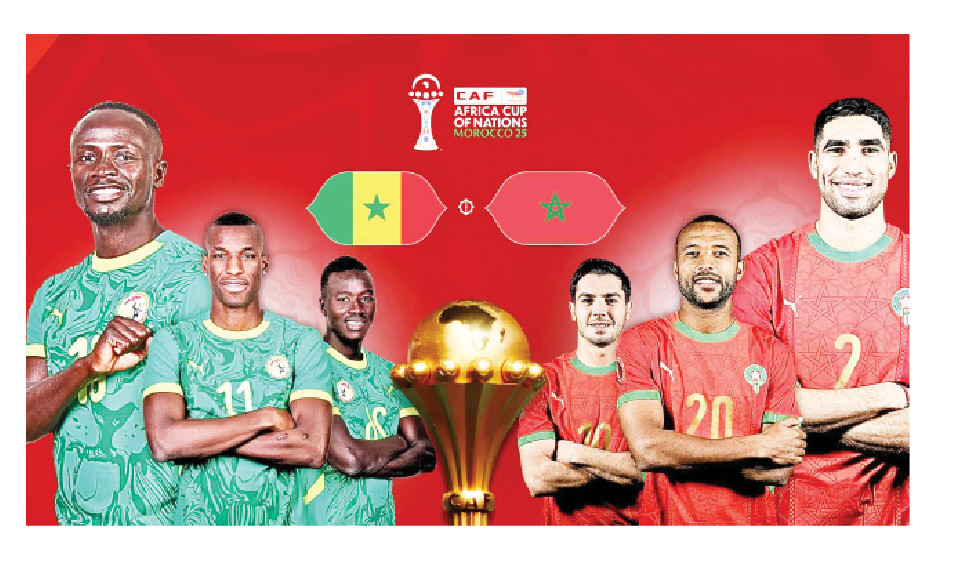
In a seismic shift that has reverberated throughout the footballing world, the Confederation of African Football (CAF) has taken a gamble so fraught with peril that it threatens the very essence of its premier competition, the Africa Cup of Nations (AFCON). This controversial decision has transformed the sport from a revered contest into a mere pawn on a political chessboard. AFFA ACHO delves into the ramifications of a boardroom ruling delivered a staggering two months post-final whistle, plunging African football into turmoil.
Traditionally, the fate of football championships is sealed on the pitch, where players sweat and strive under the glaring lights and intense pressure. Yet, for the first time in the modern era, a continental title has been wrested from one nation and handed to another almost two months after the trophy was triumphantly lifted. March 17, 2026, marks a date critics argue has rewritten the narrative, questioning the very foundations of sporting justice.
The CAF Appeals Board’s shocking verdict to strip Senegal of its 2025 AFCON title and award it to Morocco has sent shockwaves far beyond the usual realms of football disputes. This decision has sparked protests from Dakar to Johannesburg, igniting profound questions about governance across the continent and leaving many to ponder the future of African football.
The Fateful Final
To grasp the gravity of this crisis, one must revisit the chaos of the final held at the Prince Moulay Abdellah Stadium in Rabat on January 18. As stoppage time dwindled, the score remained tied at 0-0. It was here that Congolese referee Jean-Jacques Ndala, after a VAR review, awarded a penalty for a challenge on Morocco’s Brahim Diaz by Senegal’s El Hadji Malick Diouf. The call incited outrage on the touchline, prompting Senegal’s players and coaching staff to walk off the pitch in protest for nearly 15 minutes, leaving the match hanging in uncertainty.
Upon their return, Edouard Mendy saved Diaz’s penalty, and the game resumed. In extra time, Pape Gueye netted the winner, securing a 1-0 victory for Senegal. Medals were draped around necks, and the trophy was paraded through the streets of Dakar, etching a moment of triumph into history.
Initially, CAF’s Disciplinary Board sided with this narrative, imposing fines on Senegal while allowing the result to stand—a compromise acknowledging the outcome despite the protest. However, following an appeal from the Moroccan Football Association, the narrative took a dramatic turn.
The Bombshell Verdict
On March 17, the CAF Appeals Board issued its bombshell ruling. Citing Articles 82 and 84 of the competition regulations, it decreed that Senegal’s walk-off constituted a forfeiture. The 1-0 victory was erased from the records, replaced instead with a 3-0 administrative defeat. Morocco, the team that had lost on the night, was declared the new champions of Africa.
“The Senegalese national team is declared to have forfeited the match,” CAF stated, confirming the new official record in favour of the Atlas Lions.
CAF President Patrice Motsepe attempted to mitigate the fallout, portraying the controversy not as a leadership failure but as a testament to institutional independence. “The independence of CAF’s judicial bodies is reflected in the decisions taken by both bodies,” he asserted. However, this defence fell flat for many; critics viewed the contradictory rulings as evidence of dangerous inconsistency and a lack of cohesive authority.
Outrage in Senegal
The reaction in Senegal was one of visceral disbelief and anger. The Senegalese Football Federation (FSF) did not shy away from expressing its frustration, calling the ruling “iniquitous, unprecedented, and unacceptable,” a decision that “discredits African football.” Government officials echoed this sentiment, labelling it an “unjustified dispossession” and vowing to contest the ruling at the Court of Arbitration for Sport (CAS).
Amidst the uproar, the voice of the players resonated most powerfully. Star forward Sadio Mané took to social media, declaring, “The world knows the true champions,” a simple yet profound repudiation of CAF’s authority. He continued in a following statement, articulating the existential threat the decision posed to the sport’s integrity: “What has happened here goes too far… There is too much corruption in our sport, and that is killing the passion of millions of fans across the continent.”
His teammates echoed similar sentiments, with midfielder Pathé Ciss posting a celebratory video, while Pape Demba Diop bluntly remarked, “I think we’re in a mental asylum.” The Senegalese Football Federation amplified this message, sharing footage of the team’s jubilant homecoming, a powerful assertion that, for them, the trophy remained in Senegal.
A Continental Crisis
The fallout from this decision has rippled beyond Senegal, exposing deep fractures within the African football community. While Moroccan media and supporters celebrated the ruling as justified, the wider continental response has been overwhelmingly critical.
In Egypt, reports emerged that Pharco FC would boycott CAF-organised tournaments in protest, denouncing the ruling as “unfair, politically motivated, and unsportsmanlike.” Clubs like South Africa’s Mamelodi Sundowns and Tanzania’s Simba SC condemned the decision, calling it a “shame.”
Respected figures in football have rallied against the ruling. Liberian football icon and former FIFA World Player of the Year, George Weah, described the decision as a “travesty” that has “scarred and blemished” the integrity of African football, warning that it establishes a dangerous precedent.
Weah meticulously dismantled CAF’s justification, invoking Law 5 of the FIFA Laws of the Game, which establishes the referee as the “final authority” during a match. He emphasised that Ndala allowed play to continue, and the match was concluded with a result. “The subsequent decision by the CAF committee, taken after the match had already been concluded, should not override the authority exercised by the referee during the game,” Weah asserted.
The Implications of Overturning History
Weah further highlighted that the referee’s report characterised the incident as a “stoppage” rather than a “forfeiture,” recommending sanctions for infractions rather than a reversal of the match result. “Football must be decided on the pitch, not re-decided after the final whistle,” he declared, cautioning against a slippery slope where committee decisions could undermine the authority of match officials.
The ruling has raised alarm bells within CAF itself. Executive committee member Augustin Senghor voiced his dissent, stating, “In a situation like this, we have to fight against injustice. Football is fair play; it is played on the field, not in offices.” His colleague Samir Sobha described the ruling as “a big joke,” warning that correcting one perceived injustice with another would irreparably damage African football’s credibility.
Yet, amidst the outcry, some defended CAF’s decision. Football administrator Olawale Quadri asserted, “Rules are rules. Senegal violated them and disgraced the whole of Africa.” Others suggested that the outrage was more about timing than substance, arguing that the ruling represented a necessary step to enforce discipline in a competition often seen as chaotic.
Rwanda’s The New Times acknowledged the uncomfortable reality that “CAF’s judgment rests on a strict interpretation of its regulations,” suggesting that the ruling, while brutal, conveyed a powerful message that no team is above the law.
A Precedent for the Future
However, it is the unprecedented nature of this ruling and its retroactive application that has many fearing a dangerous new precedent. “Stripping a team of a continental title nearly two months after the final is unprecedented,” noted The New Times. Former FIFA and PGMOL chief Keith Hackett condemned the process, arguing, “Deciding the result of a football match sat around a table by committee is a huge disrespect for the game.”
This sentiment strikes at the core of the issue. By choosing to overturn a result long after the fact rather than ordering a replay, CAF has opened a Pandora’s box. If titles can be won and lost in boardrooms weeks after the final whistle, what is the point of the 90 minutes played on the pitch? What happens to the finality that gives sport its meaning?
The Senegalese federation has appealed to the Court of Arbitration for Sport (CAS), a process that may take up to a year to resolve. For the next 12 months, the 2025 AFCON will exist in a state of limbo, marked with an asterisk in the record books. Morocco will be acknowledged by CAF as champions, yet a significant portion of the continent—and the greater footballing world—will rally behind Sadio Mané’s defiant words, viewing Senegal as the true victors.
A Call to Action
This incident also provides ammunition to the long-time critics of the tournament. European clubs like Manchester United and Liverpool, who frequently voice grievances regarding the timing of AFCON, will now point to this debacle as evidence of organisational instability. The image of African football, painstakingly built over decades of progress on the pitch, has been severely tarnished.
As policy analyst Dr. Benjamin Anyagre Aziginaateeg warned, this is a “wake-up call” for the continent. Football remains one of Africa’s most powerful unifying forces, but when the integrity of the game is compromised by decisions that appear politically motivated and legally dubious, that unity is at risk of fracturing.
For now, the lingering images are not of a trophy presentation, but of a heartbroken superstar’s social media post, a defiant victory parade video, and the haunting question now overshadowing African football: If you cannot trust what you witness on the pitch, what can you trust?
As one fan in Dakar poignantly stated while holding a scarf emblazoned with “Champions d’Afrique 2025,” “They can take the trophy, but they cannot take the memory. They cannot take the goal. They cannot take the truth.”
We’ve got the edge. Get real-time reports, breaking scoops, and exclusive angles delivered straight to your phone. Don’t settle for stale news. Join LEADERSHIP NEWS on WhatsApp for 24/7 updates →
Join Our WhatsApp Channel